









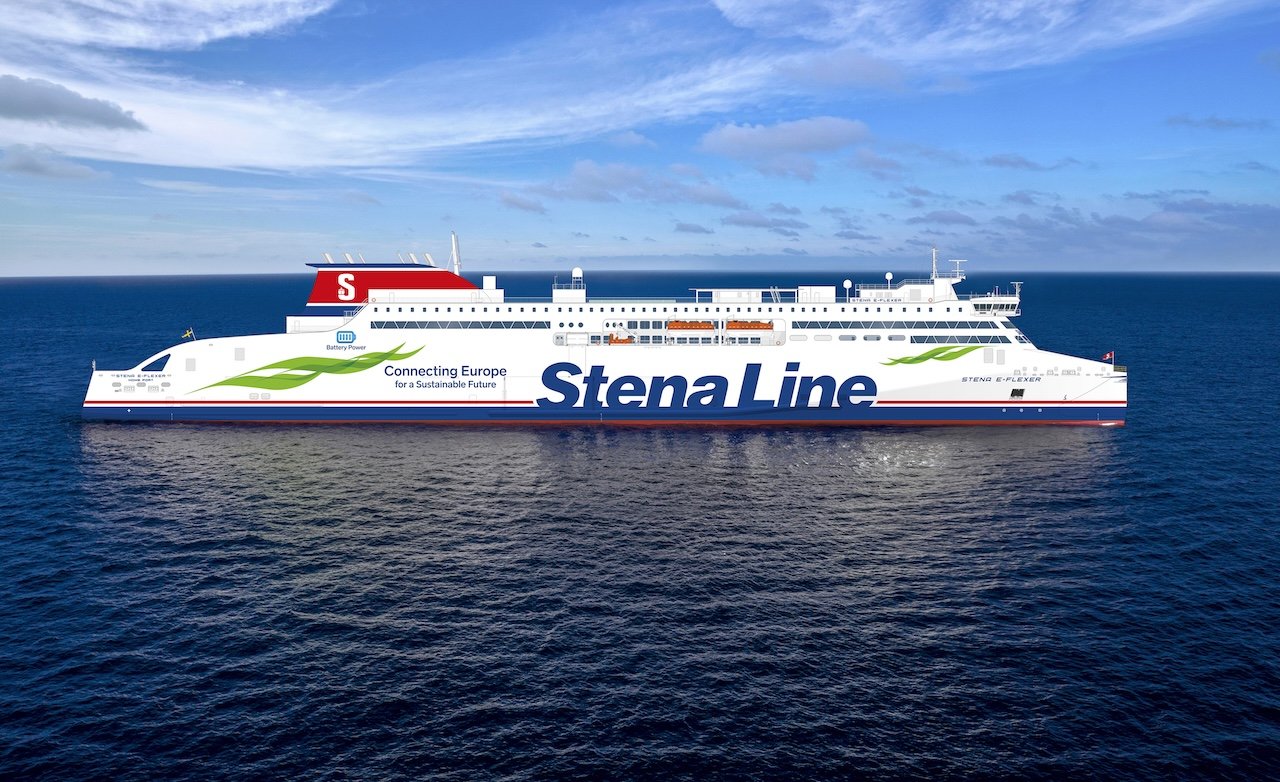
Stena Line is modernizing its fleet by ordering two new hybrid E-Flexer ferries, which are scheduled to enter service in 2030 on the route between Sweden and Denmark. Two vessels of this class have already been operating on the Gdynia-Karlskrona line since 2022.
The two new RoPax ferries will be able to carry 1,500 passengers and 2,750 lane meters of freight. Designed as day-service vessels, they will operate on the Gothenburg – Frederikshavn route (Sweden – Denmark). The ships will be equipped with state-of-the-art hybrid propulsion technology, allowing for the use of both conventional fuel and electricity. They will also be prepared for a transition to fully electric propulsion as soon as the necessary battery charging infrastructure is in place.
This is a historic investment for Stena Line, allowing us to take further steps towards sustainable fleet modernization. The two new ferries will enrich our offering, taking the travel experience to a higher level. At the same time, we are securing the realization of our CO₂ emission reduction goals and preparing for upcoming, more stringent environmental requirements.
– says Niclas Mårtensson, CEO of Stena Line.
The vessels currently serving the Gothenburg – Frederikshavn route, namely Stena Danica and Stena Jutlandica, have been in service on this route for many years. Stena Danica began operations in 1984, and Stena Jutlandica joined it in 1996.
Increased freight capacity
The newly ordered ships are expected to begin serving the route between Gothenburg and Frederikshavn in 2030. However, as Stena Line always strives to maintain operational flexibility and sufficient reserve in its fleet, these vessels will also be adapted to serve other day routes within the company’s network.
Our current ships have been extremely reliable units and have performed excellently on the route to Denmark for years. However, the new generation of E-Flexer ferries will represent a huge step forward for both passengers and freight customers. It will allow us to offer an extremely attractive and modern service, distinguished by significant improvements in sustainability, comfort, service quality, and freight capacity. With the new units, we are increasing our cargo transport capabilities, which we believe will be particularly important in the context of the planned relocation of operations to the new port in Arendal in Gothenburg. The conditions there are conducive to the development of freight transport, offering, among other things, greater opportunities for intermodal transport thanks to access to rail infrastructure.
– says Christina Bromander, Business Region Director Denmark at Stena Line. She adds:
The two new units will be the sixth and seventh E-Flexer ferries in the Stena Line fleet. The first one entered service in 2019. Currently, three units of this type operate on the Irish Sea, and two run between Sweden and Poland on the Gdynia-Karlskrona line, under the names Stena Estelle and Stena Ebba.
The new ships will be built at the Chinese shipyard China Merchants Industry Weihai, which has already produced 15 E-Flexer units to date.
This significant investment demonstrates Stena Line’s long-term commitment and our determination to prioritize sustainable transformation, and it also confirms our belief in the continued, dynamic development of the Gothenburg–Frederikshavn route.
– concludes Niclas Mårtensson.
E-Flexer 2.0 – facts and figures
- Length: 214.5 m
- Width: 27.8 m
- Three car decks: one for passenger cars and two for trucks
- Freight capacity: 2,750 lane meters
- Number of passengers: 1,500
- Day ferry, equipped with 50 cabins for truck drivers
- Place of construction: China Merchants Industry Weihai shipyard (China)
- Planned entry into service: 2030
Source: Stena Line