









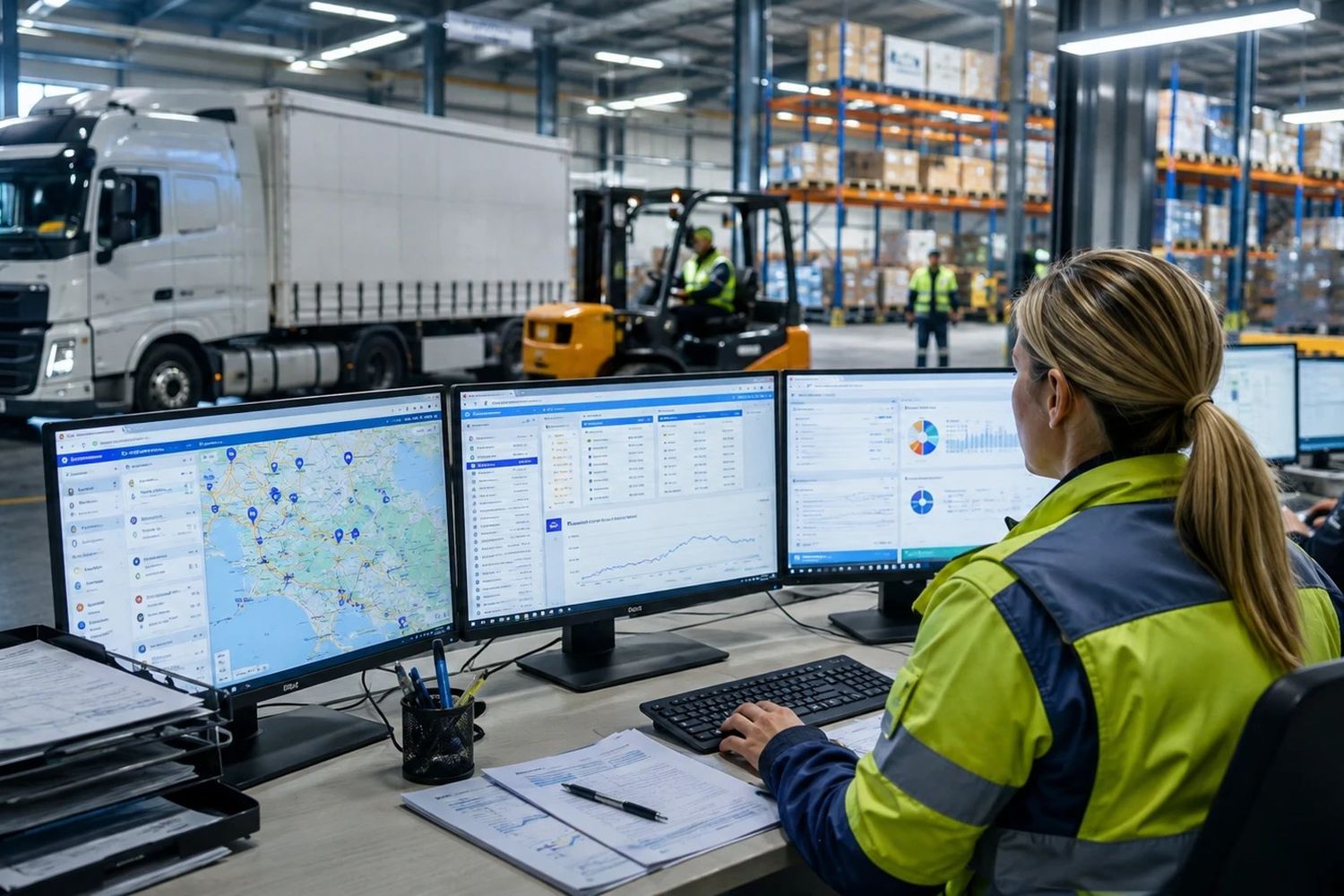
The logistics industry is closely linked to production, warehousing, and the flow of goods, which is why the efficiency of individual operations is crucial for organizing the entire process. One way to streamline selected activities is through automation. Depending on the specifics of the enterprise, it may involve a single workstation, a specific machine, or a section of an existing line.
In the case of Automatec, the starting point is to define the needs of a specific process and the requirements that the designed solution should meet.
Why is competitive advantage in logistics becoming increasingly difficult to maintain?
The functioning of logistics and production companies is influenced by many factors: work organization, the method of moving products, the repeatability of individual operations, and the need to adapt processes to changing requirements. Activities performed repeatedly according to the same pattern require special attention. If their course and parameters can be clearly defined, they may become candidates for automation. This does not have to mean robotizing the entire plant. The subject of a project can be a specific workstation or device whose operation is linked to other stages of the process.
Robotization in logistics – what exactly changes?
Robotization allows for the use of industrial robots to perform specific operations within a production process. The scope of their application depends on the nature of the task, the design of the workstation, and the method of controlling the entire solution. Automatec designs and builds machines and solutions using industrial robots. The company also performs electrical installations and control systems. The offer also includes, among others, vision, labeling, and printing systems, rewinders, and traverses.
Loading and unloading as a key area for implementation
Operations related to loading and unloading can involve repetitive activities that, under certain conditions, are suitable for automation. However, before a workstation is designed, one must consider, among other things, the type of product handled, the method of feeding and receiving it, and the sequence of operations performed. There is no single way of robotization suitable for every process. The right solution depends on the parameters of the specific application and technical requirements.
Palletizing and order picking
Palletizing is an example of an operation where a robot can perform repetitive activities related to stacking products. Automatec has implemented a palletizing station based on a collaborative robot. The robot picks up cartons from a conveyor and stacks them on a pallet according to a pattern defined by the operator via an HMI panel. The station was prepared for the sequential handling of two pallets. This is an example of a specific application of a robot in a process related to product handling. However, it should not be equated with an automatic order picking offer, which Automatec does not indicate as a separate service.
Specific business benefits of implementing robotization
The effects of automation depend on the specific project, so the same results cannot be attributed to every implementation. When evaluating a solution, one can analyze, among other things, the method of performing the automated operation, the operating parameters of the device, and its cooperation with other elements of the process. Additional information can be provided by data collected during machine operation. Automatec creates software tailored to the client’s needs, which enables the archiving of parameters from machines. The system can be used, for example, to monitor downtime, the number of products manufactured, selected line elements, and information about failures. Data can be transmitted via email and SMS.
How to approach the implementation of robotization in practice?
It is worth starting the design of a solution by defining the task to be automated and then establishing the requirements for its execution. Only then can the appropriate elements of the workstation, the control method, and devices cooperating with the robot be selected. As part of its operations, Automatec designs and builds machines, electrical installations, and control systems. The company uses solutions from manufacturers such as Mitsubishi, Siemens, and Allen-Bradley, and also works with industrial robots and vision systems. In the case of existing devices, their modernization is also possible. The company performs modernizations of existing machines and production lines, adapting them to new process requirements.
Where to start a conversation about robotization in your own company?
The first step is to define the specific operation to be automated. It is worth considering its course, the method of feeding and receiving products, and cooperation with other elements of the process. Before preparing a solution, Automatec familiarizes itself with the client’s process and requirements, and then presents possible implementation variants. If necessary, the company also performs tests to verify the adopted assumptions. Thanks to this, a conversation about robotization can start with a specific technical task, rather than with the choice of a specific robot model.
Summary
Robotization can be one of the elements of automating processes related to production and product flow. It does not have to mean rebuilding the entire plant – the scope of the project can cover a single operation, a workstation, or the modernization of an existing line. Automatec deals with the design and construction of machines, electrical installations, and control systems, as well as solutions using industrial robots and vision systems. The company also performs machine and line modernizations and creates software for production control and supervision. Therefore, it is worth starting the planning of automation from a specific process and the requirements that the designed solution should meet. Only on this basis can the appropriate scope of work and technologies used be determined.