









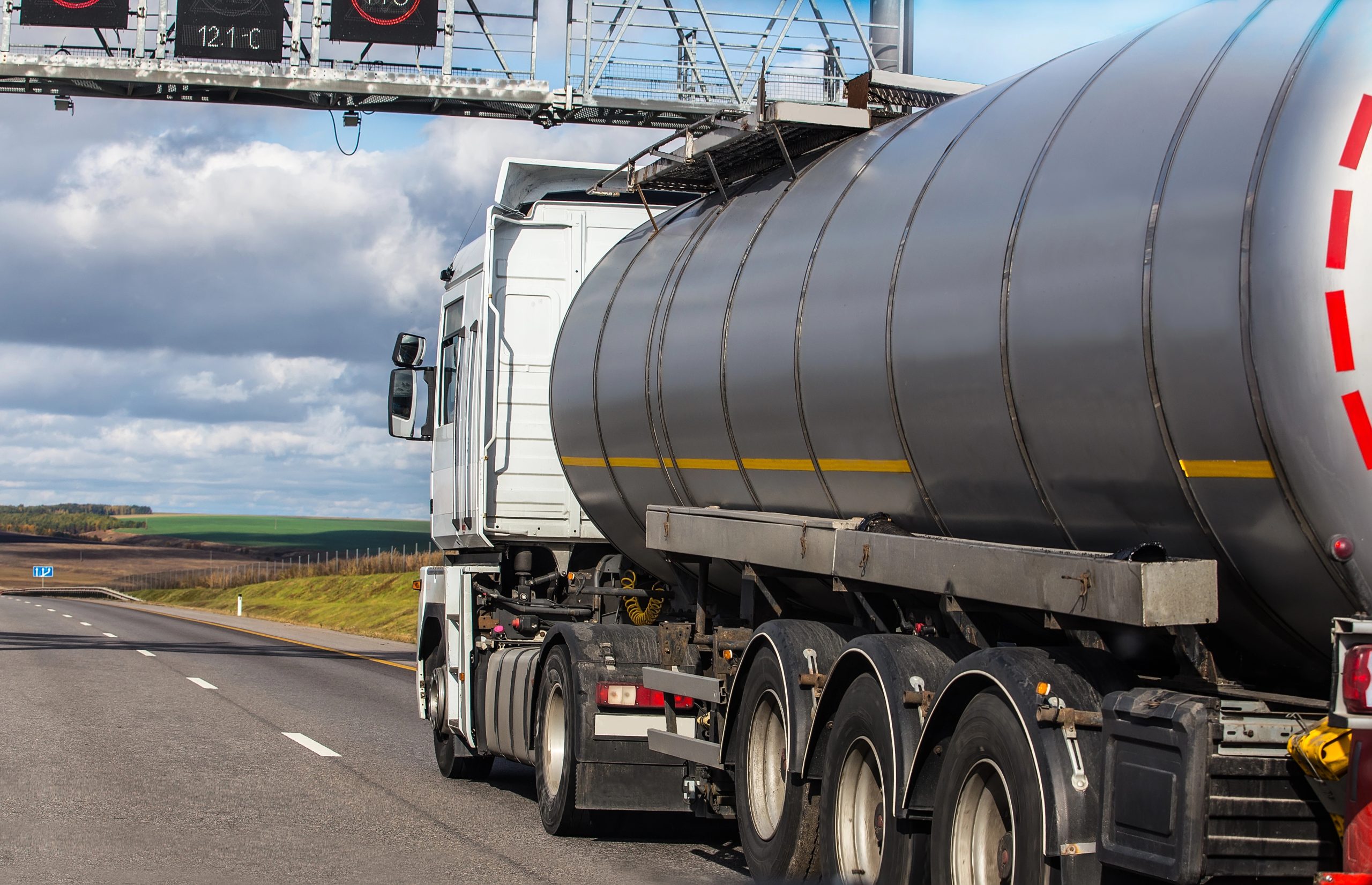
Although Brent crude has once again exceeded 91 dollars per barrel, the price and availability of diesel remain a bigger problem for carriers today. In Europe, the margin between the price of diesel and Brent has increased by over 180 percent since the beginning of the year – from about 25 to over 70 dollars per barrel, which shows that the refined products market reacts much more strongly to supply constraints than the crude oil market itself. A potential drop in raw material prices does not necessarily have to translate quickly into prices at gas stations. Poland still remains one of the cheaper fuel markets in the EU – gasoline is about 23 percent and diesel about 17 percent cheaper than the EU average. However, these data require careful interpretation, as the European Commission’s data refer to prices from August 17, i.e., the first day of the CPN (Lower Fuel Prices) protection program, and do not yet show its full effect. After its conclusion, the smallest carriers may face not only the prospect of more expensive fuel but also the need to recalculate whether, with rising operating costs, it is still profitable for them to remain outside the VAT system.
The fuel market is currently influenced by two opposing factors simultaneously. On one hand, US crude oil inventories are growing – they increased by 17.4 million barrels last week, which was the largest increase since January 2023 – and global demand forecasts are increasingly weak. On the other hand, disruptions in oil supply and transport related to the situation in the Middle East persist. Transport through the Strait of Hormuz remains severely restricted, and some trade has been diverted to longer and more expensive routes and ship-to-ship transfers. This means higher costs and less predictability of supplies.
For road transport, however, the relationship between the price of the raw material and the price of finished fuel is more important than the Brent price itself. And in the case of diesel, this remains extremely unfavorable. In the US, the margin between the price of diesel and the price of crude oil has risen to a record 102.20 dollars per barrel, exceeding the 100-dollar level for the first time. In Europe, the diesel premium relative to Brent has increased by over 180 percent since the beginning of the year – from about 25 to over 70 dollars per barrel. At the same time, gasoil stocks at the Amsterdam–Rotterdam–Antwerp hub are 24 percent lower than the five-year average, and diesel exports from Russia, the Middle East, and major Asian suppliers were 1.3 million barrels per day lower in July than a year earlier.
As a result, the price of diesel is following the price of crude oil less and less. Brent can react quickly to an improvement in the geopolitical situation, while the rebuilding of supply and stocks of finished fuels will be much slower.
Poland still has cheap fuel, but prices are partially protected
Despite the pressure on the European fuel market, Poland remains one of the cheaper markets in the European Union. According to European Commission data, the average price of 95-octane gasoline in Poland was 1.481 euros per liter, compared to 1.924 euros in the entire EU. Diesel cost 1.686 and 2.033 euros per liter, respectively. This means that gasoline in Poland was about 23 percent cheaper than the EU average, and diesel about 17 percent cheaper. Lower gasoline prices were recorded only in Malta, and for diesel in Malta and Bulgaria.
However, the current price level at Polish gas stations must also be analyzed in the context of the government’s “Lower Fuel Prices” (CPN) protection program. From August 17 to 31, VAT on gasoline and diesel was reduced from 23 to 8 percent, and maximum retail prices were additionally introduced. On August 17, the limit for 95-octane gasoline was 6.41 PLN per liter, for 98-octane gasoline – 7.20 PLN, and for diesel – 7.37 PLN. The program covers all retail stations in the country, and its cost to the state budget is expected to be nearly half a billion zlotys.
This is an important element of the current market situation. The price at the Polish pump does not fully reflect the pressure resulting from high refining margins, limited diesel availability, and more expensive oil transport routes. Part of this pressure is currently being cushioned by tax and protection solutions.
What happens after the CPN program ends?
For transport companies, what happens after August 31 will be particularly important. If tensions in the diesel market persist while the current protection disappears, cost pressure may become much more visible. The return of VAT on fuels from 8 to 23 percent means an increase in the gross price in itself – provided that other price components remain unchanged. For the smallest transport companies, the method of VAT settlement is significant. Some of them benefit from a VAT exemption or can benefit from it due to the scale of their operations, and in that case, the VAT paid on fuel purchases constitutes their real cost. With rising fuel costs and other operating expenses, it may turn out that remaining outside the VAT system will not always be the most profitable solution for a small carrier. Will 2026, as a result, turn out to be the beginning of a major change for small carriers, not only in the fuel market but also in their approach to VAT and tax strategies?
Source: Malcom Finance in Poland