









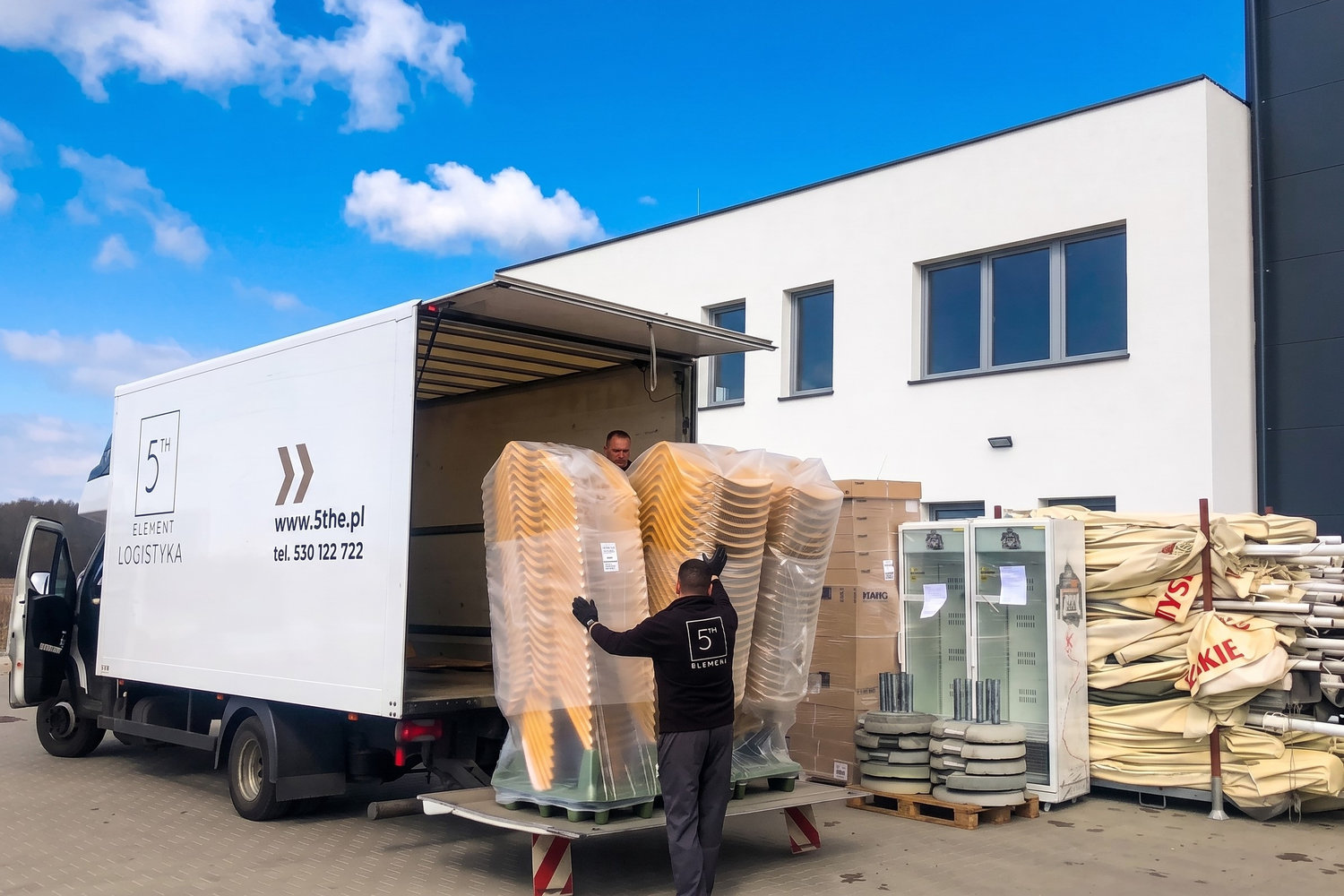
In B2B logistics, the kilometers are not always the most difficult part. When handling point-of-sale equipment, devices, POSM materials, or retail chain rollouts, problems often arise between successive stages: the warehouse and transport, transport and the field team, the team and the location, and finally, between the completion of the task and the information that returns to the client.
This is why delivery alone is increasingly rarely the end of an operation. It is one stage of a larger task. A device must be set up in the right place, a piece of equipment installed, a display activated, and sometimes, during the same visit, a previous asset must be collected or moved.
From the operator’s point of view, this means it is not enough to perform each stage well separately. You must also ensure that they all work in the right order and at the right time. The more locations and project participants there are, the greater the importance of this coordination.
A process is only as efficient as its weakest touchpoint
The warehouse can prepare an order flawlessly, transport can arrive on schedule, and the installation team can be properly prepared. Even so, the implementation will be delayed if these three elements do not meet at the right place and time.
Experience with multi-stage projects shows that the problem does not always lie in the quality of a single service. It often appears at the interface of responsibilities. Transport arrives before the agreed time window and the location is not ready. The field team arrives before the delivery and waits. The lack of a single element is only discovered during installation, which means an extra trip and another visit.
For a single location, such an event can be treated as an exception. For rollouts involving dozens or hundreds of points, even a small percentage of deviations begins to affect the timeline, cost, and quality of the entire project.
At a larger scale, this is why it is so important to limit unnecessary touchpoints and clearly define who is responsible for a larger part of the process, not just for a single activity.
The warehouse as a place for implementation preparation
In such a setup, one must also look at the warehouse differently. It is not just a place where assets wait for shipment. It is a facility preparing for subsequent implementation in the field.
Here, physical goods must be combined with a specific order, location, and deadline. For POSM materials or store equipment, the completeness of the set is particularly important. A single point may receive several different elements that only together create a finished display or equipment.
Therefore, kitting, picking, and proper assignment of elements have consequences far beyond the warehouse. A shortage detected before shipment can be corrected relatively easily. The same shortage revealed several hundred kilometers away may mean an extra trip, a repeat visit by the team, and a delay in the location’s launch date.
In multi-stage projects, the warehouse is therefore in practice the beginning of field implementation, not a separate service after which the “actual” process begins.
At 5th Element Logistyka, the infrastructure for such processes is created by four main logistics hubs – in Szczecin, Poznań, Wrocław, and Pruszcz Gdański – supplemented by a partner network in Poland. For projects carried out in parallel in many locations, such a scale of infrastructure allows for combining the preparation of assets in the warehouse with subsequent stages of operations conducted in the field.
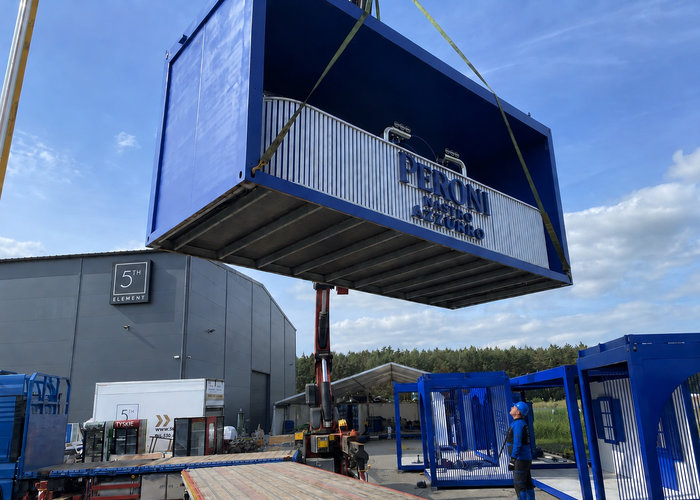
Hundreds of locations, but one standard of execution
A rollout in many points very quickly shows the scale of this challenge. Each location has its own working hours, access possibilities, technical limitations, and unloading conditions. In a shopping center, work may only be possible after the facility closes. In the city center, access and parking space can be a problem. Elsewhere, the key is the safe carrying in of heavy or bulky equipment.
From the client’s perspective, however, these differences should not translate into a different level of execution. The chain expects the same result regardless of the city and local conditions.
The role of the operator is therefore to translate different field conditions into a repeatable standard of implementation. It is not about serving every location identically. On the contrary – the way of acting can be different if it leads to the same agreed effect.
And that is precisely why transport planning must take into account what will happen after the vehicle arrives.
The last meters are part of the project
In classic transport, the end point is the delivery address. In specialized projects, however, the address itself says little about the actual scope of work.
A device sometimes needs to be carried in and set up. A piece of equipment needs to be installed. During the same implementation, a previous asset might also be collected. Added to this are the specific working hours of the point, facility limitations, and the need to perform the task without disrupting its normal functioning.
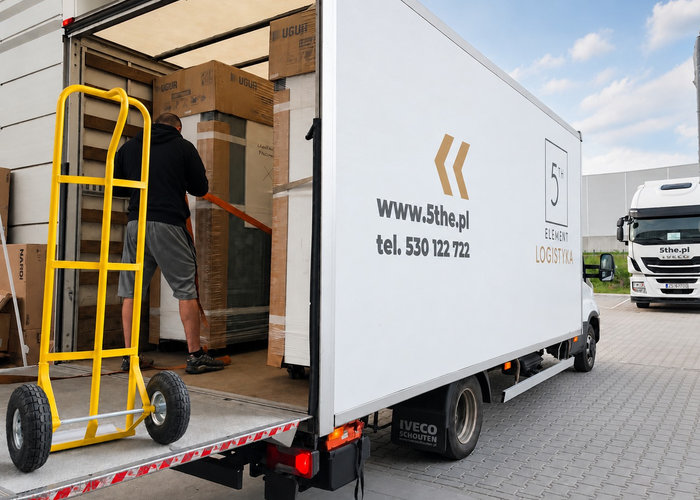
Hence the importance of White Glove deliveries, where responsibility does not end at unloading. A suitable vehicle, auxiliary equipment, and, depending on the task, a two-person team that will safely perform the work at the location are needed.
At 5th Element Logistyka, for such implementations, we use a fleet of over 50 specialized vehicles with tail lifts and 2-person installation teams working to the White Glove standard. From the client’s point of view, however, it is not the infrastructure itself that is important, but the fact that transport, carrying in, and activities at the location can be part of one order and one schedule.
Synchronization instead of multiplying contractors
If warehousing, transport, and installation are carried out by different suppliers, someone must connect their schedules and information flow. In practice, this is very often done by the client’s team.
For a small project, this does not have to be a problem. For dozens or hundreds of locations, however, the number of phone calls, confirmations, schedule changes, and situations that need to be handled individually grows quickly. Each subsequent contractor is also another moment of transferring information and responsibility.
An integrated model does not make the project suddenly simple. However, it allows for moving the management of its complexity to one place. Instead of coordinating several independent services, the client can settle the result of a larger part of the process with one partner.
This is particularly important where one stage depends on the previous one. The cheapest transport or the fastest installation will not help if both elements are not synchronized with each other.
Information must move along with the asset
For projects carried out in many locations, alongside the physical flow of assets, the flow of information is equally important.
The client wants to know which locations have already been served, where a problem has arisen, what the status of the implementation is, and whether further actions are needed. For a few points, ongoing contact is enough. For hundreds, reporting becomes part of the service, because without it, it is difficult to assess the actual progress of the project.
This is especially important when assets belonging to the brand are moving in the process. A refrigerator, display furniture, Retail Tech device, or POSM structure do not lose value the moment they leave the warehouse. After delivery, you still need to know where they are and what their status is.
Well-organized service should therefore give the client not only the execution of the operation but also a clear answer to two simple questions: what has been done and what is the current status of the project?
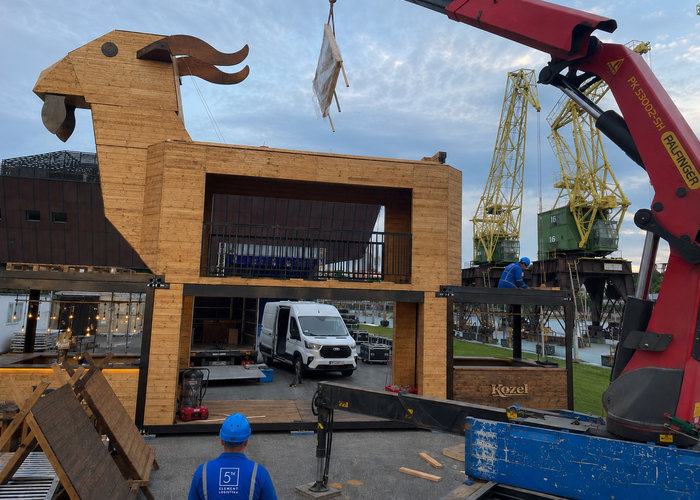
A deviation at one point can affect the entire scale
Large rollouts have one more feature: scale very quickly reveals minor imperfections in the process.
What looks like a single exception in a few implementations can become a recurring cost in several hundred locations. That is why it is worth looking not only at the incident itself but also at why it appeared and whether it can repeat in subsequent points.
The most benefit comes from catching a problem as early as possible. A shortage noticed before shipment can be supplemented. The same shortage during installation already means additional logistics. A date change included before route planning costs less than a correction after the vehicle has left. Information about location limitations provided earlier allows for choosing the right method of implementation.
At this point, logistics ceases to be solely about moving goods. It becomes managing the entire course of the operation.
After installation, the process can start again
In many projects, an asset works in one location only for a certain time. The campaign ends, the store undergoes remodeling, the brand identity changes, or the device is to be moved to another point.
Then the direction of the flow reverses. You need to organize collection, return transport, relocation, and sometimes also service or rebranding. Some assets can return to circulation and be used again.
Reverse logistics is therefore not an addition at the end of the project, but another stage of the same cycle. If it is included earlier, it is easier to avoid a situation where functional equipment loses value just because it was not planned what should happen to it after the campaign ended.
In practice, this means moving from thinking about a single delivery to managing the entire lifecycle of the asset.
Cost must be calculated for the process, not for a single activity
Separating the process between several contractors may look beneficial at first glance, especially when comparing the price of warehousing, transport, or installation separately.
The full bill, however, is broader. It also includes additional trips, repeat visits, downtime, errors at the interface of services, and the time of the client’s team needed to coordinate all project participants.
Therefore, for multi-stage implementations, it is worth evaluating the cost and quality of the entire process, not just the price of each activity separately.
Not in every project will the integration of all stages be necessary. At a large scale, however, it is worth checking efficiency where the business result is actually created, and not just where the responsibility of one supplier ends.
Delivery ceases to be a natural boundary of responsibility
The change in B2B logistics does not boil down to adding more services to transport. What is changing above all is the place where the operator’s responsibility ends.
For the client, the value is not always the information that the device has arrived at the indicated address. Often, what counts is that it is standing in the right place, the installation has been completed, the display is ready, or the rollout has been carried out according to plan across the entire network.
Therefore, warehouse, transport, White Glove, installation, documentation, and reverse logistics must increasingly be planned as elements of one process, even if each of them requires different resources and competencies.
In such a setup, the most important question is no longer just: who will perform a given service? It becomes more important: who is responsible for the result and for the moments when one stage must smoothly transition into the next?
It is precisely at these touchpoints that the quality of the entire implementation is largely decided.