









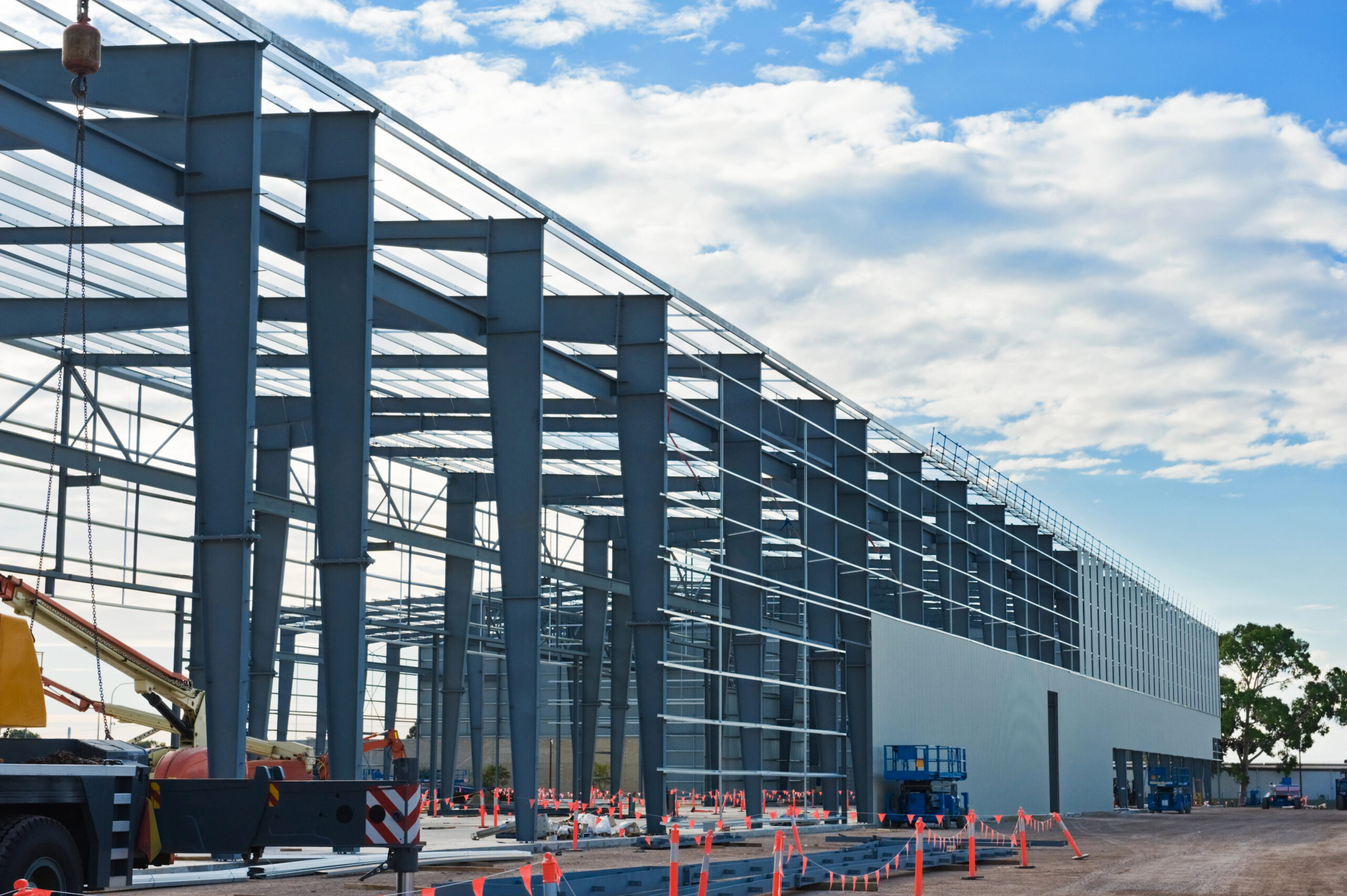
Tenant activity is clearly increasing, while developers remain cautious about launching new investments. The volume of space under construction is at its lowest in nearly seven years. We are not talking about a supply gap, but it is becoming increasingly clear that the availability of specific products may become a problem: large, modern spaces in the right location, with parameters allowing for automation and further operational development – says Jakub Kurek, Head of Industrial and Warehouse Department at Newmark Polska.
In the first half of this year, demand exceeded 3.5 million sqm, growing by over 21 percent year-on-year. At the same time, the space under construction shrank by over 11 percent, and the vacancy rate fell below 7 percent for the first time since 2023. – The warehouse market is clearly slowing down in terms of new investments. At the end of the second quarter of this year, only 1.3 million sqm of space was under construction. This is the lowest result since the third quarter of 2019 and a clear signal that in the coming quarters, a smaller pool of new warehouses entering the market will be available – claims Jakub Kurek.
New projects only with a tenant
An increasing share of development activity is concentrated in the six largest regional markets. Warsaw, Upper and Lower Silesia, Central Poland, Poznań, and the Tri-City already account for almost 85 percent of the space under construction. – Developers have not stopped building, but they have practically withdrawn from speculative projects. The market is now large and mature enough that investors calculate risks much more carefully, especially with high construction and investment financing costs. Therefore, new projects only start after signing a pre-lease agreement with a key tenant – says the director at Newmark Polska. He does not rule out that in 2027, speculative projects will reappear in one of the main markets, but he does not expect a return to a situation where they would be the standard nationwide.
Space meeting requirements is starting to run out
At the end of the first half of the year, there were over 2.5 million sqm of vacant warehouses in existing facilities across the country, and the vacancy rate was 6.6 percent. This is the lowest level since the second quarter of 2023. However, the number of vacant square meters alone does not fully describe the situation that tenants are facing.
Poland is not currently at risk of a nationwide warehouse shortage. If a tenant is looking for a standard facility, the market still offers suitable space. A greater challenge is finding specific square footage, in a specific location, and with the right technical parameters. This applies particularly to large modules, in the range of 15–20 thousand sqm and more, in the best locations – emphasizes the Newmark Polska expert.
He points out that the availability of space also varies between regions. Poznań and the Tri-City offer the least vacant space among the six largest warehouse markets in Poland, while in Łódź, Upper Silesia, or Wrocław, the supply of vacant space is significantly larger.
However, tenants in regions with high vacancy rates are not always in a better position. A comparison of the Masovian and Pomeranian voivodeships clearly shows that vacancy rates alone do not reflect the choice available in individual markets. In the first half of the year, the vacancy rate in Masovia was 7.6 percent, and tenants had a choice of 19 large modules with an area exceeding 10 thousand sqm, including six above 20 thousand sqm. In Pomerania, vacancies occupied 6.5 percent (only slightly more than 1 percent less) of the stock, and the offer of large modules was much more modest – three facilities with an area above 10 thousand sqm, none of which exceeded 20 thousand sqm.
Halls must be ready for the future
Quality of product is becoming an increasingly important element of competitiveness. A location by a main route is still crucial, but it is no longer enough on its own. For some entrepreneurs, available power capacity, the possibility of implementing automation, or adapting the space to specific processes will be equally important.
In practice, this means further polarization of the market. Some tenants will look for modern facilities that allow for the efficient conduct of increasingly advanced operations. In this segment, well-prepared warehouses in good locations will enjoy growing interest, and cooperation between the tenant and the developer at the design stage of the facility will become increasingly important. At the same time, many tenants will still primarily need functional space at an attractive price. For them, older warehouses that meet basic operational requirements will remain a competitive option.
– claims Jakub Kurek.
Chinese e-commerce has skewed the statistics
Given the caution of developers, the demand data looks very optimistic at first glance. Tenants are returning to the market, available space is being absorbed, and warehouse owners have more reasons to be satisfied. However, the growth in demand is driven by both real business needs and several large, one-off transactions that have significantly boosted the statistics.
Two things must be separated. Demand is indeed growing, and this is not just a statistical effect. Companies still need space, are developing logistics, reorganizing distribution networks, and in some cases, moving to larger and more efficient facilities. At the same time, this year’s results have been strongly boosted by several very large transactions. Therefore, growth of over 20 percent should not be treated as a simple reflection of the situation of all tenants.
– explains Kurek.
The ten largest contracts concluded by Chinese e-commerce platforms in the first half of the year accounted for approximately 410 thousand sqm of space. Among them were, among others, the extension by Shein of a contract for 67 thousand sqm in Mountpark Wrocław and the lease of 65 thousand sqm in CTPark Iłowa. Temu, on the other hand, leased 52 thousand sqm in EQT Park Wrocław South III. Chinese e-commerce platforms remained active in the leasing market also in the third quarter.
The scale of these leases is significant, but here again – interpretation of the numbers requires caution. Companies from this segment had to quickly secure space in connection with changes in trade conditions and customs regulations in the European Union. Therefore, in many cases, they used existing facilities that allowed them to quickly increase operational capabilities. At the same time, such tenants are conducting talks regarding long-term development and larger distribution centers, which means that part of this demand may continue to persist.
– comments director Jakub Kurek.
The expert emphasizes that the scale of this year’s transactions should not be treated as a new norm. It is largely a reaction to a specific change in trade conditions, the effect of which will be strongly visible in the statistics for 2026, and when assessing the market in the coming years, this effect will need to be separated from more permanent demand.
The Newmark Polska expert also points to a change in the structure of demand partly caused precisely by large transactions carried out by Chinese e-commerce platforms – In the first half of this year, new leases accounted for over half of the total leasing volume, while the share of renegotiations fell to 34.4 percent, from 54 percent in the same period a year earlier. Meanwhile, our experience in working with clients shows that renegotiations are still and will continue to be an important element of the market in the coming quarters – assures Kurek.
38 million sqm and an appetite for more
The Polish warehouse sector currently has a stock exceeding 38 million sqm and remains the largest industrial and logistics market in Central and Eastern Europe. Poland accounts for over half of the warehouse stock in the six main countries of the region (Czech Republic, Slovakia, Romania, Hungary, Bulgaria), which confirms its strong position in this part of Europe. – The market will continue to develop, although the pace of growth will remain lower than a few years ago. Subsequent investments will increasingly result from the specific needs of tenants. If a demand for large, modern spaces appears in a given location, and the available offer proves limited, developers will receive a clear signal to start new projects. Such a development model is very natural for mature markets, such as Poland – concludes Jakub Kurek.
Source: Newmark Polska