









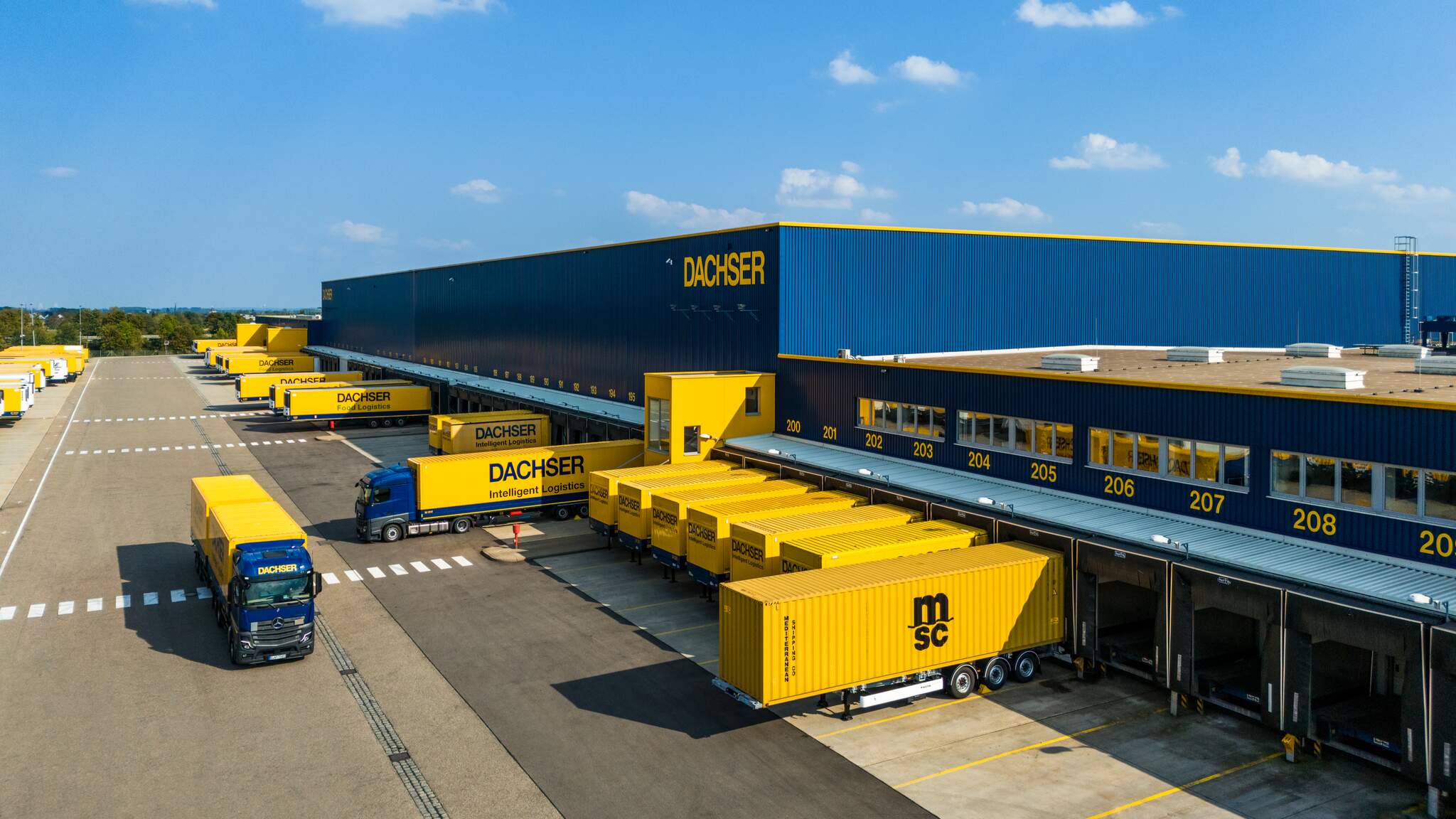
What makes a supply chain well-organized? Maximum efficiency alone is not enough. The key is for it to meet the strategic needs of the enterprise. Burkhard Eling, CEO of DACHSER, explains why supply chain optimization always requires setting priorities and making trade-off decisions.
Supply chain optimization, or finding ways to organize the flow of goods more efficiently, has always been one of the key areas of our business. However, in recent years, this issue has become much more complex. In conversations with clients and business leaders, I often hear questions about what to do and what to avoid when optimizing a supply chain. Where should companies start? What priorities should they adopt? And what does an ideal supply chain actually look like?
The best supply chain is one tailored to the company’s needs
My answer is both simple and complex: there is no single “best” supply chain. The optimal solution always depends on the tasks the supply chain is intended to perform for a specific enterprise.
A good example is our recent project for IGP, a Swiss manufacturer of powder coatings. The company offers over 17,500 products and serves customers across Europe. One requirement is of particular importance to its operations: orders must reach recipients within 24–48 hours.
When we analyzed various scenarios for organizing IGP’s European supply chain, greater centralization initially seemed like an attractive solution. It offered the possibility of achieving synergies and simplifying the operational structure. However, one problem arose: delivery times would have increased to three or even four days. A solution that seemed efficient at first glance would have undermined one of the client’s fundamental business requirements.
In my opinion, this is the essence of supply chain optimization. The goal is not to find the theoretically best solution, but to achieve the right balance, tailored to the needs of a specific enterprise.
Optimization means making trade-offs
Service quality, resilience to disruptions, costs, and speed – all these elements matter. At the same time, they may require making decisions that lead in different directions.
Higher inventory levels can increase supply chain resilience to disruptions, but they also mean tied-up working capital. Centralization can improve efficiency but extend delivery times. Reducing order lead times can improve service quality but involve higher costs. Conversely, a solution that is the cheapest today may expose a company to serious difficulties in the event of sudden supply chain disruptions.
The starting point should therefore not be the question: “How can we increase the efficiency of this supply chain?” Instead, one should ask: “What tasks must the supply chain perform to meet the needs of this specific enterprise?” Today, this distinction is more important than ever before.
Many supply chains have evolved over years, or even decades. A new warehouse was built in one place, another supplier appeared in another, and elsewhere the company entered a new market. Each of these decisions was likely fully justified at the time. However, a structure that emerges as a result of hundreds of sound, individual decisions is not necessarily the one a company would choose if it were designing its supply chain from scratch under current conditions.
At the same time, the environment in which these structures operate has changed dramatically. Supply chains have become more global, more complex, and at the same time more susceptible to disruptions. The pandemic or recent conflicts in the Middle East show that companies must maintain the ability to deliver and control costs while facing market volatility, geopolitical uncertainty, and changing customer expectations. At the same time, issues of sustainability are becoming increasingly important.
As a result, supply chain design is ceasing to be purely an operational issue and is increasingly becoming a strategic one.
Before we optimize the supply chain, we must understand it
So how do you determine what a properly designed supply chain should look like? At DACHSER, when we work on optimizing our clients’ supply chains, the starting point is transparency. Before we make any changes, we must understand the entire supply chain – from beginning to end – instead of analyzing air, sea, road transport, or warehousing separately.
How do we do it? We create a digital twin of the existing structure and use it to simulate various variants of logistics network and transport organization. This allows us to analyze various scenarios, such as changing warehouse locations and its impact on costs, or alternative cargo consolidation models and their consequences for service levels or emission volumes. Working with a digital twin allows us to see the effects of individual trade-offs before we make any changes to the actual supply chain.
Although data alone should not dictate decisions, it allows us to better assess the available options. The strategic priorities of a specific enterprise determine which variant is the right one.
An example could be another of our clients – an international company in the automotive industry. By redesigning global transport and consolidation structures, we managed to reduce transport costs by up to 15% and cut CO₂ emissions by approximately 21%. In this case, economic efficiency and sustainability supported each other instead of competing. However, this does not mean that the same model would work for another client.
Source: Dachser