









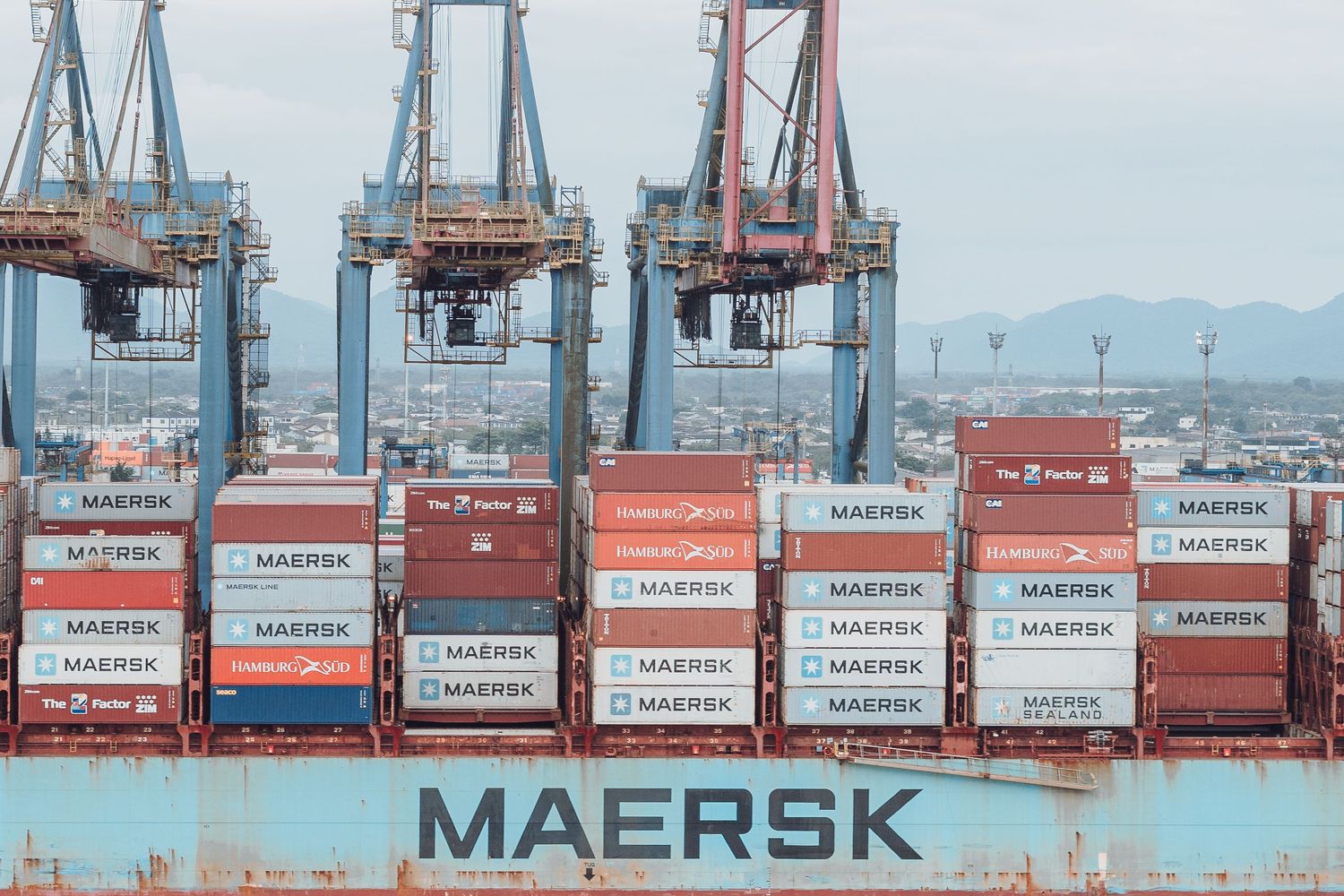
In the first half of 2026, over 150,000 TEU were transported by rail from China to Poland, an increase of 45.1% compared to the previous year (IntermodalNews based on ERAI data). This is a clear rebound, but not a record. The growth is calculated from a very weak 2025, with volumes returning roughly to 2024 levels, and momentum has been slowing since spring. This text explains how to interpret these data, where the growth came from, and how to plan rail deliveries for the turn of the year.
Poland handles almost all rail imports from China to the EU
The rail route from China through Kazakhstan, Russia, and Belarus currently ends almost exclusively in Poland. According to ERAI data analyzed by Upply, the China–Poland route accounted for 97.6% of Northern Corridor east-west traffic in the first half of 2026. A year earlier, it was 93.4%. In practice, the growth of rail imports from China to the EU is currently growth at the Polish border and in Polish terminals.
The most important figures are summarized in the table. TEU is a unit of measurement equal to a 20-foot container; each row has a different scope, so the values should not be added or compared directly.
| Indicator | Period | Value | Source |
| China → Poland transport | H1 2026 | over 150,000 TEU, +45.1% y/y | IntermodalNews (ERAI data) |
| Share of China–Poland route in Northern Corridor east-west traffic | H1 2026 | 97.6% (93.4% the previous year) | Upply (ERAI data) |
| Transit China → Europe via Kazakhstan, Russia, and Belarus | H1 2026 | 165,000 TEU, +39% y/y | ERAI |
| China–Europe–China, central corridor | January–August 2026 | +22% y/y (after May: +27%) | ERAI |
| China–Europe rail transport, record | 2021 | over 618,000 TEU | IntermodalNews (ERAI data) |
A rebound after a weak 2025, not a record
The year 2025 was exceptionally weak for rail from China. In the first half of 2025, traffic on the Northern Corridor in both directions fell by 27% y/y to 138,009 TEU (Upply, ERAI data). In all of 2025, the China–Poland route lost 12.7% and closed with a result of 255,869 TEU (Upply, ERAI data).
This year’s growth is calculated from this low base. ERAI notes that the result for the China → Europe direction in the first half of 2026 only slightly exceeds the level of the first half of 2024. It is far from the peak: in the record-breaking year of 2021, over 618,000 TEU were transported this way, and in 2025 – half that amount (IntermodalNews based on ERAI).
The pace is also slowing. According to ERAI, after five months of 2026, the central corridor, i.e., the route through Russia and Belarus, grew by 27% y/y, and after eight months by 22%. Since the average has fallen since January, the growth in the summer months must have been significantly lower than at the beginning of the year.
Chinese statistics measure something else
Data from the China State Railway Group regarding the China–Europe Railway Express often appear in the media. They show a similar trend but cover much broader traffic – including to Russia and other countries along the route, not just to the EU. In 2025, total rail container exports from China to the west amounted to 3.17 million TEU, mostly to Russia, while about 310,500 TEU reached Europe (IntermodalNews).
Chinese statistics also use a different measure: the number of China–Europe Railway Express trains. In the first half of 2026, there were about 11,200 (+20% y/y), and 1.122 million TEU were transported (+16% y/y). In January–August, the number of trips increased by 15.9% y/y, compared to +29% in the first quarter (all: China State Railway Group). There are two conclusions: the number of trips is increasing faster than the cargo, and the pace is slowing down similarly to the ERAI data. However, none of these figures should be applied directly to the China–Poland route.
Where the growth came from: the maritime crisis and its fading
The rebound began before the maritime crisis emerged. In January–February 2026, Chinese data showed +25.2% TEU y/y, and RailFreight described this result as a partial recovery of losses from the beginning of 2025, when volume fell by 11%.
A stronger impulse came later. After the outbreak of the war with Iran at the end of February 2026 and disruptions in the Strait of Hormuz, the SCFI Shanghai–Northern Europe index rose by 74% by the end of May, and shipping fuel prices by almost 70% (Lloyd’s List). Added to this was poor shipping punctuality: in July 2026, only 56.4% of global sailings arrived on schedule (Sea-Intelligence).
This argument is weakening. According to the Drewry World Container Index, Asia–Europe rates have been falling for 12 consecutive weeks; on October 1, 2026, transporting a 40-foot container from Shanghai to Rotterdam cost 3,399 USD. Shipowners are also returning to the Suez Canal route: in the 39th week of 2026, there were 68% more crossings than a year earlier (Drewry).
One must also remember the scale. In the first half of 2026, about 8.5 million TEU were shipped from China to Europe by sea (Japan Maritime Center, data cited by ERAI). Rail, with 165,000 TEU, is therefore on the order of 2% of this volume – an important supplement to sea freight, not a replacement.
What this means for the importer
More traffic means higher demand for space on trains. On rail transport connections from China organized by Union Cargo, trains from terminals in Xi’an, Chengdu, Chongqing, and Zhengzhou depart 2–3 times a week, with each carrying about 40 containers. The cargo must reach the terminal before the cut-off, i.e., the final deadline for acceptance for a given departure – about 7 days before departure. A delay means waiting for the next departure.
Terminal-to-terminal transit takes about 14–22 days, averaging about 16. The delivery time includes transport to the terminal in China, waiting from the cut-off, customs clearance, and delivery to the final address.
The route leads through Kazakhstan, Russia, and Belarus to Małaszewicze. Russia maintains a list of goods that cannot be transported in transit through its territory, so the admissibility of the cargo must be checked during the quote process, before booking space. The border also affects the timeline: from September 12 to 25, 2025, crossings with Belarus, including rail, were closed (Ministry of Infrastructure). For goods with a fixed deadline, it is safer to plan a buffer than to count on the average transit time.
A separate point in the plan is the Chinese New Year, which falls on February 6 in 2027. Rail transport continues during the holiday, but there are fewer departures.
What to do when planning rail deliveries for Q4 2026 and Q1 2027
- Check the goods before booking. Ensure during the quote process that the cargo can transit through Russia.
- Count from the cut-off, not the departure date. The goods must be at the terminal about 7 days before departure, and departures are 2–3 times a week.
- Plan a buffer for the upper end of the range. Assume 22 days of transit instead of the average 16 and add factory pickup, customs clearance, and delivery.
- Establish a readiness date with the supplier before the Chinese New Year. Before the break, it is most difficult to arrange factory pickup and delivery to the terminal, and there are fewer departures then.
- Compare FCL and LCL. A full container (FCL) on these connections is exclusively 40′ HC, and less-than-container load (LCL) also travels below 1 m³. For shipments close to a full container, ask for a quote for both variants.
- Compare rail with sea freight. Sea rates are falling, so for goods that can wait, also calculate the sea route. Leave rail for deliveries where time and predictability matter.
- Track Q3 data. They will show whether growth continues with cheaper sea freight.
Market data: ERAI, Upply, IntermodalNews, China State Railway Group, RailFreight, Lloyd’s List, Sea-Intelligence, Drewry, Japan Maritime Center (via ERAI), Ministry of Infrastructure – as of October 8, 2026. Connection data: Union Cargo, October 2026.
Robert Fischer – a freight forwarder at Union Cargo, a freight forwarding company from Warsaw that organizes international transport. He prepares transport quotes, manages the India route, and provides substantive verification for company guides on importing from China.