









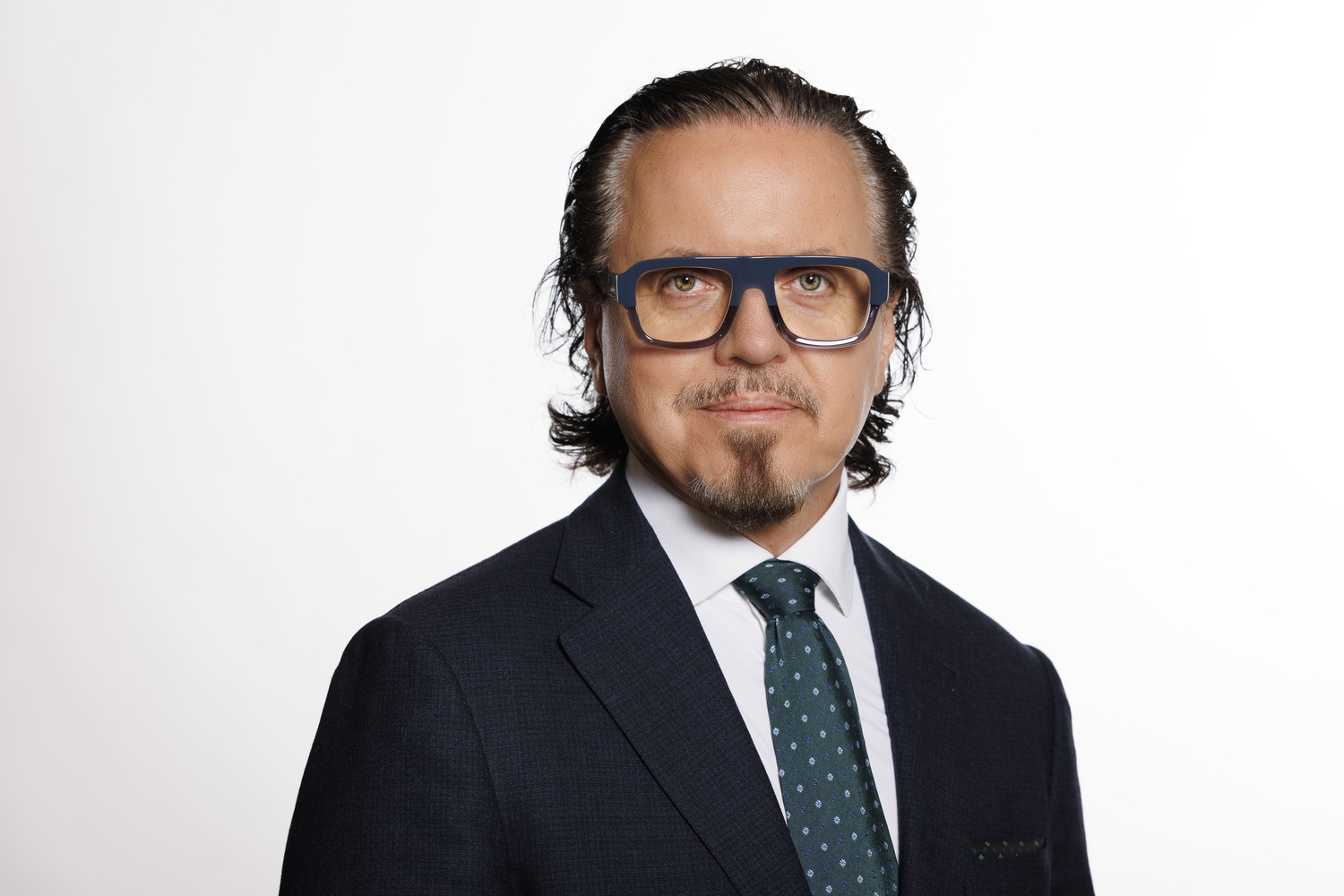
Radical shocks in supply chains related to the situation in the Strait of Hormuz do not serve the economy or consumers. The goal of the Ministry of State Assets (MAP) and the entire government is to mitigate the effects of the war in the Persian Gulf for companies and individual customers – hence the CPN (Lower Fuel Prices) program and other stabilizing actions by Orlen. We are certainly safe in this regard, because our oil and gas supplies are diversified, and storage facilities are full – we speak with Wojciech Balczun, Minister of State Assets.
Janusz Mincewicz: On April 9th, near Toruń, the Ministry of State Assets presented the “Local content. For the benefit of Poland” project, which aims to polonize supply chains. What does this mean for the Polish economy?
Wojciech Balczun: In my opinion, the official initiation of our “Local content. For the benefit of Poland” project at the Polish company Apator near Toruń marks the symbolic end of a certain stage in the development of our economy. It is worth constantly reminding ourselves of the technological and competence deficit with which we emerged from the Polish People’s Republic (PRL), and how small and inefficient our economy was. Even relatively simple products from the West were tempting due to better workmanship, durability, functionality, or even better design. This phase has already ended, and in many areas of the economy, we do not need to rely on foreign know-how. Certain exceptions are nuclear technologies and electromobility, but even here we are doing everything, including at the MAP, to make a competence leap. We have trained employees, we have experienced companies – we must use this to the greatest extent possible, especially in strategic investments carried out by companies controlled by the State Treasury. It is worth emphasizing that local content is not only a manifestation of ambitions that naturally appear in the 20th largest economy in the world, but also a manifestation of thinking in terms of national security. The COVID pandemic and armed conflicts in various parts of the world show how fragile the supply chains of finished products and raw materials are. We must ensure our strategic autonomy in all possible critical areas, which is why the local content program is a government priority and the most important task facing the MAP.
J.M.: The role of the state is to create strong economic entities. Do we already have Polish companies that are able to compete in the European and global economic market?
W.B.: Let’s clarify: the role of the state is not so much to create such entities as it is to support the development of domestic companies – both those with State Treasury participation and those that are completely private. This can be achieved in various ways. Over the next decade, we will spend over a trillion zlotys on energy. This is a huge commitment, but also an incredible opportunity, because if we do it in accordance with the assumptions of the local content program, domestic companies will be able to develop significantly: not only in terms of capital, but also in terms of competence. We already have many companies that are gaining space abroad, and one of my tasks is to encourage companies under the supervision of the MAP to expand internationally. In May, PZU concluded a conditional agreement to acquire 100% of the shares of MetLife Ukraine – a leader in the Ukrainian life insurance market. This transaction will significantly strengthen the position of the PZU Group in Central and Eastern Europe. KGHM is present in many markets: in Canada, the United States, but also in Chile. Orlen also has a strong position in several Central European markets. In almost every industry, we have important international players, although sometimes these are names that are not commonly associated with us. We have worked hard for this for 35 years. It is time to enter the world’s top tier, even in those industries that are currently only in their infancy.
J.M.: Polish road freight transport is a European powerhouse, and the Polish TSL (Transport, Shipping, Logistics) industry has an increasing share in GDP. What impact does it have on Polish logistics and the economy?
W.B.: It is difficult to imagine the success of the Polish economic transformation without thousands of companies from the TSL sector. This very industry is probably one of the greatest beneficiaries of accession to the European Union: it is to the EU that we provide an infrastructural leap, a huge increase in exports, but also the organizational development of the logistics industry. The domestic industry is dynamic, modern, and adapts extremely quickly to the needs of customers and the changing world. A great example is courier services, which are at a high level in Poland. It is a peculiar paradox that our geographical location, which was so often a curse for us, has now become an incredible asset. We are at the intersection of the most important European transport routes. 15–20 years ago, I would have said that the TSL industry also benefits from the fact that we are close to the core of European industry, but in the meantime, Poland has gained the status of one of the most important industrial engines of the EU.
J.M.: The leader in the Polish economic market is PKN Orlen. How has the situation in the Strait of Hormuz affected its condition, the Polish economy, and companies supervised by the MAP?
W.B.: Of course, such radical shocks in supply chains do not serve the economy or consumers. The goal of the MAP and the entire government is to mitigate the effects of the war in the Persian Gulf for companies and individual customers – hence the CPN (Lower Fuel Prices) program and other stabilizing actions by Orlen. We are certainly safe in this regard – our oil and gas supplies are diversified, and storage facilities are full. This is the most important thing.
The overall impact of the war in the Gulf on the Polish economy is still difficult to estimate. This situation perfectly shows how important a certain degree of state control over key sectors of the economy, such as energy, is, and highlights what a big mistake the decisions were that resulted in a large part of the fuel market passing into foreign hands. As a result of the only privatization in the last decade, i.e., the sale of Lotos, over 400 gas stations went to the MOL concern linked to Russia, and 50% of the production capacity of the Gdańsk refinery also passed into foreign hands. As a result, Orlen, i.e., the state, is responsible for 65% of fuel supply.
J.M.: In the years 2008–2013, you were the CEO of PKP Cargo, which is currently experiencing a deep crisis. When will it have a chance to get out of it?
W.B.: The Polish economy is still growing very fast, but it is also changing structurally. The transport of raw materials, especially coal, is decreasing. One can make money on rail transport, which I know perfectly well, because a dozen or so years ago I left PKP Cargo in excellent condition. Railway infrastructure, underfunded for years and heavily in the shadow of road infrastructure, has improved significantly, largely thanks to EU funds. So there is no objective reason not to take advantage of such good circumstances; I hope that Poland will have its own strong company in this market.
J.M.: You took part in the World Economic Forum (WEF) in Davos. How has Poland’s economic position grown in recent years?
W.B.: I think that my feelings from such international meetings of experts are similar to what most Poles feel when they go abroad. We see the path we have traveled over 35 years of a market economy, and especially since joining the EU community in 2004. Our position is definitely the strongest it has been in several hundred years, which is vividly proven by taking the 20th position in the ranking of the world’s largest economies and the invitation to join the group of countries associated in the G20. We are in an elite club of highly developed countries, which is confirmed, among other things, by observations of tourists and business people arriving in Poland. We should make the most of this unique historical moment, and the way to do this is, among other things, by placing as much emphasis as possible on local content, i.e., strengthening domestic competencies, building domestic supply chains, and promoting appropriate attitudes in State Treasury companies, state institutions, local government, and the entire society.