









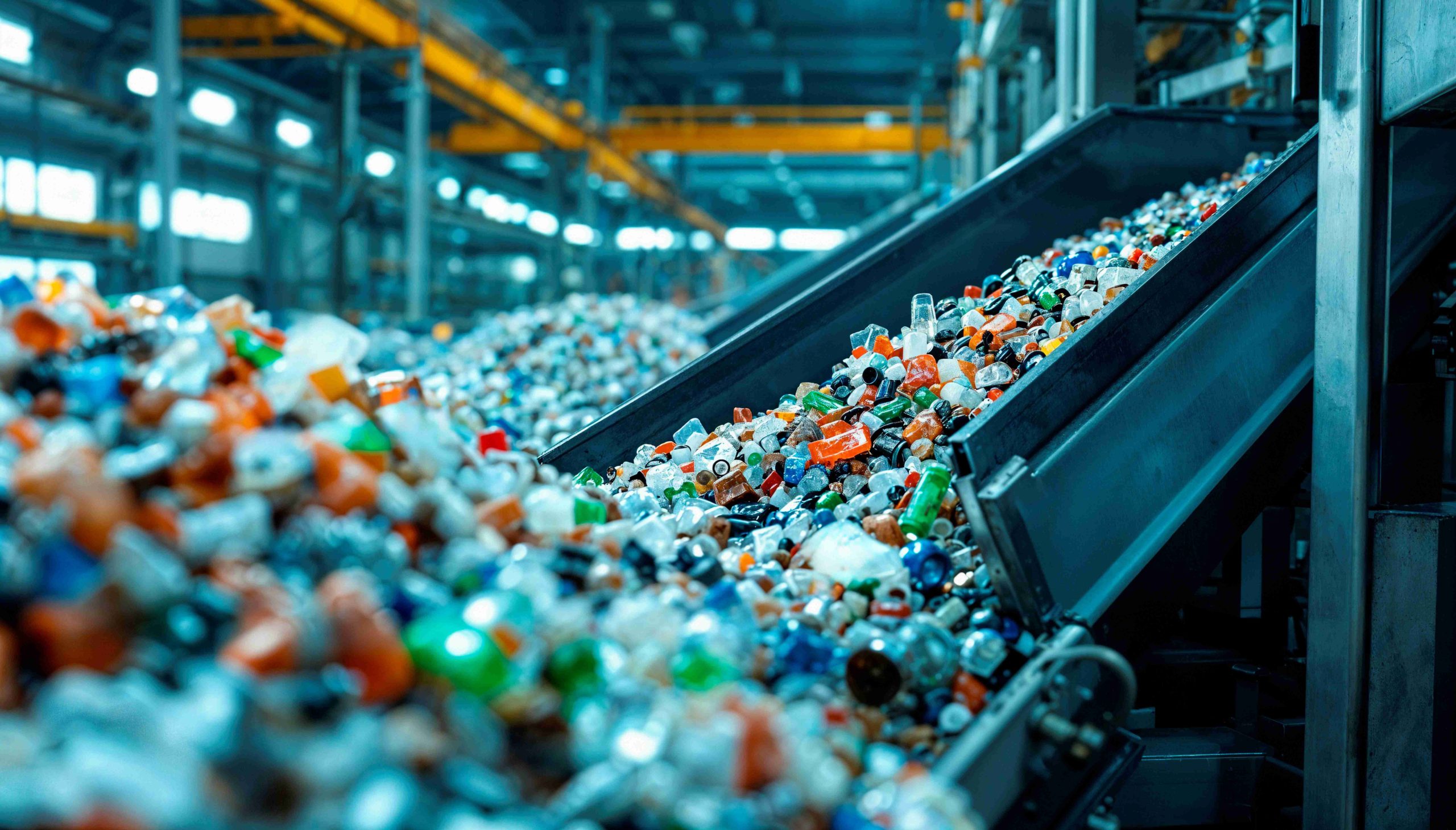
As of May 21, 2026, the transboundary movement of waste must be carried out in accordance with the new Regulation (EU) 2024/1157 of the European Parliament and of the Council of April 11, 2024. The regulation replaces the previous rules that have been in place for nearly 20 years and introduces a number of new obligations for businesses involved in waste generation and management in Europe. Experts emphasize that the changes will affect many companies in Poland and mean not only the need to adjust documentation and contracts, but also the transition to the DIWASS digital waste transport management system.
The new regulations also apply to entities involved in the international movement of waste for recovery from the so-called green list. These are primarily producers of such waste who send it abroad, entities involved in the collection or processing of such waste, as well as dealers, brokers, or carriers.
This is the biggest change in the area of transboundary waste movement in many years. Until now, the transport of green-list waste took place on the basis of a paper document – Annex VII, which had to be attached to every shipment. The new regulation introduces the obligation to complete information electronically via the DIWASS system, which will significantly tighten the system and allow for greater control of businesses. For many companies, however, this will mean the need to restructure existing operational and compliance procedures.
– comments Paulina Buczek, legal counsel at Wolf Theiss Poland.
Regulation 2024/1157 explicitly points to the requirement for the person organizing the waste shipment, who is not the producer, to hold an appropriate permit or registration. The same obligation is imposed on recovery facilities, which should present the person organizing the shipment with a permit to conduct business in this area or proof of registration. In practice, companies will have to verify their foreign business partners more thoroughly.
It will be particularly important to check whether the person organizing the waste shipment, who is not the producer, holds the required administrative decisions or entries in the appropriate registers. For Polish companies sending waste abroad, this means they will have to confirm they hold a valid permit or authorization covering waste collection or processing, or an entry in the Database on Products and Packaging and Waste Management (BDO). However, the problem is much broader, as every EU country applies its own legal instruments for regulating waste management. Therefore, it will be necessary to verify the requirements adopted in a given Member State each time. Organizing a waste shipment by a person who does not hold the required permit or registration will constitute illegal waste shipment.
– emphasizes Paulina Buczek from Wolf Theiss.
The new regulations also clarify issues that have previously caused interpretative disputes, including the distinction between the waste recipient and the operator of the recovery facility. In situations where these are different entities, it will be necessary to conclude a tripartite agreement regulating the liability of all participants in the process. Experts also point out that properly drafted contracts regarding waste recovery are now of particular importance. The regulation introduces new mandatory elements for such documents, including the need to specify the quantity of waste covered by the contract.
In practice, many companies will have to update their contracts and procedures related to the transboundary movement of waste. The documentation used so far often does not meet all the new requirements indicated directly in Article 18(10) of Regulation 2024/1157, in particular, it does not include information on the quantity of waste that will be transported under the contract. It will therefore be necessary to correctly estimate the quantity of waste sent – so that there is no need to conclude a new contract before each waste transport.
– adds Paulina Buczek.
A major challenge for the industry will also be the digitalization of the entire process. The European Commission has launched the DIWASS (Digital Waste Shipment System), through which documents and information related to waste movement are to be transmitted. Although a transition period is provided until the end of 2026 and it is still possible to use paper documentation, from January 1, 2027, waste transport management must be carried out electronically.
Companies should not treat the transition period as a time to delay preparations. Registration in DIWASS, organizing document flow, assigning responsibilities to carriers, recipients, or recovery facilities – these are processes that require time. Entities that start preparations only at the end of the year may have trouble smoothly adapting their operations to the new requirements.
– concludes Paulina Buczek.
The new regulations may affect as many as several thousand companies operating in Poland in the recycling, transport, and waste trading sectors. The scale of the market is huge – according to data from Statistics Poland (GUS) and the Chief Inspectorate of Environmental Protection (GIOŚ), in 2024 alone, over 199,000 tons of waste were legally imported into Poland, and nearly 574,000 tons were exported. Experts emphasize that the new regulations are intended not only to organize the market and increase the transparency of waste trading in the EU but also to hinder the operation of entities that exploit insufficient supervision over transport documentation. The digitalization of the process in the DIWASS system and the detailing of regulations regarding illegal waste shipments are ultimately intended to enable more effective control of waste flows in Europe.
Source: Wolf Theiss