









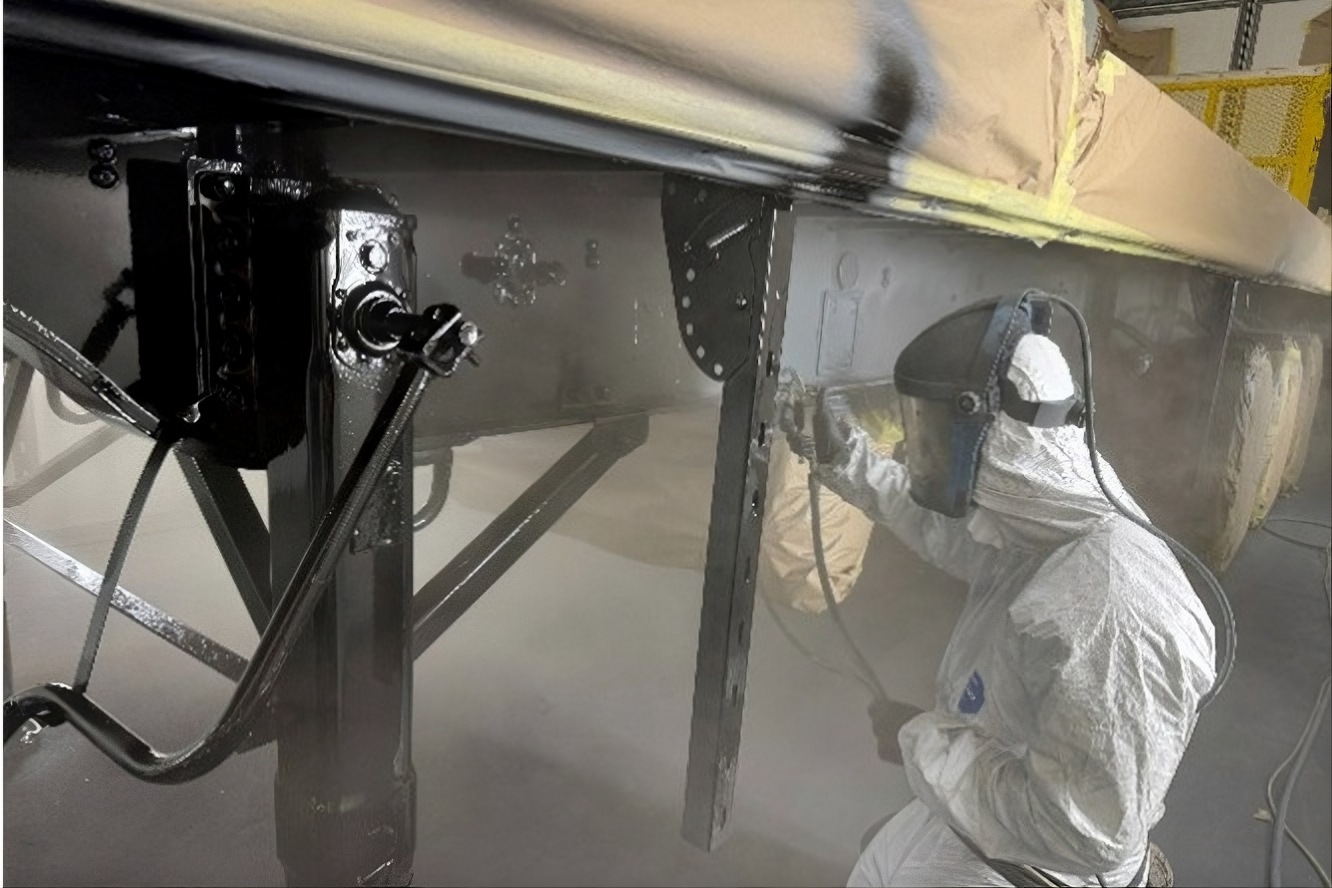
European logistics is moving away from the “buy–use–replace” model towards an approach based on comprehensive fleet lifecycle management. Faced with rising operating costs and increasingly stringent sustainability regulations, Boards are beginning to view trailers not as disposable assets, but as flexible capital that can be actively managed.
An interview with Arjen Kraaij, CEO of TIP Group, addressing key questions about these changes and why trailer refurbishment is becoming one of the strategic priorities for Boards of transport and logistics companies today.
Faced with rising costs of new equipment and increasing ESG requirements – why has refurbishment ceased to be merely an operational task and become a strategic priority for Boards?
For a long time, the industry operated according to a simple scheme: ‘buy new, then replace’. This was the easiest approach from a balance sheet management perspective. However, the realities of recent years — the sharp rise in asset prices, unpredictable delivery times, and growing regulatory requirements — have exposed the limitations of this model.
Today, when I talk to Board Members, the discussion focuses on linking asset management strategy, capital allocation, and sustainability goals. Refurbishment allows for extending the asset lifecycle by four to eight years — at a fraction of the cost of purchasing new equipment.
For CEOs and CFOs, this means a change in perspective: instead of just reacting to market conditions, they can actively optimize capital allocation, maintain operational capabilities at significantly lower costs, and simultaneously free up financial resources for other purposes. The fleet ceases to be a rigid cost center and becomes a flexible, strategic tool that can be consciously managed.
Ultimately, it is all about one thing — building business resilience.
How does data-driven refurbishment help leaders reconcile environmental goals with maintaining healthy revenues?
Sustainability is no longer just an element of CSR reports; it is moving into annual reports, directly influencing company valuation and credibility — and that changes the rules of the game. With CSRD regulations, transparency is no longer a choice, but a standard. We now have data that clearly shows that trailer refurbishment significantly reduces their carbon footprint compared to the production of new units — primarily by avoiding energy-intensive processes associated with steel and aluminum manufacturing.
Our recent projects, including refurbishment programs carried out together with DSV and P&O Ferrymasters, clearly show that data-driven decisions are key to effectively combining environmental goals with maintaining profitability. When procurement teams receive concrete metrics — such as the number of tons of CO₂ saved or the impact on the Total Cost of Ownership (TCO) — refurbishment ceases to be perceived as a “green experiment” and becomes a rational and obvious choice.
Both from a financial perspective and that of environmental responsibility. Data acts as a bridge here, allowing companies to meet growing market expectations without losing their competitive edge.
Fleet management in a circular economy model requires the cooperation of many entities. As TIP develops its “Excellence Centers”, how is the approach to employees and partnerships changing to make refurbishment an industry standard?
A circular economy cannot be built alone. For it to become a standard across Europe, a coherent ecosystem is needed — one in which suppliers and service providers act based on a common goal of extending asset lifecycles.
That is why we are investing in our own Excellence Centers, while simultaneously expanding this network through strategic initiatives, such as the acquisition of Trailer Auto Group in the UK in 2024. Controlled operational environments are key here, where the refurbishment process at the highest quality level is the foundation of operations, not just a supplement to the offer.
Looking towards 2030 – how can fleet leaders move away from the transactional “buy and dispose” approach towards a model based on partnership and full lifecycle management?
By 2030, the ‘buy and dispose’ approach will become an exception rather than the norm. Growing pressure from regulators, the market, and environmental challenges will make the circular model the only viable path to scaling operations and maintaining competitiveness.
The biggest winners will be those leaders who change their mindset — instead of viewing the fleet as a cost burden, they will start treating it as a strategic asset supporting business growth. It is this approach that opens the way to building long-term advantage and greater organizational resilience.
My advice to fleet leaders is simple: treat the ‘second life’ of trailers as a consciously planned stage, not an emergency solution. It is crucial to start by standardizing the approach — ensure that your assets are maintained in a condition that allows for their effective preparation for refurbishment.
At TIP, we are consistently working on eliminating barriers to scale this approach consistently across borders. Our goal is a situation where a client can manage their assets just as easily and effectively in Madrid as in Oslo.
An approach based on full lifecycle management is not just a way to reduce costs. It is, above all, the foundation for building a more resilient business — one that can flexibly adapt to the changing realities and challenges of our industry.
Source: TIP Group