









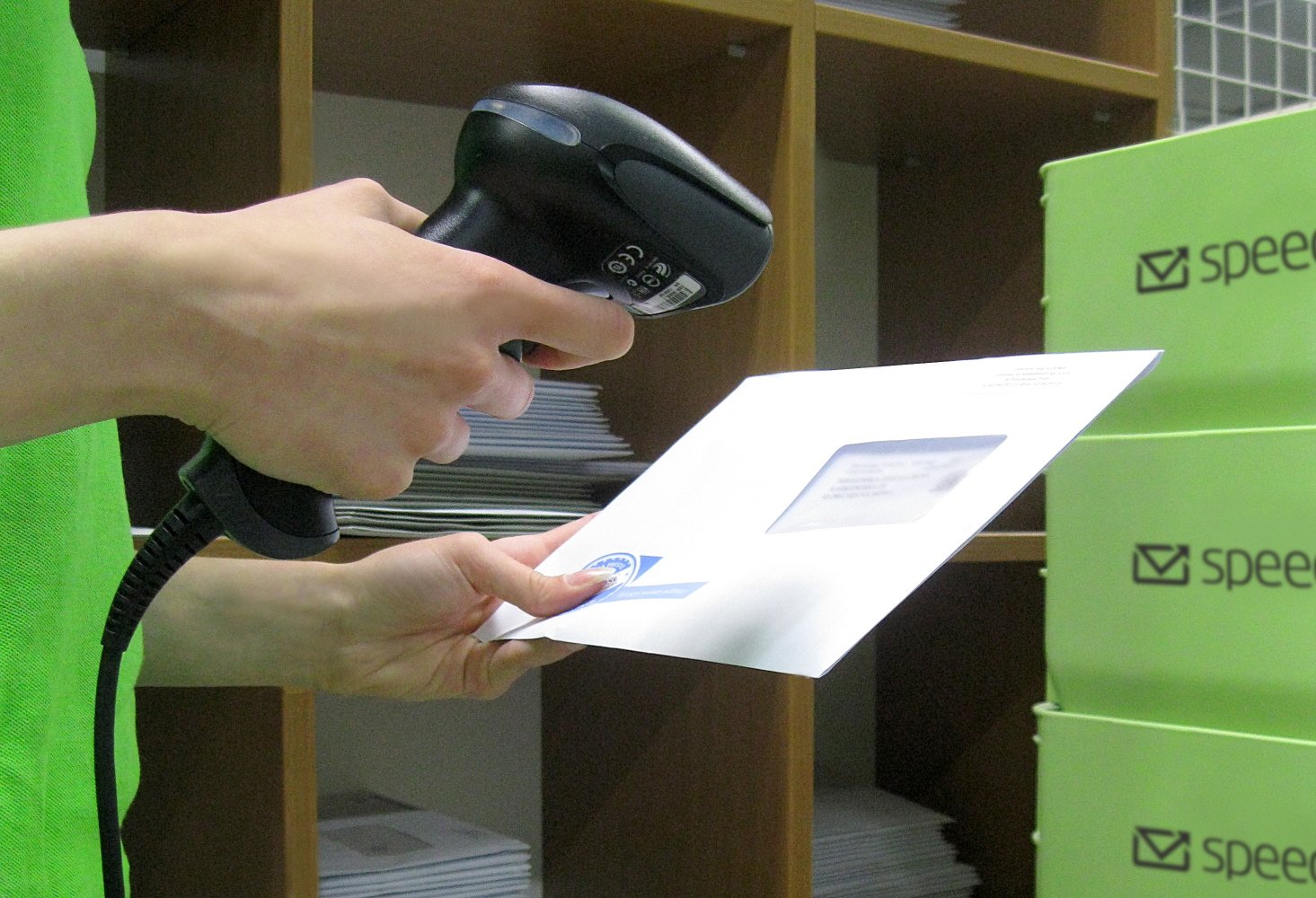
A race against time, traffic obstacles, fickle weather, and locked residential gates – this is the daily reality for Polish delivery workers. Despite the digitalization of communication, the paper letter still plays an important role – according to data from the Office of Electronic Communications (UKE), the Polish market handles over 731 million shipments annually, with a value of over PLN 3.8 billion3. The two industry holidays in October, World Post Day (Oct 9) and Polish Post Day (Oct 18), are a good time to ask whether there is still a place for traditional mail in a digitizing world?
The October celebrations combine international and local dimensions. The first holiday, established in 1968 by the UN, commemorates the global role of postal logistics. The second refers to Polish tradition, namely the anniversary of the establishment of the Royal Post by Sigismund II Augustus in 1558. These holidays serve as a starting point for analyzing logistical changes in the face of global trends. While some countries, such as Denmark, are officially abandoning traditional letter delivery in favor of full digitalization, in Poland, the role of the delivery worker and paper correspondence remains irreplaceable.
Kilometers on foot and the battle with intercoms
The duties of delivery workers involve overcoming numerous barriers. In their daily work, they encounter gated communities without public entry codes, broken doorbells, intercom failures, or illegible address data on envelopes. In winter, there are also icy sidewalks and snowdrifts. All of this requires precise route planning. The highest intensity of field work occurs between 10:00 AM and 1:00 PM – this is when over 50 percent of daily shipments reach recipients.
It seems that a postman knows the city perfectly, but field work quickly verifies these assumptions. Gated communities, the malice of the weather, or the lack of a gate code are daily challenges. On the other hand, delivering letters is working with people; especially elderly people really wait for us, and a simple conversation can be the most important moment of their day for them. A postman is also a guide for lost tourists and foreigners, whom they often help find the address they are looking for. It is not surprising, therefore, that the work of a delivery worker, according to recent SW Research studies, enjoys nearly 54 percent social recognition in Poland.
– says Michał Kalbarczyk, manager of one of the Speedmail branches.
A notice is a last resort. What really determines the delivery of a letter?
Despite daily challenges, delivery workers still face the unfair belief that they avoid attempts at personal delivery and automatically write out notices. In reality, the priority for postmen is to hand over correspondence directly, and before a notice ends up in the mailbox, the delivery worker is obliged to try to contact the addressee – which, in the case of documents from institutional clients, is a strict formal requirement.
The belief that postmen choose the easier path in advance and drop a ready-made notice into the mailbox is far from the truth.
In practice, it is the successful delivery and the addressee’s signature that are most profitable for the employee; writing out a notice takes up the delivery worker’s valuable time and simply lowers their earnings. Only when they face a locked door does a paper notice land in the mailbox, and the letter goes to the nearest collection point.
– points out Janusz Konopka, President of the Management Board of Speedmail.
Why do we still need a physical mailbox?
The question about the future of traditional mail arises when we hear about examples from abroad. In December 2025, Denmark ended a 400-year tradition of mail delivery by a state postman – it handed this service over to a private operator, DAO. In Poland, we are also sending fewer private letters, and for several years now, courier packages have been sent much more often than letters. According to the latest report from the Office of Electronic Communications (UKE), the number of delivered packages increased by 14.3 percent last year, reaching nearly 1.4 billion items annually.
Despite such dynamic development of CEP (Courier-Express-Parcel) services, paper correspondence still plays a huge role in our daily lives. In 2025 alone, over 731 million letter shipments worth up to PLN 3.8 billion were handled on the Polish market. These are not just bills and official letters.
– says Janusz Konopka.
We still find personalized catalogs, special offers, or invitations from brands in Polish mailboxes – in 2025, we received nearly 83 million such addressed advertising shipments, which generated over PLN 194.5 million in revenue for the market. In an era of widespread information noise, a physical letter allows companies to stand out from the flood of digital notifications and reach us in a much more personal, noticeable way.
We still have great trust in paper
As shown by a study by the Ariadna National Research Panel commissioned by Speedmail, as many as 79 percent of Poles consider traditional postal services to be still necessary. Moreover, in relations with institutions, a physical document remains unrivaled – 68 percent of respondents expect official letters on paper, and 61 percent expect court documents. Furthermore, one in three of us (34 percent) would like to receive contracts with banks or other key institutions this way.
A physical mailbox remains an important point of contact for us, although the nature of the correspondence arriving in it has changed. Today, we most often receive letters from offices (48 percent), banks (36 percent), property managers (30 percent), and telecommunications operators (20 percent). In turn, the most common contents found in mailboxes are information and promotional leaflets (65 percent) and electricity and gas bills (39 percent).
In the era of digital noise, a paper letter has become a carrier of “heightened importance” information. In formal matters, a physical document still gives us a sense of security and durability that is often missing in the virtual world.
– points out Janusz Konopka.
1 Study by the Ariadna National Research Panel commissioned by Speedmail. N=1145 people. Quotas selected according to representation in the population of Poles aged 18 and over for gender, age, and size of place of residence. Implementation period: May 17–19, 2024 — method: CAWI.
2 “Ranking of the prestige of professions and specialties” study, SW Research 2025.
3 “Report on the state of the postal market in 2025” by the Office of Electronic Communications.
Source: Speedmail
We invite you to listen to an episode of our podcast about the contemporary challenges of the post and the postman:
Postman’s logistics | Technology out loud | “Next to logistics” series.