









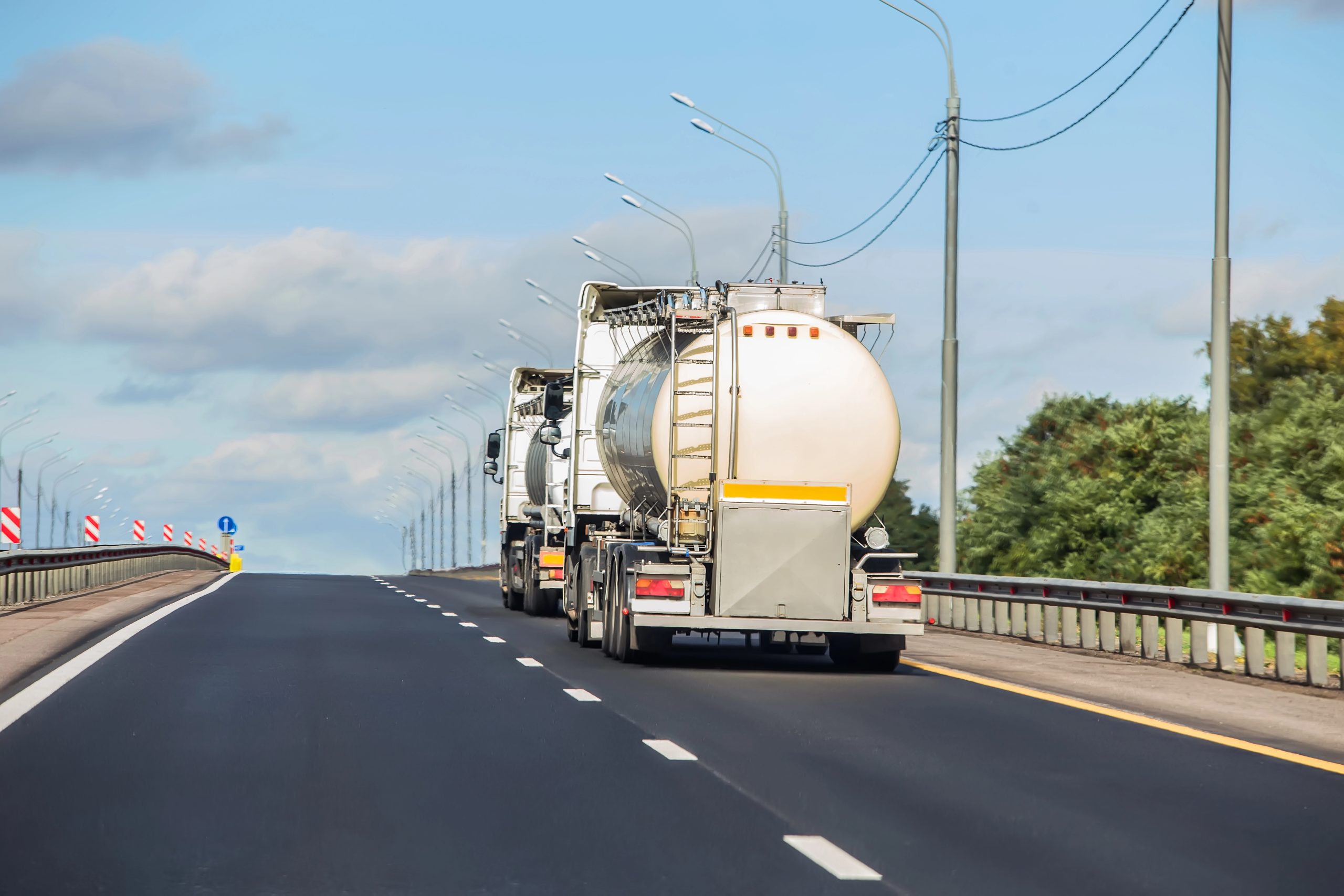
The August reading of the Monthly Business Climate Index shows a clear deterioration in the situation of the TSL (Transport, Shipping, Logistics) sector. The MIK for TSL fell by 7.1 points over the month to 86.9 points, and by as much as 16.8 points compared to August last year. This is the weakest result among all analyzed sectors and at the same time the largest year-on-year decline. The industry is clearly moving away from the neutral level, and companies are increasingly focusing on maintaining current financial stability. Fuel prices are not helping. In Poland, despite the CPN program, the average price of diesel is already above the EU average.
Liquidity remains the primary problem. TSL has the lowest percentage of companies among all sectors that declare having sufficient funds to operate for more than three months, which is 44 percent of enterprises. At the same time, almost every 10th company (8 percent) assesses its liquidity as insufficient. The transport industry must therefore simultaneously finance high current operating costs.
One of the key elements of this pressure remains fuel. For transport companies, this means that the price of Brent crude itself currently provides less information than usual about the direction of fuel cost changes. Equally important will be refinery margins, diesel inventory levels, and the pace of production restoration in Russia and the Middle East. Lower oil prices may reduce pressure on fuel costs, but there is little indication that the drop in oil prices will be fully and equally quickly passed on to diesel prices.
Against the backdrop of Europe, it is particularly clear that the problem today concerns primarily diesel. According to European Commission data, the weighted average price of 95-octane gasoline in the EU-27 was 1.94 EUR/l, while in Poland it was only 1.51 EUR/l, which is the result of the CPN program. Poland was thus among the cheapest gasoline markets in the Union; lower prices were recorded only in Malta and Sweden. In the case of diesel, the situation looks completely different. The average price in the EU-27 was 1.48 EUR/l, while in Poland it was 1.51 EUR/l. This means that Polish diesel was already about 3.4 cents per liter more expensive than the EU average. It was more expensive in, among others, France (1.72 EUR/l), Italy (1.89 EUR/l), or Portugal (2.08 EUR/l), but Poland was already more or less in the middle of the European ranking. This is an important signal for transport companies: despite relatively low fuel prices in Poland, the cost advantage of our market in the case of diesel has clearly decreased.
Strong pressure on carriers
The situation of carriers is compounded by strong cost pressure in other aspects as well. TSL companies, more often than enterprises from other sectors, point to labor costs (72 percent of companies), economic uncertainty (66 percent), and the unavailability of employees (67 percent). Importantly, 38 percent of transport enterprises also point to financing costs. This shows that companies are operating today under the pressure of many costs simultaneously, with limited ability to absorb them further.
For carriers, this means greater uncertainty in cost planning. In this situation, the ability to pass costs on to customers becomes particularly important. As many as 39 percent of companies in the TSL sector plan to raise the prices of their main products or services. This is one of the highest results among the analyzed sectors. At the same time, 11 percent of TSL companies plan price cuts, which shows that carriers still operate in conditions of strong competition and cannot always fully compensate for cost increases.
At the same time, TSL is the industry in which the highest percentage of companies are abandoning investments due to a lack of financial capacity; every fourth enterprise (25 percent) points to this. In current conditions, financial solutions corresponding to the specifics of the industry are significant support for carriers, including factoring, thanks to which a company can receive funds resulting from issued invoices even before their payment deadline. Equally important is limiting risk at the stage of choosing business partners. Checking a contractor in an international database of payers before starting cooperation can be of particular importance in international transport, where the delay of one payment can quickly translate into liquidity problems. Combining receivables financing with the assessment of the payment credibility of contractors allows companies to manage current liabilities more efficiently and at the same time limit the risk associated with unreliable partners.
Source: Malcom Finance in Poland