









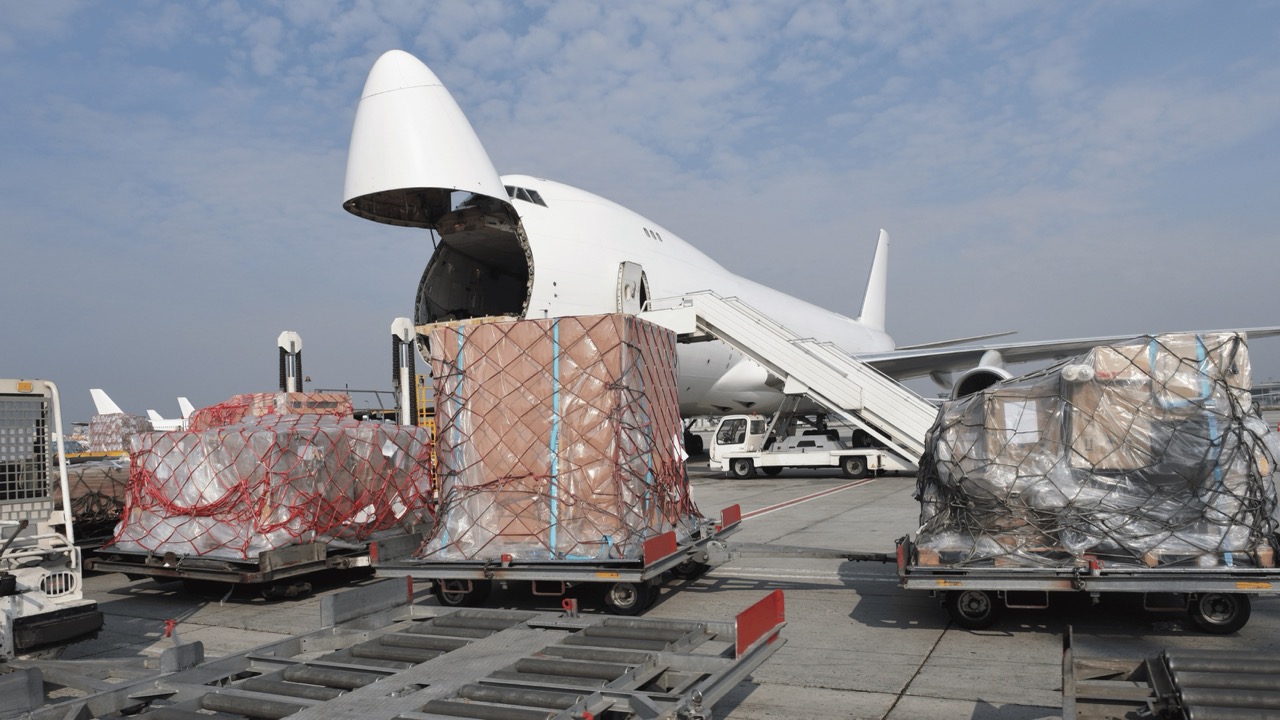
Rising defense spending is driving not only arms manufacturers – it is a driving force for many sectors of the economy. When thinking about the military, many of us see tanks, large armored vehicles, or other impressive structures – however, the realities of security infrastructure have undergone a revolution in recent years. It also benefits those working in companies that provide electronics, materials, logistics services, and equipment protection solutions. Because a modern army, while still needing multi-ton vehicles, is increasingly dependent on devices that fit into a crate or even a small box.
In 2026, Poland will allocate over PLN 200 billion to defense funding, which is 4.81 percent of the projected GDP. At the same time, an increasing share of orders is going to companies from Poland and Europe. According to data from the Armament Agency analyzed by Reuters, the value of purchases made from suppliers in Poland and Central Europe has increased nearly fourfold since 2022, to PLN 30.4 billion.
Such a stream of money does not end with the manufacturers of tanks, self-propelled howitzers, or transporters. The modern defense industry needs radars, communication systems, optoelectronics, sensors, power sources, electronics, drones, and thousands of precision parts. Each of them must not only be produced but also properly stored, secured, and delivered. This opens up the defense sector to branches of the economy that, just a few years ago, were not associated with the arms industry.
In 2026, everyday devices and those for special purposes are already highly refined, and production chains are perfectly optimized, but this does not mean they are short. Behind the final device are electronics and parts manufacturers, logistics companies, material suppliers, and companies responsible for product safety in transport. Today, more and more companies from the civilian sector are checking which of their competencies can be used in military “special purpose” chains.
The more modern the equipment, the more demanding the logistics
This is clearly visible in the example of unmanned aerial vehicles. A drone can be many times cheaper than traditional weapons, but it contains control systems, sensors, cameras, electronics, and power sources. Therefore, in the logistics of such equipment, it is not only the packaging itself that matters, but also how the cargo is handled at subsequent stages of its journey.
With a regular shipment, a cardboard box falling might result in a dented corner. With optoelectronics, measuring equipment, or precision components, a strong shock may mean the device needs to be re-checked, even if there is no visible damage from the outside. A great example is an invention used in ground, flying, and stationary vehicles that has become a work of military engineering since its inception – radar – a massive structure on the outside, but precise electronic equipment on the inside.
That is why shock and tilt indicators are used in transport. A small device placed on the packaging can permanently signal that the shipment has been subjected to a strong impact or was in a position in which it should not have been transported.
The most interesting thing is that damage is not always visible. A crate or even a cardboard box can arrive without visible damage, while the precision electronics inside could have previously suffered a strong shock. That is why, with valuable equipment, not only protection is becoming increasingly important, but also information about what happened to the shipment along the way – in a combat situation, there is no room for failures caused by faulty transport, which is why tools have been created to detect potential threats of this type well in advance.
– explains Jarosław Kamiński, Managing Director of RAJAPACK Poland.
It is similar with other threats. Sensitive electronics are protected against electrostatic discharge, metal elements against moisture and corrosion, and delicate devices against vibrations and impacts. To protect the shipment against sabotage, tapes and seals that allow for the detection of attempts to open the shipment are used in the logistics chain.
This is no longer a detail. Modern battlefield systems use more and more electronics, and thus elements that require special treatment in the warehouse, during transshipment, and in road, air, or sea transport.
Adjust the offer, support defense
Many civilian companies see their role and development potential – however, this does not mean creating a separate shelf for “military products.” Many needs of the defense industry are similar to those that have existed for years in electronics, aviation, or precision manufacturing.
Among such solutions, known until now to specialized engineers in the civilian market, are anti-static bags for sensitive electronics, materials protecting against corrosion and moisture, cushioning systems, the aforementioned shock and tilt indicators, protection against unauthorized opening, and products intended for specialized transport.
It is not about painting an existing product green, adding a Polish or NATO flag, and calling it military. If electronics require protection against ESD (electrostatic discharge), the laws of physics are the same regardless of whether the component goes into an industrial machine, an airplane, or a defense system. The difference lies in the scale, customer requirements, and the consequences of an error. In the defense sector, the margin for accidental damage is simply very small, and the stakes are very high.
– says Jarosław Kamiński, Managing Director of RAJAPACK Poland
The more equipment that is to be produced, integrated, and serviced in Poland, the larger the market for subcontractors becomes. Some of them will produce complex components. Others will provide solutions that are much less spectacular, but without which the finished system will not reach the recipient safely from the factory. As the packaging market example shows, the most advanced radar, sensor, or drone at some point simply becomes cargo that needs to be transported from point A to point B.
Many more such examples can probably be found – so it is not surprising to see companies at military trade fairs (e.g., the upcoming MSPO in Kielce) that have had a 100% civilian profile until now – each of them is an opportunity for further companies driving the Polish and European economy.
Source: RAJAPACK