









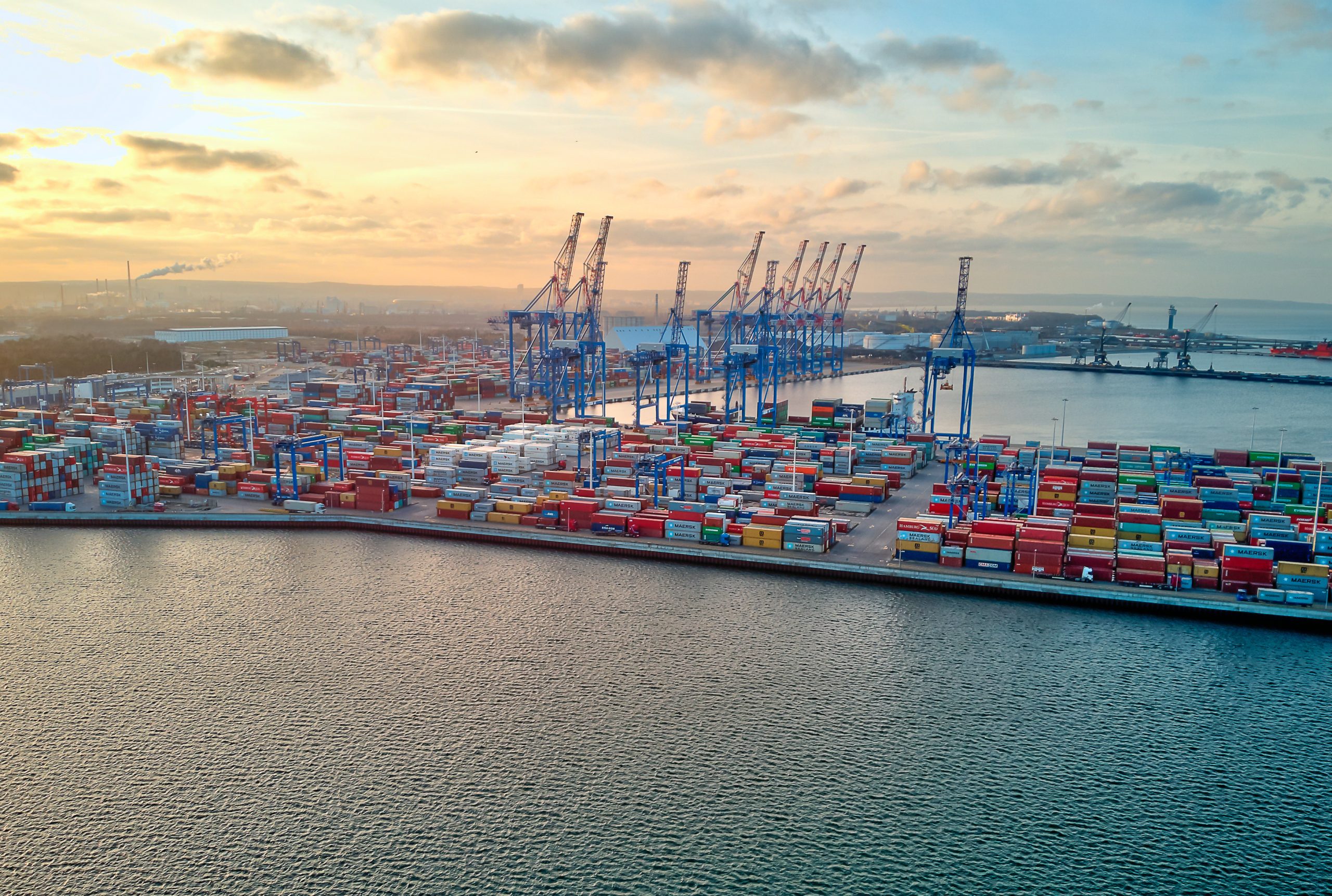
Approximately 1,600 shipments per year, worth nearly one billion zlotys and intended for the Polish market, are cleared in Western European ports. Customs duties and taxes remain in the budgets of Germany, the Netherlands, and Belgium, while the goods enter Poland by truck as intra-EU movements. The Polish Association of Fish Processors estimates the annual losses to the state budget at over PLN 100 million.
The Polish fish processing industry relies heavily on raw materials from third countries, which are then processed into finished products for the domestic market and for export. Frozen fish from China, Norway, or South America reach plants in Koszalin, Bydgoszcz, or Poznań. Increasingly, however, they arrive not via Gdańsk, Gdynia, or Szczecin, but through Hamburg, Rotterdam, or Antwerp.
The reason is neither geographical nor legal. The framework for official controls is set across the entire Union by the same Regulation 2017/625. The difference lies in the organization of its application: control procedures in Polish ports take from a few days to even three weeks, while in Western European ports they take from two to five days. An importer who cannot predict the container release date chooses the port where they know that date.
– says Maciej Kisiel, member of the Board of the Polish Association of Fish Processors.
The bill for the budget
The Association estimates losses from lost customs clearances for just two fish species – cod and pollock – at PLN 50 to 70 million annually. After including other species, the amount exceeds PLN 100 million.
This sum consists of several elements. With a customs duty rate of 2 to 4 percent, lost duties from shipments cleared outside Poland amount to PLN 20 to 40 million per year. Lost logistics and port handling, i.e., revenues for customs agencies, terminals, and ports, account for another PLN 12 to 24 million. Added to this is an element that is rarely discussed: the member state that collects the duty retains 25 percent of that amount as collection costs. When clearing in Rotterdam, for example, this money stays in the Netherlands.
We are talking about raw material that, as a result of processing, becomes a finished product for the Polish consumer, processed in a Polish plant and sold in a Polish store. The only thing missing is the clearance in a Polish port. The state budget pays the bill. We are not advocating for fewer controls or lower food safety standards. We are advocating for the same controls to be carried out in a coordinated manner, just as Hamburg or Rotterdam do. EU law allows for this, and other member states take advantage of it.
– explains Maciej Kisiel.
A barrier removable without changing EU law
Dialogue with the administration is ongoing: the Ministry of Infrastructure has established a Working Group on Border Crossings, in which representatives of the industry, ports, customs agencies, and control services participate. The causes of the problem have been described, but decisions that would translate into concrete solutions are missing.
A single container of food can be subject to inspection by up to four independent services, whose duties partially overlap. To release one shipment, a border veterinarian logs into six non-communicating IT systems. Staffing levels have not increased for years despite a multiple-fold increase in volumes: in Gdańsk, seven border veterinarians now handle over 5,700 shipments annually, compared to 600 in 2008.
They are wonderful and hardworking specialists, but there are simply too few of them. There is also a shortage of commercial quality inspectors; their work is also an element of border clearance.
– adds Maciej Kisiel.
Source: Pfeifer & Langen Polska