









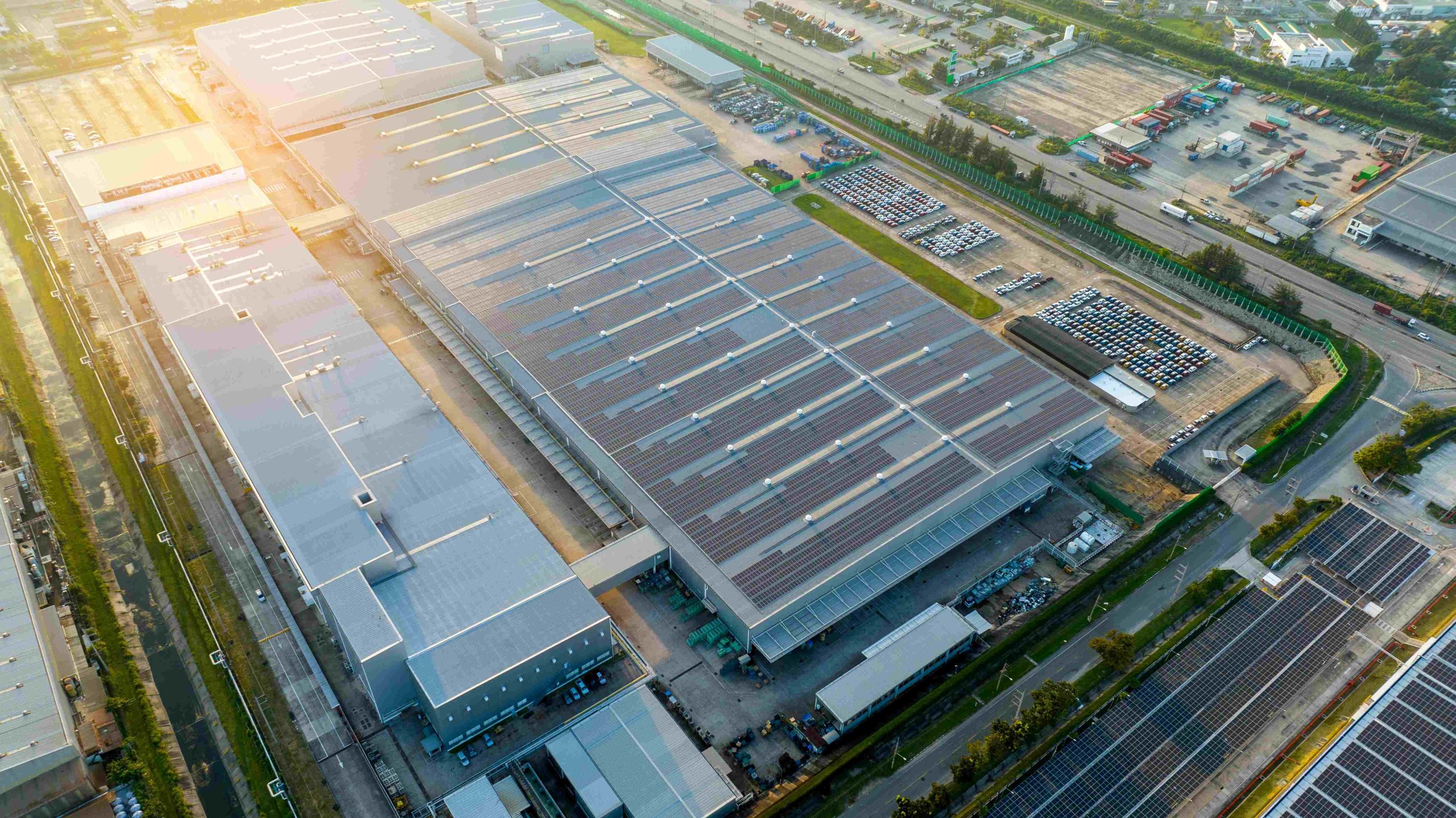
The industrial and logistics space market has clearly accelerated. According to a report by BNP Paribas Real Estate Poland, new leases accounted for nearly two-thirds of all transactions concluded in the second quarter of 2026. After the first half of the year, the stock of modern warehouse space in Poland exceeded 38 million sqm, strengthening the country’s position as the largest warehouse market in Central and Eastern Europe.
Stock exceeded the 38 million sqm barrier
At the end of June 2026, the stock of modern industrial and logistics space in Poland exceeded 38 million sqm. In the second quarter, approximately 0.6 million sqm was delivered, 11.4% less than in the previous quarter. Over the last four quarters, developers delivered a total of approximately 1.8 million sqm, 16.2% less year-on-year. Record-high stock is therefore accompanied by a transition from dynamic expansion to more selective, sustainable development.
The results of the first half of the year show more sustainable market development. New space is still reaching tenants, but investment decisions are more cautious and increasingly respond to the specific needs of companies. This limits the risk of oversupply and promotes market stability.
– says Ludwika Korzeniowska, Director of the Industrial and Logistics Department at BNP Paribas Real Estate Poland.
Clear acceleration in demand
In the second quarter, demand for warehouse space clearly accelerated. Tenants signed leases for over 1.9 million sqm, 35.7% more than in the previous quarter and 4.9% more year-on-year. The total volume of transactions in the first half of 2026 reached approximately 3.31 million sqm.
The structure of transactions was also significant: new leases accounted for 63.5% of the gross volume, and renegotiations for 34%. The dominance of new contracts indicates that companies are not only extending their commitments but also expanding their operations and entering new locations. This confirms tenants’ confidence in the prospects of the Polish warehouse market.
The increase in leasing volume and the dominance of new contracts confirm that companies are more actively developing their logistics networks. Demand is supported by e-commerce, contract logistics, and supply chain reorganization. Poland remains attractive for regional distribution and serving the European market.
– comments Ludwika Korzeniowska.
Less space remains vacant
Increasing tenant activity and a slower pace of new investments have translated into a decline in vacancy rates. At the end of the second quarter of 2026, the rate was 6.6% – 0.7 p.p. less than in the previous quarter and 1.6 p.p. less year-on-year. Approximately 2.5 million sqm of warehouse space remained available.
Despite the decline in vacancies, tenants still have a wide choice of space. However, the availability of modules is decreasing in mature, well-connected locations, especially in modern facilities that meet high technical and environmental requirements.
Tenants still have location alternatives, but the choice of facilities is becoming more selective. This applies especially to energy-efficient space with appropriate infrastructure and the possibility of automation. With falling vacancy rates, early planning of relocation and expansion will become increasingly important.
– adds Ludwika Korzeniowska.
Developers limit the scale of new investments
Developer activity remains moderate. At the end of June 2026, approximately 1.3 million sqm of industrial and logistics space was under construction, less both quarterly and annually. Projects are concentrated in the largest and most mature warehouse markets, including Upper Silesia and the Warsaw II zone. The commercialization level of investments under construction was 61.4%, which indicates a growing share of projects secured by contracts or confirmed demand. This limits the risk of rising vacancy rates.
Stable rents and the growing importance of facility quality
Rents for industrial and logistics space remain stable, although they vary depending on the location and project. The highest rates are maintained in key logistics hubs, where limited availability of land and modern space supports rental pressure. Mature markets with a larger stock of warehouses offer more competitive conditions.
Rents are also increasingly influenced by: the technical standard of buildings, the availability of power connections, and solutions supporting ESG goals. Tenants are therefore more frequently evaluating the total cost of occupancy and the operational efficiency of the facility, rather than just the rental rate.
The cost of leasing remains important, but it is increasingly analyzed through the prism of total operational efficiency. The importance of access to energy, infrastructure, technical parameters, and the ability to reduce operating costs is growing. Facilities that meet these needs gain a competitive advantage.
– points out Piotr Załęski, Director in the Industrial and Logistics Department at BNP Paribas Real Estate Poland.
Market prospects remain favorable
The fundamentals of the Polish market remain stable. The development of e-commerce and the 3PL sector, nearshoring, and the reorganization of European supply chains should continue to support demand for modern warehouses. The importance of logistics automation and solutions improving the energy efficiency of buildings will also grow.
Decreasing space under construction, a high share of projects secured by contracts, and tenant activity favor a balance between supply and demand. Facilities in major logistics hubs with good transport infrastructure, appropriate energy parameters, and ESG solutions will remain particularly sought after.
Source: BNP Paribas Real Estate