









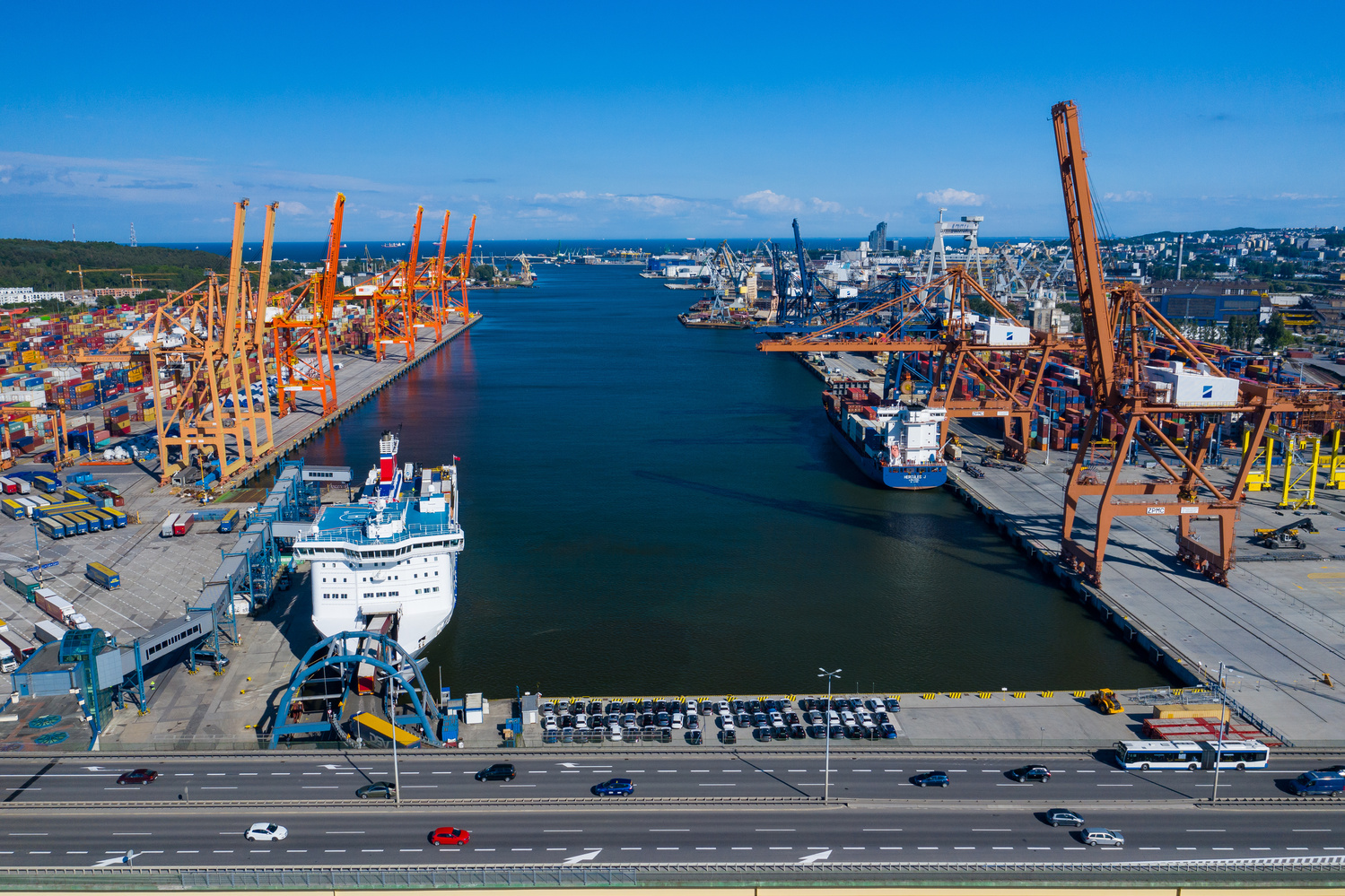
Terminals in Polish ports unload containers around the clock, while border veterinary inspections operate on working days only until 3 p.m. Longer, twelve-hour inspection shifts in Gdańsk will start at the earliest at the turn of January and February 2027, but this date is still not confirmed. As a result, about a quarter of the industry’s shipments reach Poland through Western ports, where clearance takes less time.
The government has funded seven of the eighteen positions requested by the industry, but at least six additional people per border crossing are needed to operate in a twelve-hour mode. We accept this decision as a first step in a matter we have been reporting to the administration for over ten years. However, time is short, because Polish importers still bear high costs for the storage of containers waiting for clearance and release for free circulation – says Maciej Kisiel, member of the Board of the Polish Fish Processors Association.
The port operates continuously, while the border operates on office hours
A container ship arrives in Gdańsk, Gdynia, or Szczecin at any time, 365 days a year, 7 days a week, and terminal staff unload it even at night, on weekends, or on holidays. However, a container with frozen raw material for a processing plant can only continue its journey after border inspections, which take place during office hours. Release for free circulation requires a green light from four inspection services.
The port operates continuously, while the border operates on office hours. A container unloaded on Friday afternoon waits for inspection until Monday, and often it is more than 21 days, and the importer pays for each of these days out of their own pocket. This state of affairs is not a matter of ill will. Border veterinarians are hardworking specialists, but there are simply too few of them to staff longer shifts – explains Maciej Kisiel.
A sharp increase in the number of handled shipments
In a letter from October 2014 to the then Head of the Customs Service, the Association described the state of affairs that still persists: container terminals operate 24 hours a day, seven days a week, while inspection services only on working days, from 7 a.m. to 3 p.m. In November 2025, the industry again warned that the problem was growing.
During this time, the scale has changed primarily. In Gdańsk, the number of shipments handled by border veterinarians increased from 600 in 2008 to over 5,700 per year. Staffing levels have not kept pace with this growth over the years, and the working hours of the services have remained practically the same. The demand for longer working hours today concerns primarily veterinary inspection.
We have been sending reminders about increasing staff successively over all these years, but the problem has remained the same. We want to show how long it takes in Poland from reporting a problem by entrepreneurs to a decision. This time has a price, and it is paid by importers, processors, and ultimately also the state budget and the customer who buys the goods – says Maciej Kisiel.
First decision: seven positions out of eighteen
On August 5, 2026, the Council of Ministers adopted a resolution that funds seven new positions in border veterinary inspectorates: three in Gdańsk, three in Gdynia, and one in Szczecin.
The industry requested eighteen, and such a declaration was also made at the Maritime Economy Committee in May 2026 by a representative of the Ministry of Agriculture.
The Association accepts this decision as the first, but it cannot be the last move in a matter that has remained at the correspondence stage for over a decade. To launch work in a twelve-hour mode, at least six additional people are needed per border crossing. However, this is about 1/3 of the needs. Three people each for the ports in Gdańsk and Gdynia and one for Szczecin will not staff a twelve-hour shift throughout the week. That is why we want the granted positions to be filled without delay, and subsequent decisions to be made faster than this first one – says Maciej Kisiel.
Office hours turn into days of downtime
Control procedures in Polish ports take from a few days to even three weeks, while in Western European ports from two to five days. The working hours of the services are one of the components of this difference. In Hamburg, when a terminal reports unloading, the import platform automatically confirms the customs declaration submitted before the arrival of the goods, without human intervention. In Poland, confirmation requires the work of an official, so a container unloaded on Saturday waits until Monday.
Every day of downtime for a refrigerated container is an additional cost, which, with low margins in processing, ultimately ends up in the price of the product. The unpredictable time of container release also affects the choice of port. About a quarter of the industry’s shipments reach Poland today through Western ports, and the Association estimates that the state budget loses over PLN 100 million annually due to this.
When we extend the problem of the structure of border clearance in Polish ports to other cargo groups, it turns out that the losses to the state budget are significantly larger. We are not advocating for fewer inspections or more lenient food safety standards. We are advocating for the border to work at the rhythm of the port. Without strengthening the staff, no procedural improvement will work fully, and every subsequent season without changes means containers that importers direct to Hamburg or Rotterdam. Changes are needed immediately. – concludes Maciej Kisiel.
Source: Polish Fish Processors Association