









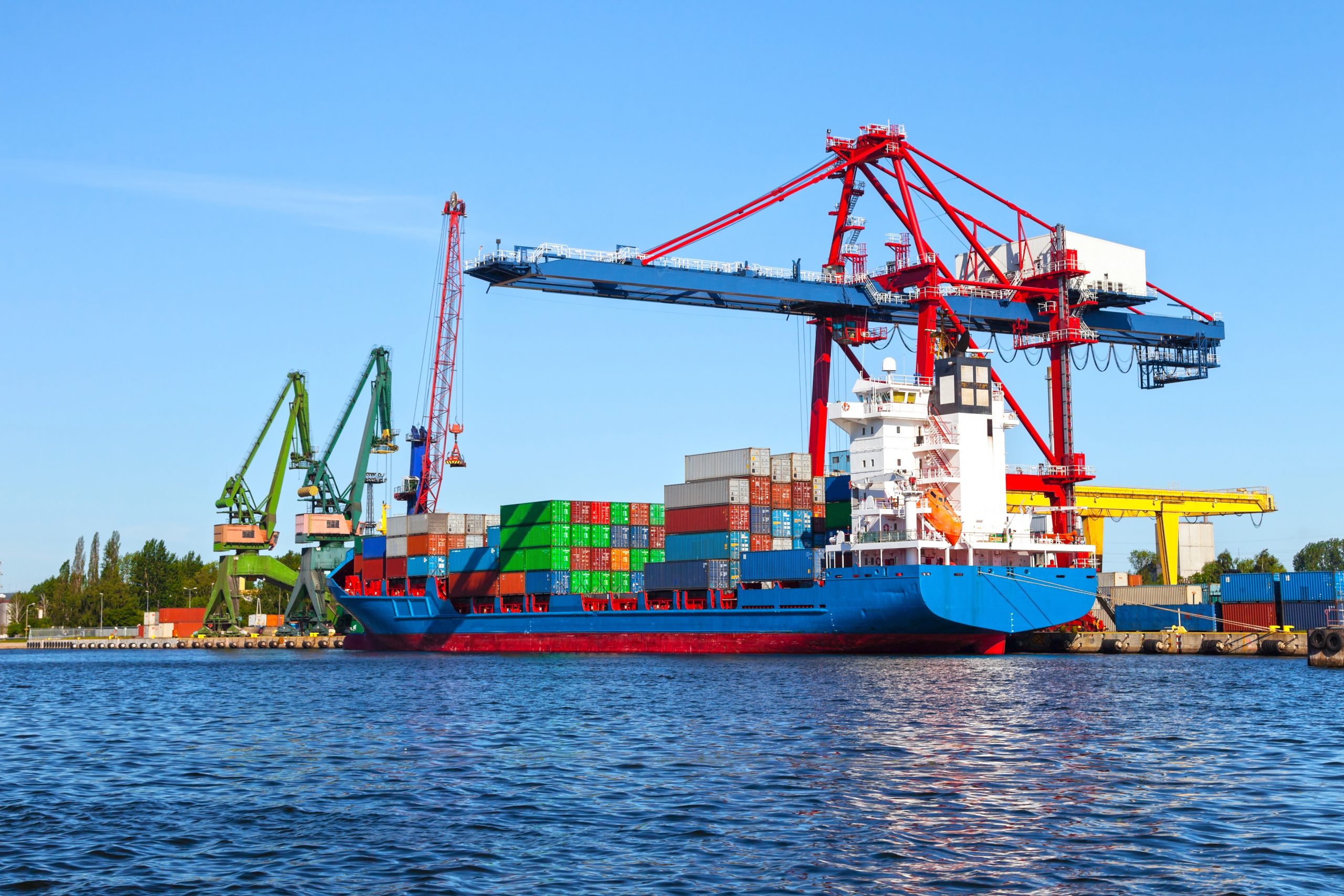
The Polish coast is undergoing its greatest boom in decades. The Port of Gdańsk now serves as an oceanic gateway for the continent, with direct calls from Asian services. In July, construction began in Świnoujście on a deep-water terminal that will perform a similar function. Gdynia and Szczecin are breaking their own container records. However, an increasing portion of this cargo does not remain in the country but reaches recipients throughout Central and Eastern Europe. Polish ports are beginning to compete for this volume with ports in the west and south of the continent. Along with the development of port infrastructure, warehouse and transport facilities are also being expanded.
The growth in transshipments at Polish ports is also influenced by the geopolitical situation. By the end of August 2026, approximately 18 percent of capacity on the Asia–Europe westbound route had returned to the Suez Canal, which shortens transit times and increases the number of port calls. Imports to Poland are also growing: according to Statistics Poland (GUS) data, in the first half of 2026, they were 5.1 percent higher than a year earlier. For logistics operators, this means a growing volume of cargo requiring comprehensive handling – from transport and customs clearance to warehousing and distribution.
Terminal and facilities – a system of interconnected vessels
Before goods reach a shelf or a production line at the buyer’s site, they must be unstuffed, reloaded, cleared through customs, and usually stored for some time. Often, these operations do not take place at the quay, but in warehouses and cross-dock terminals within a few dozen kilometers of the port. In LCL (Less than Container Load) imports, deconsolidation is a prerequisite for distribution – the contents of a single container are distributed to a dozen or more recipients. Therefore, the throughput of the container terminal alone is not enough – the efficiency of the logistics facilities behind it is equally important.
Port investments drive the region and open it to Europe
Baltic Hub has launched its third container terminal, Gdynia exceeded the one million TEU threshold for the first time in 2025, and the Szczecin–Świnoujście port complex handled 7.5 percent more cargo in 2025 than the year before. The dynamic development of Polish ports means they are increasingly serving not only the domestic market but also the markets of Central and Eastern Europe. Rail and road connections are also being expanded – both leading deep into the country and connecting Polish ports with other markets in the region. These are largely what determine how quickly cargo will reach the recipient deep within the continent.
It is precisely this transport infrastructure and logistics base that allow Polish ports to effectively compete with the ports of Western and Southern Europe. In Pomerania, changes can be seen, among other things, in the pace at which new warehouse space is being created. At the end of 2025, 84 percent of the space under construction in the Tri-City already had a tenant. Warehouses located directly at the ports are particularly sought after, often being leased even before they are completed and commissioned.
Warehouse and customs warehouse at the quay increase transport efficiency
Today, the value of warehouse facilities is increasingly determined by the ability to combine multiple operations in one place. One can operate a customs warehouse and a temporary storage facility there, clear goods at an authorized location, maintain stock for the domestic and export markets, and also perform value-added services (VAS), such as co-packing and labeling.
A container transported several hundred kilometers inland just to be unstuffed and cleared there is, in effect, traveling the same route twice. By performing these operations at the quay, we shorten the entire cycle and release the unit faster. At SUUS, we see that demand is shifting precisely toward facilities that combine warehousing and cross-docking with customs expertise at a single address.
At SUUS, we secure such locations in advance. In May 2026, we launched a hub in Szczecin with an area of over 15,000 m², where the warehouse is adjacent to a cross-dock terminal. We unstuff sea containers there, clear the cargo at an authorized location, and the general cargo departs via daily connections to Sweden and Norway. For us, Szczecin is a gateway to Scandinavia, and increasingly to the German market as well. We are also planning to launch AutoStore at this facility – a robotic storage system that will streamline its operations.
We are also developing our branch in Gdańsk. We are expanding the cross-dock zone and adding loading bays for distribution, while allocating the rest of the facility to container handling, as the existing space is already fully utilized. A customs warehouse and a temporary storage facility are in operation there, and we perform customs clearances at an authorized location. Thus, the entire customs handling of imported goods can take place right behind the port gate.
Polish ports today have a real chance to become the main gateway for cargo heading to Central and Eastern Europe. This will be decided not only by the depth of the approach channels and terminal throughput, but at least equally by the availability of warehouse space, customs expertise, and efficient transport connections with the rest of the continent.
Source: Rohlig SUUS Logistics