









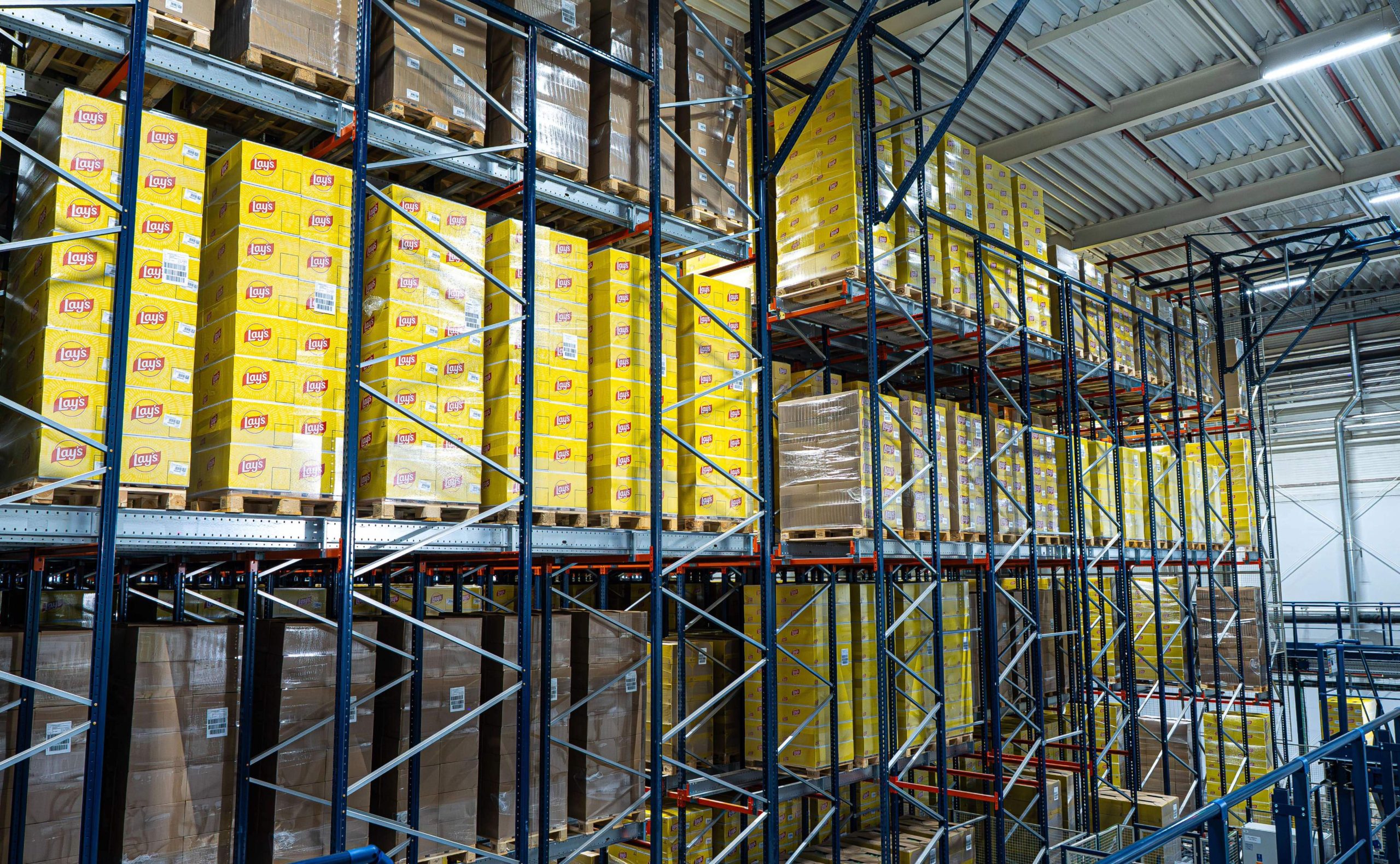
A new, fully automated warehouse has been built at the PepsiCo production plant in Grodzisk Mazowiecki. The investment, worth approximately 10 million dollars, has increased the plant’s storage capacity, will streamline the flow of products from production to shipment, and will enable a greater number of deliveries directly to customers and distribution centers. The new warehouse will also strengthen Poland’s role as one of PepsiCo’s key production and logistics hubs in Europe.
The new warehouse uses an ASRS system, which is an automated storage and retrieval system for pallets. It connects the auto-palletizing zone with the warehouse and shipping area, creating a smooth flow of products and reducing the number of manual operations, transshipments, and transport between locations.
The launch of the warehouse is an important step in the development of the Grodzisk Mazowiecki plant and the entire PepsiCo logistics network in Poland. Connecting subsequent stages of the process within a single system allows us to manage product flow more efficiently and respond faster to customer needs.
– says Marcin Chmielewski, National Logistics Manager at PepsiCo Poland.
The investment has increased the plant’s storage capacity by approximately 2,000 pallet spaces. Currently, the warehouse can hold a total of about 10,000 pallets, of which nearly 8,000 are handled by the automated storage and retrieval system.
The new solution will enable the execution of up to 300 additional direct deliveries per month. Ultimately, all export shipments and the majority of deliveries to distribution centers will be handled directly from Grodzisk Mazowiecki. In the case of direct deliveries, removing one stage of pallet receipt or dispatch will increase load stability and reduce wear on pallet carriers. Reducing intermediate transport and transshipments will shorten the route of products to customers and optimize costs of storage, transport, and equipment used.
Construction of the automated warehouse lasted from 2025 and did not affect the ongoing operation of the Grodzisk plant. The company Mecalux was responsible for the implementation of warehouse automation, and the company Trasko was responsible for the construction work.
One of the biggest challenges was implementing the new solution without disrupting the plant’s daily work. The project required close cooperation between many teams, while simultaneously preparing employees to operate modern systems. For us, automation is not only an investment in technology but also in the development of our team’s competencies.
– adds Marcin Chmielewski.
Ultimately, about 60–70 people will work in the warehouse. Part of the team will be retrained from manual work to tasks related to the operation and maintenance of automation systems.
The investment is also part of the pep+ sustainability strategy. Reducing internal transport and transshipment operations will allow for a reduction in CO₂ emissions by approximately 200 tons per year. Furthermore, the stacker cranes used in the warehouse recover between 15 and 20 percent of energy during each work cycle.
The new warehouse in Grodzisk Mazowiecki is another stage in PepsiCo’s logistics transformation in Poland. The project supports the development of direct deliveries, process automation, and the construction of a more efficient and sustainable supply chain. It also strengthens Poland’s role as one of PepsiCo’s key production and logistics hubs in Europe.
Source: PepsiCo