









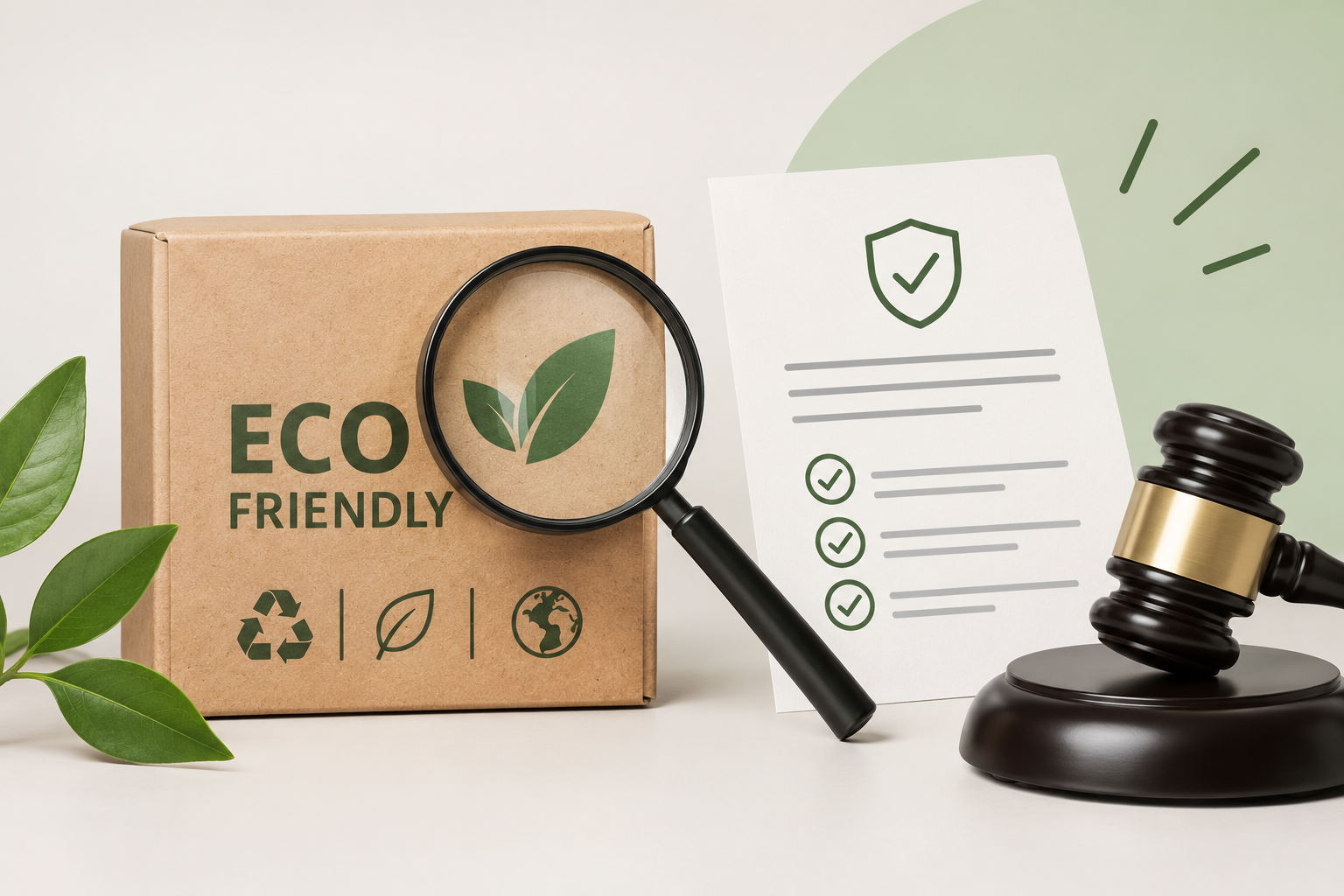
“Eco-friendly packaging” – two words that can cost a brand more than it seems. With new anti-greenwashing regulations, corporate environmental claims will come under greater scrutiny. From September 27, 2027, regulations implementing an EU directive will apply in Poland, limiting the use of general claims about the environmental properties of products without proper justification. What does this mean for packaging manufacturers and suppliers? How should they communicate product properties to build customer trust without risking accusations of misleading consumers?
No more general environmental claims
Terms such as “environmentally friendly,” “green,” or “ecological” may suggest that a product has a particularly beneficial impact on the environment, even if the company provides no evidence to support such a claim. The EU Directive 2024/825 aims to curb such practices. It includes, among other things, restrictions on general environmental claims that a company cannot adequately justify, as well as sustainability labels that are not based on a recognized certification system or established by public authorities.
In practice, this means it is necessary to more carefully verify not only what a company communicates but also whether the content of the declaration corresponds to the actual properties of the product. The mere use of a specific material does not automatically justify all claims regarding its environmental impact. Specific product features, the way it is used, and the conditions under which it can be recycled are what matter.
The new regulations touch upon the essence of competition, which is what a company can expect customer recognition for. Simply meeting legal requirements is not a unique market advantage, just as improving one packaging parameter does not automatically justify claims about the eco-friendliness of the entire product. For our industry, this is a signal that the development of solutions with specific environmental properties must go hand in hand with a reliable way of communicating them. Companies that are genuinely changing materials, increasing the use of recycled raw materials, or developing solutions that support recycling should be able to show the results of their work without having to compete with empty promises. This is where I see the value of these regulations: they are intended to protect consumers while creating conditions for fair competition based on facts.
– says Jarosław Kamiński, Managing Director of RAJA Polska.
How to precisely describe packaging properties?
In the packaging industry, environmental claims can relate to various product features, including the content of recycled raw materials. The difference between a general slogan and precise information can be significant. Instead of the term “eco-friendly packaging,” a company can indicate that a given product contains a specific share of recycled material – provided it can document it. Similarly, instead of a general “environmentally friendly” claim, it can describe specific properties of the packaging that it is able to confirm. This approach avoids suggesting broader environmental benefits that are not justified by available information.
Another example is recyclability. In this case, it is important whether the declaration corresponds to the actual properties of the packaging and the conditions for waste collection and processing. It is not just the material itself that matters, but also the design of the packaging, the combination of different raw materials, or the presence of additional elements. Therefore, a message about recyclability should take into account the features of a specific product rather than relying solely on the name of the material used.
A similar approach should be taken regarding information about replacing one material with another. Using a paper solution instead of a plastic element may be important information about the packaging design, but it does not in itself determine the overall environmental impact of the product. Therefore, the most important thing is to indicate exactly what has been changed and what property the given solution has, without drawing broader conclusions that are not supported by available data.
Reliable communication starts with knowing the product
Preparing compliant environmental claims requires cooperation between marketing, purchasing, and those responsible for selecting packaging. Before a company places a statement about the ecological properties of a product on its website, in a catalog, or in advertising material, it should know on what basis it can justify it. It is also worth checking whether the message refers to the entire product or only to a specific element of it.
The availability of information that allows customers to assess the properties of the packaging before choosing it is also important. Data on material composition, design, or recyclability can help in matching the solution to a specific application. The supplier also plays an important role here, as they should provide information that allows the customer to understand what features a given product has and what can be reliably communicated based on them.
Reliable communication should stem from actual knowledge of the product. This approach has been close to us for years – we believe that declarations regarding packaging should refer to their specific properties and be confirmed by available data. Thanks to this, customers can consciously choose solutions for their needs and reliably inform about their features. In the area of environmental communication, it is particularly important to precisely indicate what actually distinguishes a given product, instead of attributing general benefits to it that cannot be clearly confirmed.
– emphasizes Jarosław Kamiński, Managing Director of RAJA Polska.
The new regulations are a signal that environmental communication should be based on facts, not just slogans. For companies, this means the need to review product descriptions, marketing materials, and ways of justifying claims. In the case of packaging, it becomes particularly important to distinguish between a specific, documented property and a general assessment of the product’s impact on the environment.
Source: RAJA Group