









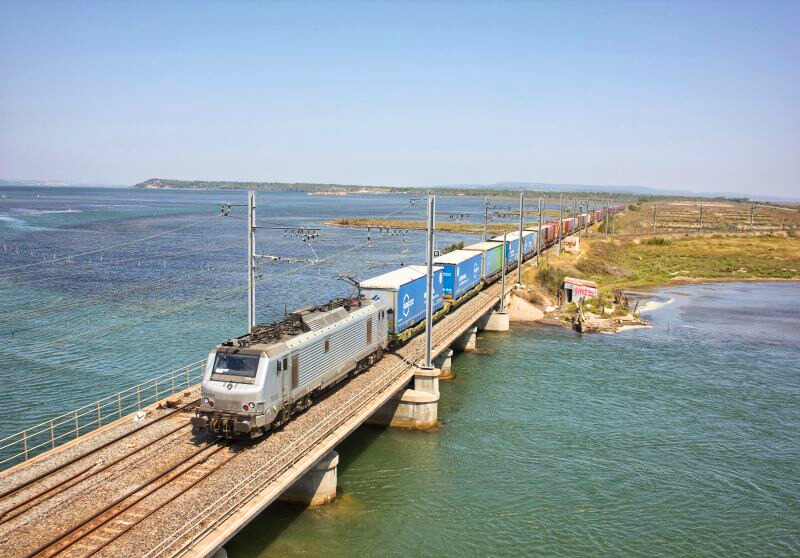
KLOG has increased the number of rail connections between Poland and Catalonia from one to four, and plans to launch more by the end of the year. At the same time, the company has increased the number of connections between Catalonia and Portugal from three to six. The expansion of the connection offer from Poland is intended to provide customers with greater transport capacity and an alternative to road transport.
Poland currently accounts for approximately 50% of KLOG’s intermodal transport volume. The route connecting it to the Iberian Peninsula is one of the fastest-growing connections in the company’s European network, and demand for transport is increasing in both directions. Increasing the number of connections develops KLOG’s offer based on combining rail and sea transport. It is intended to provide customers with greater transport capacity, flexibility, and delivery predictability.
We are observing a change in how companies approach the transport of goods. It is no longer just about transport availability and price. There is a growing demand for solutions that combine efficiency, predictability, and sustainability. Increasing the frequency of our rail connections allows us to meet these needs while preparing to shift more cargo from road to rail. Our goal for the future is to create high-frequency corridors.
– says José Cardoso, CEO of KLOG.
On the route between Poland and the Iberian Peninsula, KLOG primarily transports goods for the textile, furniture, food, and automotive industries. Although there is currently higher demand for transport from Poland to the Iberian Peninsula, the company is also noting significant interest in transport in the opposite direction.
Up to 11,000 fewer trucks on the roads
According to KLOG’s estimates, the second connection on this route could mean up to 11,000 fewer trucks on the roads annually. This would correspond to over 25 million kilometers of road travel that can be avoided. The company also estimates that compared to road-only transport, the use of rail can reduce CO₂ emissions by up to 1.3 tons per full truckload. On routes defined by KLOG as 100% green, the entire transport is carried out using electric propulsion, from picking up the goods from the customer to delivery to the destination, including rail traction. In 2026, the company also began calculating Scope 3 emissions in accordance with the GHG Protocol standard to more accurately measure the environmental impact of its intermodal operations.
Source: KLOG / GB Global