









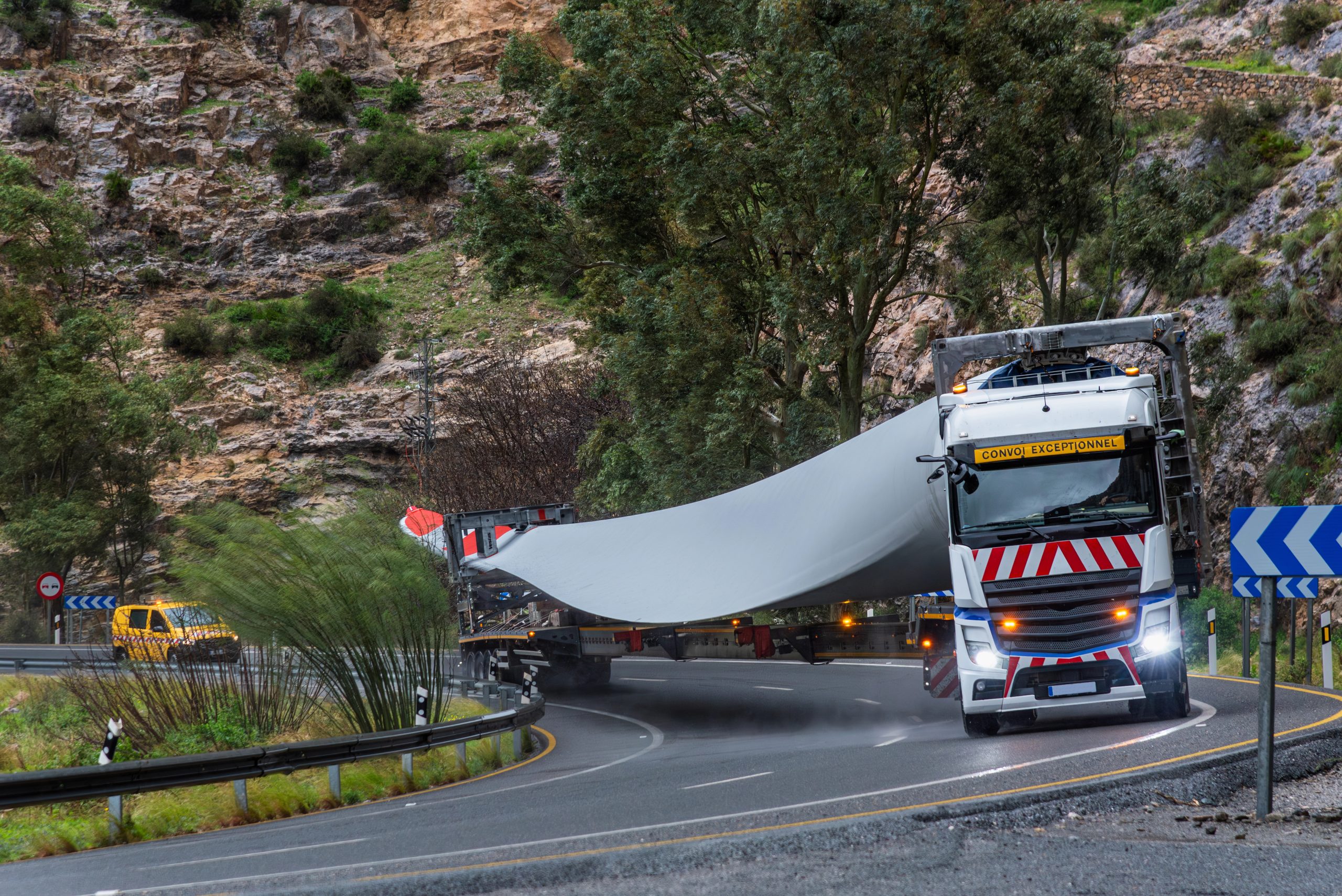
The modern market presents logistics with challenges that go far beyond the capabilities of standard distribution networks. Goods whose transport was considered too expensive or technically complex until recently have become an integral part of modern trade thanks to advanced operational infrastructure. Industrial engines, large-scale furniture, professional gym equipment, or safes are loads that require processes that conventional transport offers cannot provide. Along with the growing complexity of market needs, the importance of pallet logistics and specialized transport is increasing, where the limits of possibility are defined by the ability to design tailor-made solutions.
The evolution of business needs is directly reflected in the characteristics of the handled cargo. An increasing share of the supply stream consists of goods with significant dimensions, high weight, or non-standard sizes, which require individually designed logistics processes. This phenomenon is particularly visible in the B2B sector – it is in business relationships that the scale and technical complexity of transport place the greatest demands on the operator. In practice, this means the necessity of a smooth transition from mass handling to pallet logistics, and often to individual transport, designed for the specific operational needs of the contractor.
The most common non-standard loads are not only heavy industrial infrastructure elements but also operationally problematic goods: irregular structures, machine parts, or delicate shipments requiring strict control of transport conditions. In such cases, the challenge is not always the weight itself. Often, the greater problem turns out to be the non-standard shape, which prevents stable packing or requires individual securing and specialized equipment.
In practice, the most difficult shipments are those that cannot be standardized – they do not fit on a pallet, have a shifted center of gravity, or require an individual approach at every stage of transport. This means not only precise route planning and infrastructure analysis but often the involvement of additional resources.
– says Rafał Augustyniak, Director of the Stryków branch at Geis PL.
A good example of the flexibility provided by specialized transport services are operations carried out by companies from the Geis Group. Transporting bridge cranes, whose individual elements weigh over 76 tons and measure over 28 meters in length, poses a significant challenge in terms of operational planning. Such orders are engineering processes: the transit takes place exclusively at night, with the participation of pilot vehicles, and the route must be measured centimeter by centimeter in advance. This often requires physical intervention in the surroundings – from the temporary dismantling of bollards and the lifting of high-voltage lines to the precise adjustment of the arrival time to a strict time slot so as not to paralyze the work of strategic plants, such as steel mills or factories.
An important factor is also the so-called last mile. In an urban environment, infrastructure limitations – narrow streets, lack of loading ramps, or the permissible total weight of vehicles on a given route – often determine the possibility of delivery. Even if international transport proceeds without disruptions, the final stage can be the greatest operational challenge.
– comments Rafał Augustyniak.
The answer to these challenges is the construction of highly specialized supply chains that allow for the safe handling of demanding assortments. One of the five international gates at Geis PL handles export routes to Bulgaria, Romania, and Greece, as well as imports – mainly from Germany and France. As part of this activity, the operator also cooperates with other partners, building a coherent supply chain for demanding textile products. However, a unique solution on the market scale, which in a way redefines the logistics of sensitive products, is the Garments on Hangers (GOH) transport system.
This project, implemented in cooperation with German partners, allows for the distribution of premium goods while completely bypassing the standard transshipment network. Clothing is transported in specially adapted vehicles that act as “mobile wardrobes.” Thanks to this, the latest collections of global brands reach stores in the largest Polish shopping malls in perfect condition – without the need for folding, repacking, or re-ironing. This solution not only protects the structure of the fabrics but drastically shortens the time needed to introduce goods for sale, which in the dynamic world of fashion determines a competitive advantage.
The limit of possibility in logistics is not fixed – it shifts along with the operator’s experience and the availability of appropriate resources. What was once considered impossible to transport in a standard model, we now carry out thanks to a specialized fleet, international cooperation, and precise planning.
– adds Rafał Augustyniak.
In practice, this means that the boundaries of standard service are defined not by one parameter, but by a combination of them: weight, dimensions, shape, infrastructure availability, and requirements regarding safety and delivery time. For companies conducting commercial activities, logistics increasingly goes beyond traditional patterns – becoming a key element enabling the distribution of products that until recently remained out of reach of mass market trade.
Source: Geis Group