









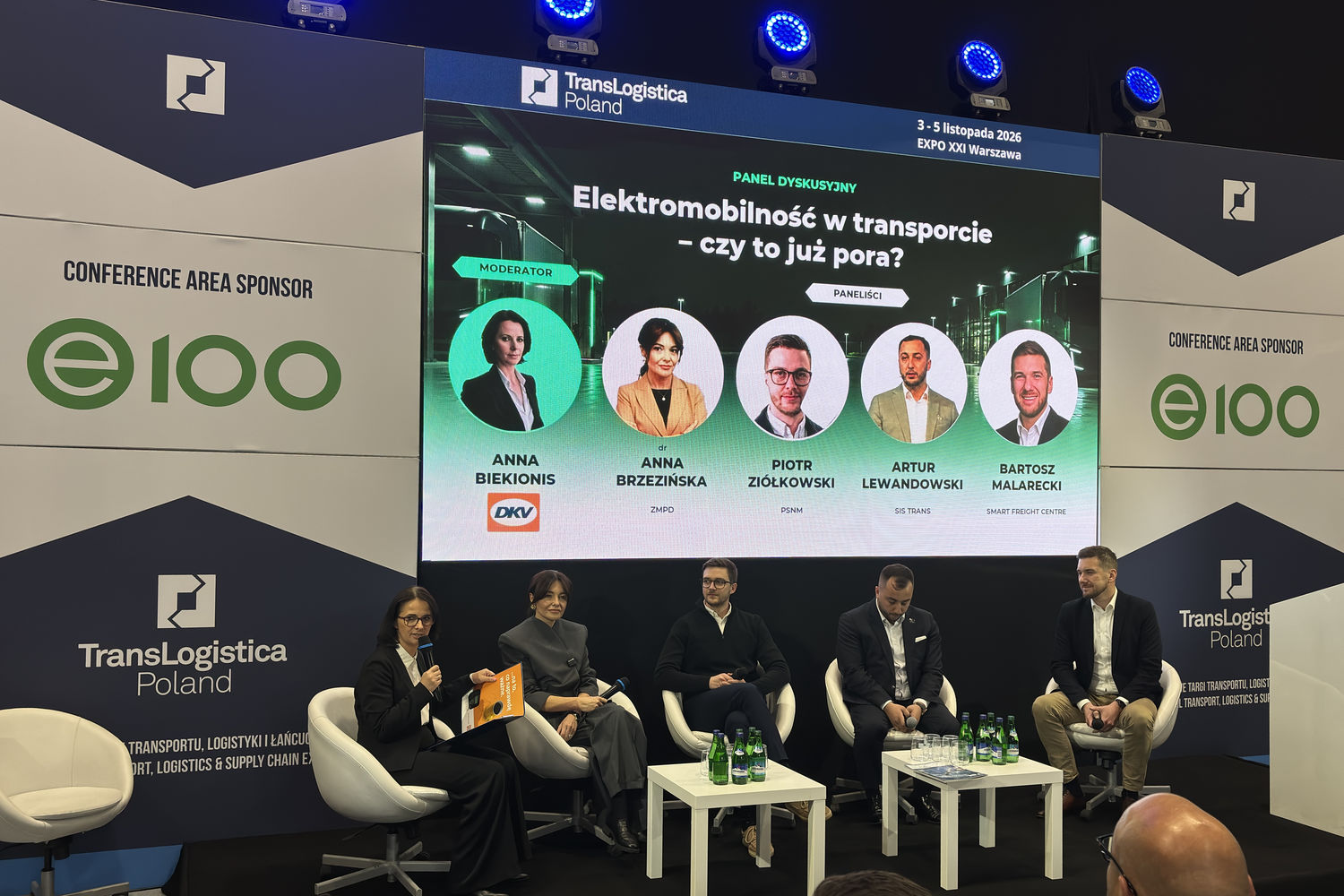
Polish carriers are ready for electromobility and want to modernize their fleets, but investment decisions are still being held back by the high prices of electric trucks and insufficient charging infrastructure. Electric vehicles are currently about 2–3 times more expensive than combustion-engine ones, which is why every investment must be carefully analyzed in terms of profitability.
The infrastructure in Poland is not developing fast enough: it should actually be ahead of the carriers’ capabilities in terms of purchasing trucks. The point is to encourage them by providing a sense of security and certainty that when they set off on a route, they will actually be able to complete it, says Dr. Anna Brzezińska from ZMPD. – In the case of long-distance transport – for example from Poland to Germany, from France to Spain, or from Spain to Portugal, the entire journey must be carefully planned.
The most important barriers to the development of heavy transport electrification also include energy prices, an insufficient number of public truck chargers in Poland, long waiting times for power grid connections and connection conditions, the lack of a full exemption for zero-emission vehicles from road tolls in Poland, as well as high purchase costs and uncertain residual value of the vehicles.
State support
Poland offers subsidy programs covering: the purchase of zero-emission vehicles of categories N2 and N3 – up to about 30% of the difference between the price of an electric and a combustion-engine vehicle, financial support for the construction of charging infrastructure, and power grid connections.
This is one of the most attractive programs of this type available in the European Union. Thanks to it, for most carriers, including small ones, electrification can already make sense today and add up in Excel, says Piotr Ziółkowski from PSNM.
Approximately PLN 2 billion has been allocated for each of these areas, totaling about PLN 6 billion for the decarbonization of heavy transport. The programs are very attractive, but their implementation is slow. The first subsidy agreements for vehicles were signed only after about a year and a half of the program’s operation, and many applications are still waiting to be processed.
Practical experience
The company SIS Trans purchased its first five electric tractors without subsidies in 2023. Initially, the vehicles had a range of less than 300 km and caused numerous service problems – in the first months of use, as many as 41 service interventions were recorded. Over time, thanks to better planning and gained experience, the problems practically disappeared, and some vehicles have already covered hundreds of thousands of kilometers.
We use the vehicles for work in Germany. Thanks to this, the return on investment is much faster than in Poland, says Artur Lewandowski from SIS Trans. – This is due, among other things, to the temporary exemption from road tolls, better charging infrastructure, and additionally, some large clients, such as Amazon, UPS, or FedEx, offer additional remuneration for zero-emission transport.
New truck models already offer a range of about 700 km and much faster charging, which may allow for the completion of a full driver shift without additional operational breaks. Nevertheless, it is recommended to implement electric vehicles gradually — initially, they should not account for more than about 10% of the fleet, especially in the case of companies just gaining experience.

Investment profitability
On properly selected routes, electric transport can be profitable already today. The most important factors are: the length and nature of the route, the possibility of charging at the base or at the client’s site, energy and fuel prices, road tolls, the level of vehicle utilization, available subsidies, additional remuneration from the client, and proper planning of mileage and stops.
Entrepreneurs emphasize that before investing, a company should have a stable business model and a margin of at least about 10%. With margins of 2–3%, the risk associated with purchasing expensive and rapidly evolving technology vehicles is too high.
The role of shippers and clients
Large companies can accelerate electrification by offering long-term contracts, subsidies, or accepting a small premium for zero-emission transport, designating routes intended for electric vehicles, including emissions in procurement processes, and guaranteeing an appropriate volume of orders.
An example is Lidl’s commitment in the Netherlands to use only zero-emission road transport. Such actions reduce the risk for carriers and improve the profitability of investments.
Conclusion
The electrification of heavy transport in Poland is possible and on selected routes can already bring profits, but it requires individual calculations, appropriate infrastructure, stable contracts, and gradual implementation. It is crucial to treat an electric vehicle not as a universal solution for every company, but as an element of a carefully planned operational model. The development of the market will depend on the efficient launch of subsidies, the expansion of the charging network, road toll discounts, and greater involvement of clients and shippers.
The article was based on the discussion panel “Electromobility in transport” as part of the Translogistica 2026 trade fair.