









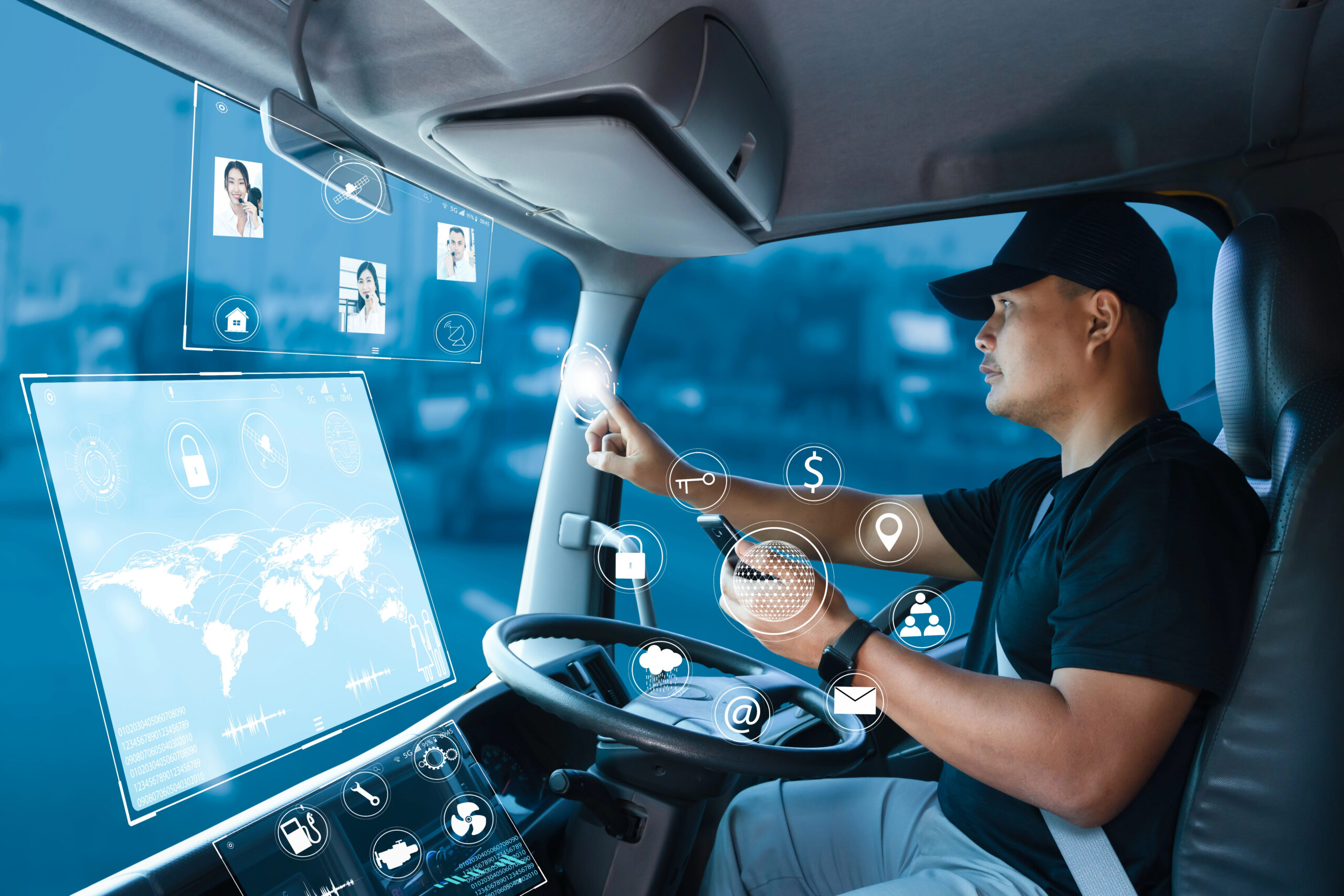
Driver distraction resulting from the use of a car’s digital cockpit is among the causes of up to one in three road accidents. 79% of surveyed drivers from 9 countries believe that the car touchscreen has increased the risk of distraction in recent years, and 53% rate the problem of distraction as high or very high. Research results and recommendations on this topic were presented today during Allianz Motor Day 2026 – an annual conference on automotive, technology, and road safety.
Comprehensive analysis of driver behavior
For this occasion, the Allianz Center for Technology conducted its most comprehensive research program to date regarding driver distraction. Over 34,000 accidents were analyzed, studies using eye-tracking technology in real vehicles were conducted, and a driving simulator study was carried out in collaboration with the Technical University of Munich. The program also included cognitive modeling of critical traffic situations, an international driver survey in 9 countries, and a review of over 80 published studies.
Every second of looking away from the road can matter
Allianz and CogniBIT examined driver behavior in critical traffic situations using a model based on real-world gaze direction data. In an emergency braking scenario on a highway, 18.2% of attentive driver trials and 54.3% of distracted driver trials ended in a collision. When a child suddenly ran onto the road, the figures were 3.9% and 11.2% respectively, and in 39% of cases, distracted drivers did not react at all. In all studied situations, distracted drivers performed worse than drivers with a simulated blood alcohol concentration of 0.8 per mille.
Allianz verified that when using various touch interfaces, drivers take their eyes off the road – depending on the screen design, with differences reaching up to 25% – for about 3 seconds. Meanwhile, a review of over 80 studies published to date indicates that taking one’s eyes off the road for more than 2 seconds is associated with a significantly increased risk of an accident.
Drivers want physical controls back
In the Allianz study conducted in nine countries, 79% of drivers stated that technologies used in cars have increased distraction in recent years, and 53% rated the overall risk of distraction as high or very high.
Among those responsible for an accident in the last three years, 73% indicated that distraction definitely or probably played a role. For safety-critical functions, 65% of respondents prefer physical controls over touchscreen menus. Safety-critical functions are considered to be: windshield wipers, turn signals, low and high beam headlights, hazard lights, defrosting, and demisting.
In the report, Allianz recommends to car manufacturers that safety-critical driving functions be controlled by physical elements that do not require taking eyes off the road, or by clearly defined fixed points on the screen.
On one hand, the advancing digitalization of the automotive industry contributes to improving safety and reducing the number of certain types of accidents. On the other hand, moving away from traditional buttons and knobs in favor of operating most functions via touchscreens creates new risks. As the results of the Allianz report show, these types of solutions can significantly distract drivers, extend the time eyes are off the road, and consequently increase the risk of collisions and accidents.
Even a brief loss of concentration can have consequences as serious as driving under the influence of alcohol. Greater driver awareness in this area is needed, as well as a lack of social acceptance for risky behaviors already prohibited by law, such as replying to messages while driving or stopped at traffic lights.
Vehicles equipped with numerous cameras, radars, and sensors require costly repairs or calibration, which also affects the level of insurance premiums used to pay for post-accident repairs.
– Krzysztof Michałek, Motor Insurance Manager at Allianz Polska
If the car itself distracts the driver, it is time to turn back from this path
The Allianz study for the first time so comprehensively shows what drivers – also in Poland – felt intuitively and sometimes even pointed out in private statements. Driving a modern car has become more difficult. Not because it is harder to drive, but because it has started to require too much attention during operation on the road. The number of systems that demand the driver’s attention has begun to exceed a critical mass, and in addition, operating them via touchscreens has started to consume more and more time.
In recent years, Poland has managed to significantly reduce the number of fatal accidents, but through regulations that Western Europe implemented decades ago. The most important examples are the standardization of speed in built-up areas to 50 km/h day and night, making penalties for drivers more realistic, and priority for pedestrians entering a crosswalk. To further minimize the scale of accidents in Poland, we will also have to focus on threats that are new. We have not yet dealt with driver distraction by smartphones – and this will be a growing problem as generations who are extremely engaged in using these personal communication devices obtain their licenses – and already new generations of drivers have started receiving cars with changed cockpits. These are cars with huge screens that consumers have fallen in love with as “modern.” However, it is already clear that abandoning physical buttons in favor of navigating huge touch tablets only exacerbates distraction.
The problem of risk associated with distraction is difficult to capture. Although it constitutes a serious part of the causes of accidents, in Polish police statistics, distraction is not recorded. These data are sometimes (not always) obtained only at the judicial stages of proceedings after accidents, when drivers’ smartphones are examined. However, distraction through operating a car via a multimedia display is in practice almost impossible to capture during investigations.
The Allianz report is all the more a valuable guide both for every driver, who should be aware of this type of threat – and minimize operating the car on the screen while driving – and for the entire automotive industry, which should rethink the design of modern cars. Before they become fully autonomous, we must turn back from the path of “big screens” and restore buttons that allow for intuitive and eyes-free operation of the most important car functions.
In the development of technology, man has more than once come to the conclusion that sometimes he must return to simpler solutions when new ones prove to be uneconomical or even dangerous. The automotive industry has apparently driven into a dead end in this matter, and it is good that scientific evidence will help pull the handbrake.
– Łukasz Zboralski, editor-in-chief of brd24.pl – a road safety portal.
Report available at the link: “Scrolling. Clicking. Crashing. Driver distraction in digital cars”
Source: Allianz Polska