









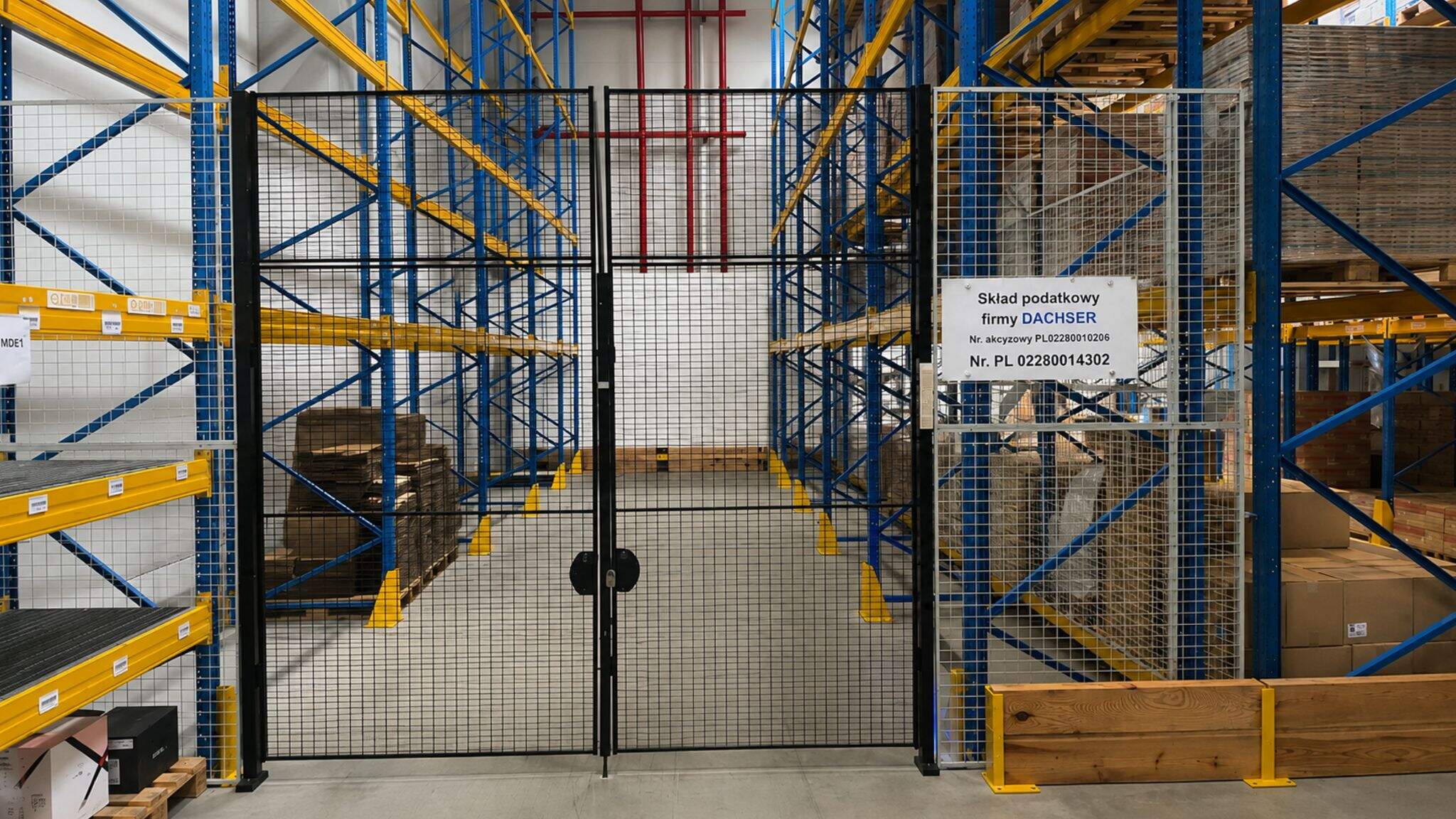
At the beginning of July, DACHSER launched a tax warehouse in Wrocław. This is a solution for importers and distributors of alcohol who, thanks to the excise duty suspension procedure, can defer payment until a specific batch of goods is released for consumption. In the tax warehouse, they will pay it only when a specific batch leaves the warehouse and enters the market.
A tax warehouse allows for the storage of excise goods under the excise duty suspension procedure. The tax is calculated only on batches released from the warehouse, not on the entire stock. For a company, this means that capital is not tied up in tax on goods still sitting in the warehouse. Goods can wait in the warehouse for as long as needed – limited only by their shelf life. Unsold surpluses can also be directed to another market without settling excise duty in Poland.
A tax warehouse in the DACHSER network accelerates the flow of goods
What distinguishes the DACHSER solution is that the tax warehouse is operated by a logistics provider, not a specialized warehousing entity. Some clients use DACHSER’s central tax warehouse in Nuremberg, which serves Central and Eastern Europe. Excise stamps are applied there – goods arrive in Poland ready for sale. There is no need to stop, repack, or handle them additionally. This reduces delivery time to just a few dozen hours.
For us, the tax warehouse is not a separate service – it is a link in the supply chain. We collect goods from the producer in another EU country, transport them, store them, and deliver them to the end recipient. The client has one partner and one point of responsibility for the entire operation.
– says Dariusz Walo, Customs Manager at DACHSER Poland.
The Wrocław warehouse also serves clients using a standard model: it stores low- and high-percentage alcohol, applies excise stamps on-site, and releases them in batches according to current demand. The client pays for storage, but excise duty is paid only on what actually enters the market. A condition for cooperation is that the client holds the required permits and licenses for alcohol trading.
Operational and tax security
The launch of the warehouse was preceded by a year and a half of preparations and consultations with tax authorities. DACHSER designated a separate, monitored zone in the warehouse that meets fire safety requirements for flammable goods, provided an excise security deposit, and obtained an individual tax ruling from the National Revenue Administration. The latter also serves as a safeguard for clients – it confirms that the adopted operational model is compliant with the law.
Our advantage is speed. Competitors have tax warehouses – we have a tax warehouse integrated into a transport network. This means that the goods do not wait for another service provider, but continue their journey. The launch of the warehouse also completes the circle for us: DACHSER now offers a full range of customs and excise services integrated with logistics and transport.
– concludes Dariusz Walo.
Source: Dachser