









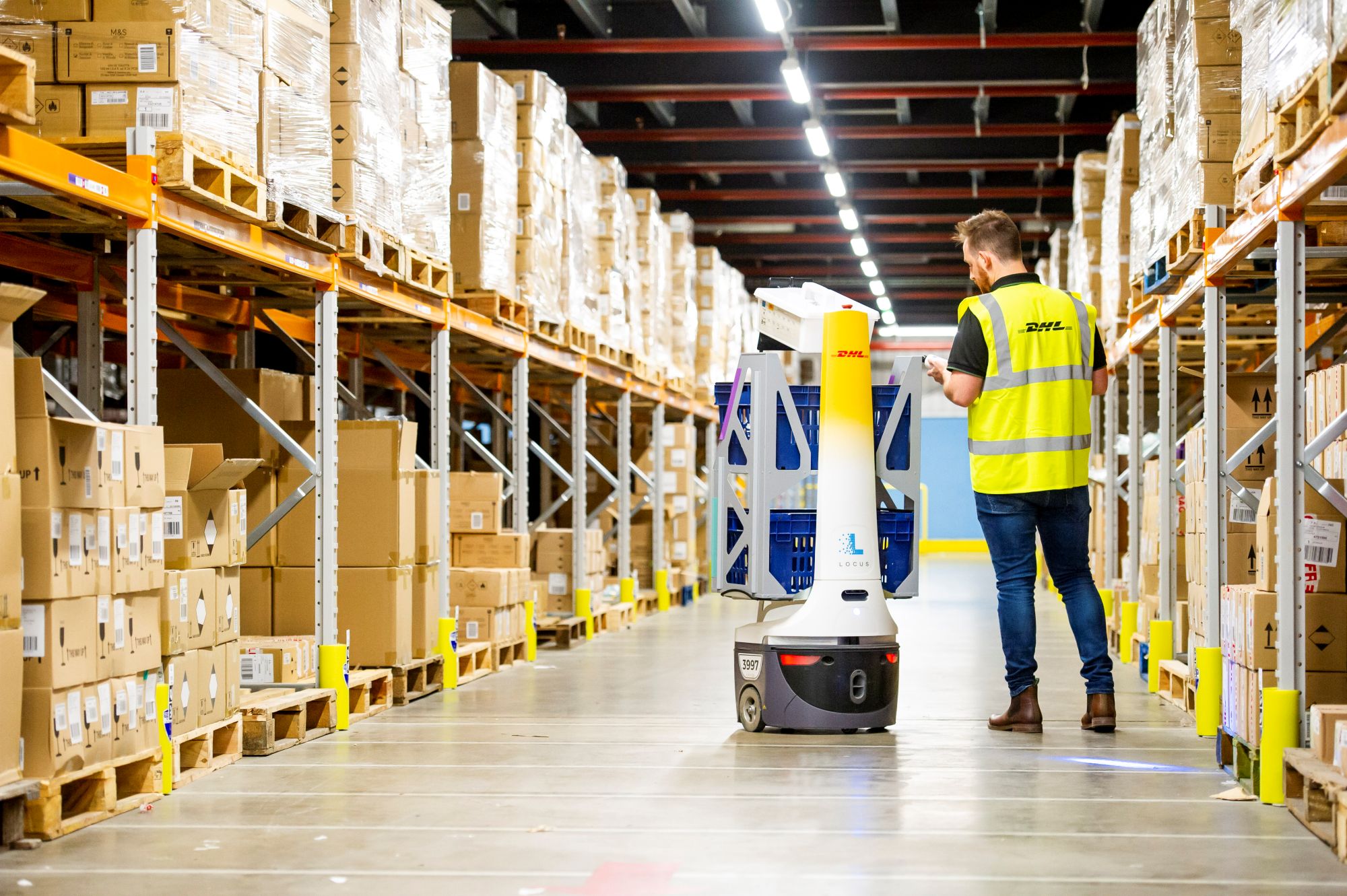
Artificial intelligence (AI) is moving beyond the role of a digital assistant and is beginning to actively operate within supply chains, according to the latest edition of the DHL Logistics Trend Radar 8.0 report. As the authors of the publication point out, the development of AI, robotics, and automation is changing not only how logistics processes function but also the nature of work itself. With the growing ability of intelligent systems to plan, make decisions, and execute actions independently, logistics companies must rethink issues of competence, safety, governance, and employee experience, while simultaneously building more resilient and sustainable supply chains.
Supply chains are changing faster than ever before, and trends related to artificial intelligence and the labor market are increasingly interacting with each other. Success can be achieved by those companies that understand the ongoing changes early enough and translate them into concrete benefits for both business and employees. The Trend Radar helps identify those areas that will be of the greatest importance.
– said Tomasz Buraś, CEO of DHL Express Poland.
AI is becoming the new operational layer of logistics
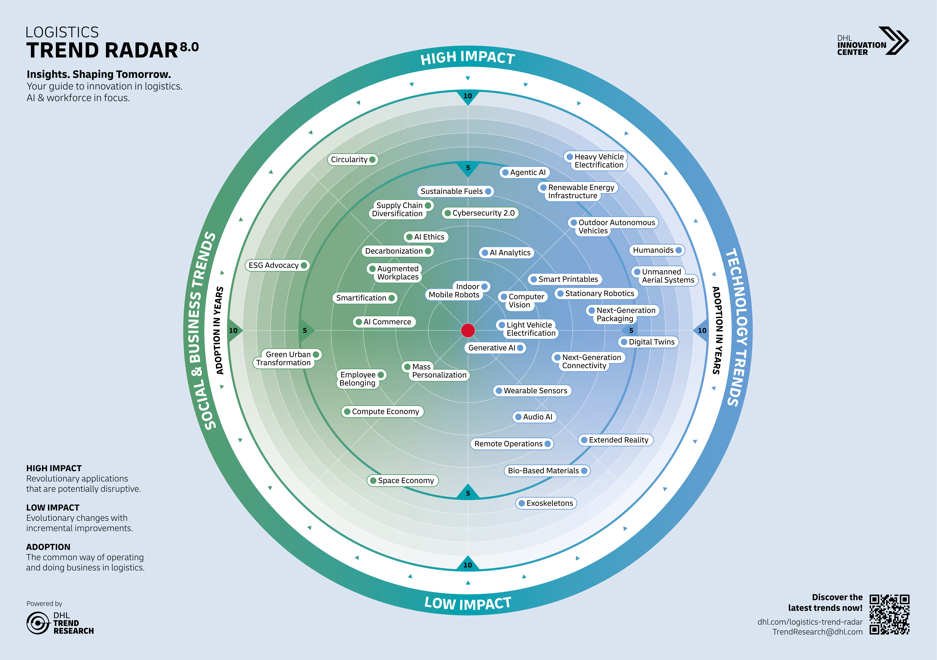
Artificial intelligence is becoming the foundation of logistics processes. Among the key findings of the report is the growing role of Agentic AI (solutions based on AI agents) – a solution recognized as one of the directions that could have the greatest impact on the industry.
Unlike earlier technologies, which served mainly to respond to commands and analyze information, Agentic AI can plan, make decisions, and execute actions leading to specific goals. This opens up new possibilities for combining the potential of intelligent systems with human knowledge and experience.
In parallel, AI Analytics is developing, which allows companies to identify correlations, predict disruptions and their consequences, and recommend appropriate actions faster than ever before – even at a very large scale of operations. Combined with Agentic AI, these solutions lead to the creation of increasingly autonomous and flexible supply chains. They can, among other things, proactively detect the risk of inventory shortages, determine alternative routes in case of obstacles, and continuously adjust transport capabilities to the current situation.
The report indicates that the impact of AI goes beyond improving operational efficiency. AI Commerce (e-commerce development using artificial intelligence to support and automate online trade) is changing how consumers and companies search for and buy products. Compute Economy highlights the strategic importance of computing infrastructure and data center logistics, while Humanoids are a prospective trend that could change how automation is used in physical environments.
These trends herald a further transformation of digital and physical supply chains – from AI-supported shopping to AI-driven warehouse automation.
The future of logistics is still based on people
DHL Logistics Trend Radar 8.0 devotes significant attention to the changes occurring in the work environment as artificial intelligence, automation, and robotics are increasingly used in logistics.
The report points to technologies such as wearable technology, remote process handling, human-collaborative robots, and intelligent assistants supporting employees. These solutions are intended to create a safer, more efficient, and more friendly workplace.
By taking over repetitive tasks and facilitating daily decision-making, they allow employees to focus on activities requiring greater engagement and knowledge – including problem-solving, customer service, and supervising operational processes.
Employee Belonging and Augmented Workplace (a modern work environment where human skills are supported and enhanced by advanced technologies) are other significant trends – employees are increasingly performing their duties using AI assistants, robots, and digital tools. The impact of these technologies may change the nature of many positions – from operational work and technical professions to roles requiring specialized knowledge. Consequently, the demand for new competencies and ways of organizing work will increase.
For business leaders, the challenge is no longer just implementing new technologies, but properly preparing employees to use them. It is becoming essential to provide them with the necessary skills, confidence in using new solutions, and support.
Technology is changing the way we work, but people remain the driving force behind every successful supply chain. We already see how AI assistants, wearable devices, and robots help employees perform their duties more safely and reduce repetitive tasks, allowing them to focus on activities requiring more knowledge and engagement. The future of logistics will not be defined by competition between humans and artificial intelligence, but by how effectively companies combine human knowledge and experience with the capabilities of increasingly advanced technologies.
– admitted Tomasz Buraś.
Responsible use of AI is becoming a business necessity
As AI systems take on more tasks and responsibilities, companies must ensure their responsible, safe, and transparent implementation.
The report points to trends such as AI Ethics and Cybersecurity 2.0, which help combine innovation with proper management, resilience, and security.
As intelligent systems become an increasingly important element of key processes – such as demand forecasting, inventory planning, or transport decision-making – appropriate safeguards and human oversight become as important as the technologies themselves.
Sustainability remains a long-term business priority
As in previous editions of the report, sustainability remains one of the main drivers of innovation in logistics.
Trends such as decarbonization, sustainable fuels, circular economy, and the electrification of heavy and light vehicles show how organizations are implementing electric delivery fleets, increasing the use of alternative fuels, and redesigning supply chains with a focus on resource reuse and greater efficiency while striving to reduce emissions.
About DHL Logistics Trend Radar
The DHL Logistics Trend Radar is DHL’s flagship research report, published every two years and developed by DHL Customer Solutions & Innovation in collaboration with experts from the worlds of business, technology, and science representing various industries.
The report identifies, analyzes, and evaluates technological, business, and social trends that may shape logistics, supply chains, and global trade over the next decade. It helps customers, partners, and industry representatives better understand emerging changes and phenomena and identify new opportunities for development and innovation implementation.
The full DHL Logistics Trend Radar 8.0 report is available in the online version. It can also be downloaded as a PDF here.
Source: DHL Express (Poland) Sp. z o.o.