









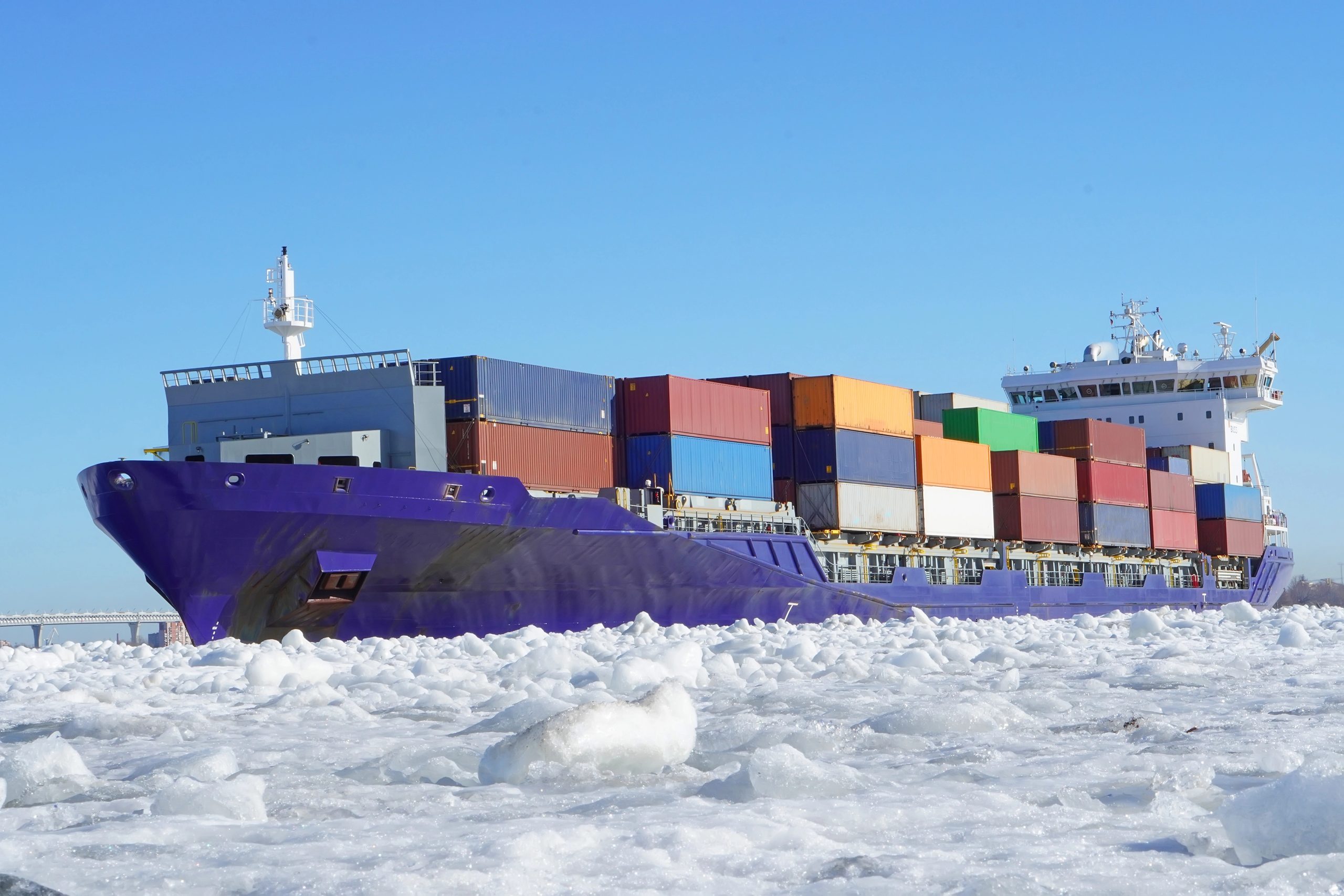
Supply chain disruptions, geopolitical instability, and increasing pressure for transport speed are prompting logistics companies to seek alternatives to traditional sea routes. The Geis Group offers a new solution that significantly reduces transport time between Asia and Europe. This is the northern route leading through the Arctic Ocean. Choosing the Arctic route allows for reducing the transport time between Ningbo and Gdynia to just 28 days, while transport via standard sea routes usually takes almost twice as long. As a result, companies gain faster delivery of goods and greater flexibility in international trade.
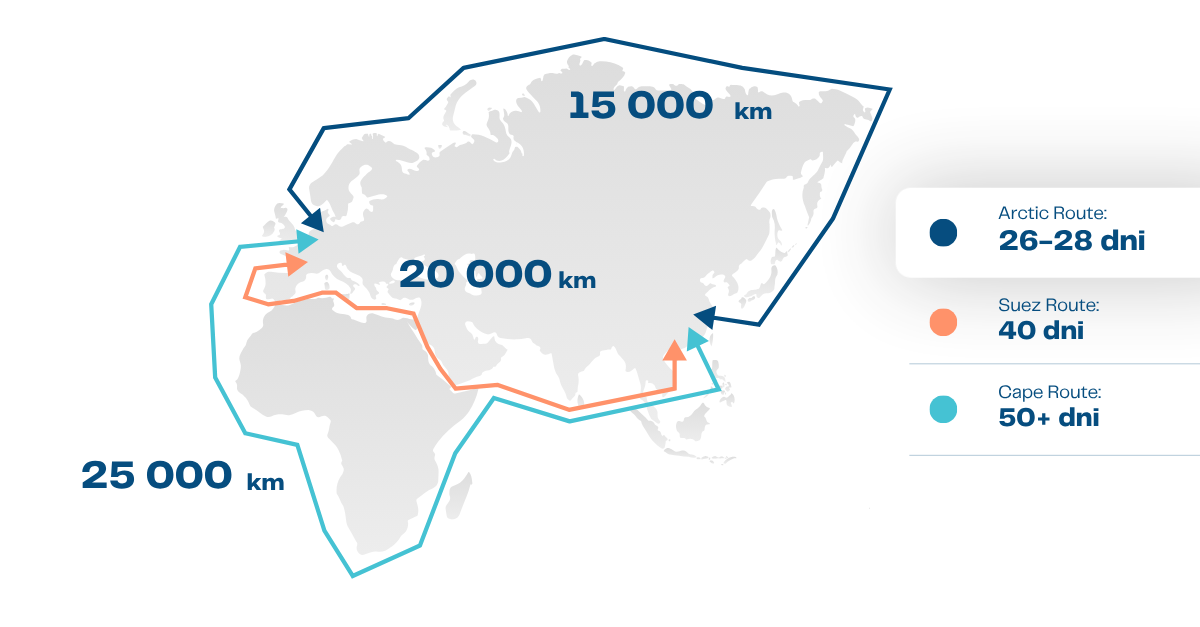
The Arctic route provides an alternative to standard sea connections because it uses a geographically shorter path between Asia and Europe. The distance between Ningbo and Gdynia in this case is approximately 15,000 km, while the route through the Suez Canal measures over 20,000 km, and the connection around the Cape of Good Hope over 25,000 km. In practice, this means the possibility of significantly shortening transport time.
Current supply chains require increasing flexibility. Serious disruptions on traditional routes show that companies cannot rely on a single scenario. The Arctic route is an answer to the need for diversification. We offer our clients an alternative that allows them to bypass these difficulties and maintain business continuity.
– comments Jarosław Utko, Branch Manager, Geis Cargo International Poland Sp. z o.o.
The greatest advantage of the Arctic route is the transport time. In the case of the Ningbo–Gdynia connection, transport can take approximately 26–28 days. For comparison: using the route through the Suez Canal means almost 40 days of transport, while choosing the route around the Cape of Good Hope takes over 50. This difference can be of particular importance for companies importing goods from Asia that need to react quickly to changing demand, replenish stocks, or fulfill deliveries by specific deadlines.
The route through the Arctic Ocean can also be an interesting option for companies that want to reduce the carbon footprint of their transport. A shorter distance means potentially lower fuel consumption and lower emissions associated with cargo transport. However, the final environmental impact depends, among other things, on the type of ship, navigation conditions, and the parameters of a specific voyage.
Diversification of transport routes is currently becoming one of the elements of building supply chain resilience. The Arctic route does not replace traditional connections, but it can be a good complement to them. For clients, this means more choice and the ability to adapt transport solutions to the nature of a specific cargo, the expected delivery date, and current market conditions.
– adds Jarosław Utko.
Due to temperature and weather conditions, the line operates seasonally. The shipping season lasts roughly from the beginning of July to the end of October, which allows importers to perfectly plan deliveries for key periods of peak demand, such as the pre-Christmas shopping season. Importantly, the safety of navigation on this demanding route is guaranteed by the use of modernly equipped ships with the appropriate Ice Class and constant assistance from icebreakers on key sections, which ensures the stability of sailing schedules and standard cargo security conditions.
Due to the seasonal nature of the route, the availability of connections and detailed transport conditions depend on the current sailing schedule. The Geis company prepares individual offers for interested parties, including, among other things, prices, transport conditions, and current sailing dates.
Source: Geis Group