









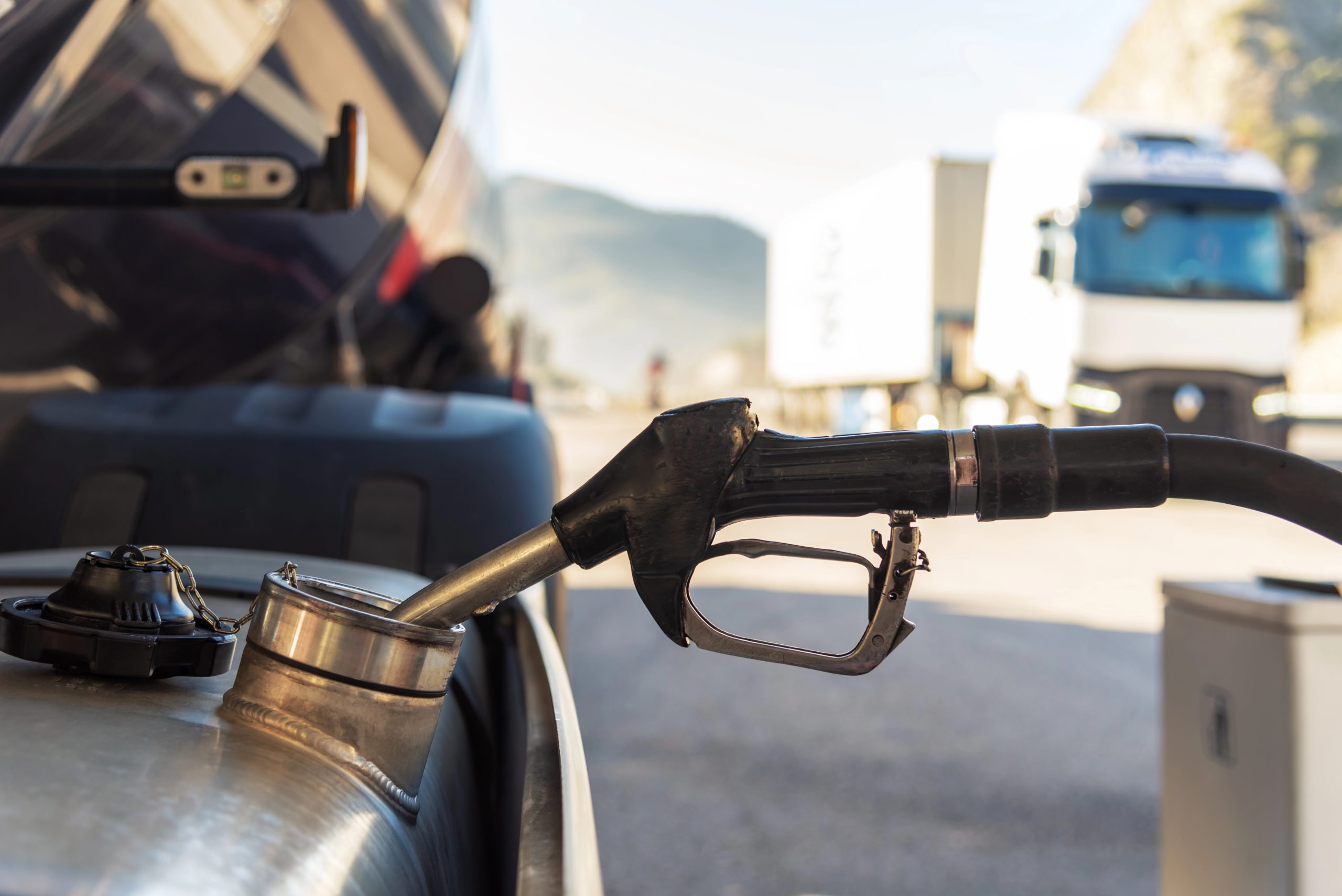
The process of recovering fuel excise duty in road transport is complex and time-consuming due to the intricacy of regulations and the need to fulfill numerous formalities. Administrative differences between EU countries do not help either. They involve the requirement to know local laws, which are constantly changing. This causes some transport companies to postpone the decision to settle the tax, while losing money in the process. A refund increases the profitability of a transport company. Thanks to actions in this area, carriers can recover up to approx. 800 PLN (approx. 200 EUR) for every 1000 liters of fuel. Where can you apply for compensation and what rates apply? What conditions must be met and what should you watch out for in the application process?
Tax refund – why is it worth it?
Excise duty refund is one of the ways to optimize costs. Its application, combined with a well-thought-out and properly planned refueling strategy, can bring tangible benefits to carriers. It realistically affects the company’s budget, improving its profitability. The amount that can be recovered depends mainly on the country where the refueling took place and the excise rate currently in force in that location.
In many EU countries, excise rates change even several times a year, and the differences between countries are significant. On one refueling of 1000 liters, you can save over 800 PLN (approx. 200 EUR), which can translate into cost reductions of up to several or even tens of thousands of PLN, considering the scale of the entire fleet. It is worth noting that the carrier will receive the highest refund in Belgium. It amounts to approx. 820 PLN for every 1000 liters of fuel (approx. 191 EUR). In France, you can recover an amount of over 650 PLN for one refueling of up to 1000 liters (approx. 155 EUR). In turn, in Slovenia, this amount reaches approx. 450 PLN (108 EUR per 1000 liters).
– emphasizes Karolina Styrcz, TAX Refund Team Leader, Eurowag Group.
Challenges for transport companies on the road to obtaining tax refunds
For transport companies, applying for excise duty compensation is a huge challenge. Most often, carriers have difficulty meeting documentation requirements. They also frequently face problems regarding the complexity of regulations and procedural differences between countries, as well as long application processing periods.
In the excise duty recovery procedure, it is not enough to just “learn” a uniform step-by-step procedure. That is definitely not enough. You need to be well-versed in the local laws of individual EU countries and monitor their changes on an ongoing basis. Moreover, when submitting documentation to a given office, you must be very meticulous. Even the smallest mistake can delay the refund process, as was the case, for example, with one of the transport companies using truck leasing. It received a request from the French office asking for additional signatures on the contract. Even though the vehicle was used correctly, the lack of the vehicle lessor’s stamp contributed to the carrier waiting several months for the payment of funds. There are more such situations, because one of the biggest difficulties in this field is precisely incomplete or improperly submitted documents, e.g., without required signatures or leasing contracts without a VIN (i.e., vehicle identification number).
– comments Katarzyna Hondowicz, Senior Tax Coordinator, Eurowag Group
Carrier, what conditions must you meet?
A carrier can apply for a refund in selected EU countries. Currently, it is available in Belgium, Croatia, Spain, France, Slovenia, Italy, and Hungary. The tax recovery process begins only after the transport company signs the activation documents, which allow for the formal initiation of the proceedings. Next, several key regulatory conditions must be met. The refund applies only to vehicles with a GVW (i.e., gross vehicle weight) equal to or greater than 7.5 tons. As Karolina Styrcz from the Eurowag Group notes, an important requirement is also that universal fuel cards cannot be used.
Universal cards are not accepted in the excise settlement process. If a transport company wants to be able to apply for a refund, it must use fuel cards supported by refund systems. Such cards are then assigned to specific vehicles to gain insight into the details of fuel transactions, including when, where, and how many liters of diesel were refueled.
– emphasizes Karolina Styrcz from the Eurowag Group.
Furthermore, a company applying for monetary compensation must hold a valid transport license, confirming its authorization to perform international transport. It is also important to check whether it is submitting a complete set of documents, especially in a situation where it is a lessee.
If a transport company uses leased vehicles or rents a fleet, it is necessary to submit all required documents. This means that vehicle contracts must contain the VIN (i.e., the truck’s identification number). One must also remember about the necessary signatures and stamps of both parties or mandatorily attach the installment repayment schedule.
– adds Katarzyna Hondowicz from the Eurowag Group.
In turn, expert Karolina Styrcz also points out that additional obligations must be met by a transport company that applies for excise settlement in Belgium and Spain
In these countries, the procedure can only begin after the company has been assigned an NIF tax number. It should also be taken into account that during registration or application processing, officials may require the carrier to provide sworn translations of leasing or rental agreements, which is a common administrative practice.
– says Karolina Styrcz, expert at the Eurowag Group.
Excise refund in express mode – how long is the standard and how to speed it up?
The standard waiting time for the verification of a submitted tax refund application ranges from a few months to even two years. The lead time depends on several factors, such as:
- correctness and completeness of documents,
- local administrative requirements,
- workload of offices dealing with application verification,
- type of contracts, especially regarding leasing or rental, which may involve the need to provide sworn translations,
- selected settlement period, which varies depending on the country.
Above all, the waiting time for an office decision depends on properly prepared documentation. It is important to take care of it at the application submission stage.
Completing a full set of documents and filling them out correctly right from the start is the most important thing and is crucial for the positive consideration of the tax recovery case. A good practice is to pay attention to all necessary signatures, assigning fuel cards to specific trucks, and in the case of leasing contracts, ensuring that they are correctly drawn up. Our specialists help in fulfilling all these formalities, taking over communication with individual tax authorities and relieving the transport company of responsibility for legal issues. We handle the preparation of the necessary documents for the application, its registration, and ongoing service until the end of the process, and if necessary, also the appeal.
– comments Karolina Styrcz, expert at the Eurowag Group.
In turn, expert Katarzyna Hondowicz from the Eurowag Group also emphasizes that the speed of the refund process is also influenced by the choice of the settlement period.
One of the effective ways to streamline the debt recovery procedure is monthly settlement cycles, which are available in Belgium, Croatia, and Spain. They allow for a much faster refund from these countries compared to those where settlements are possible only on a quarterly basis, such as in France, Italy, and Hungary, or annually, such as in Slovenia. Transport companies can also take advantage of our excise financing service, the so-called Advanced Payment, thanks to which they receive funds almost immediately after submitting the application, and we take over the settlement process with the office. In this way, the company does not have to wait many months for an administrative decision.– notes Katarzyna Hondowicz, expert at the Eurowag Group.
Applying for an excise refund is not an easy process, but with the right approach, it is a real tool for cost optimization. For companies operating in international transport, it can improve profitability, especially in times of rising operating costs.
Source: Eurowag Group