









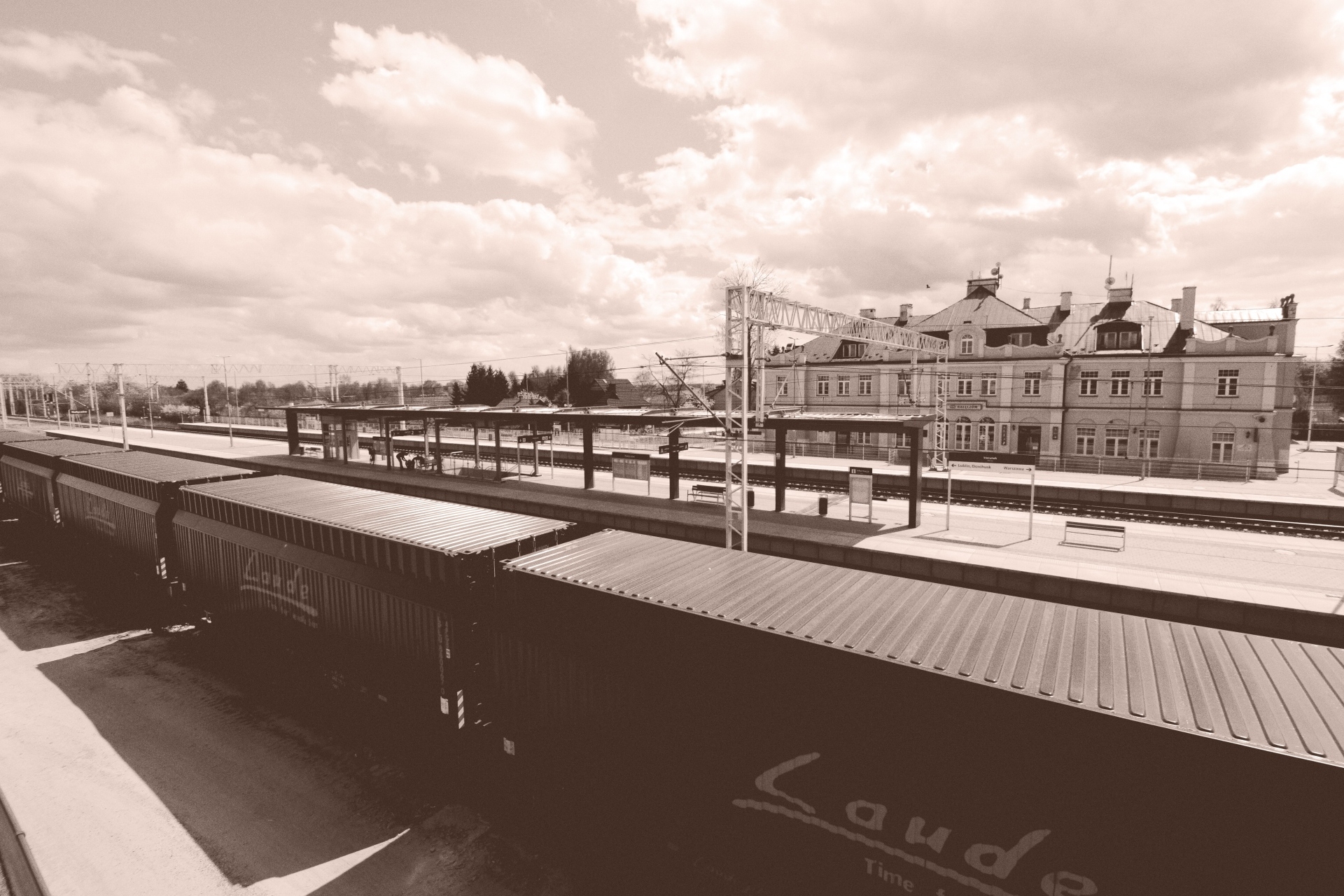
The Nałęczów Zdrój Group, producer of Cisowianka and Cisowianka Perlage, has been focusing on the development of so-called intermodal transport for four years. In 2025 alone, 26 million bottles of water were transported by rail, organizing 36 train sets, each with 44 containers – which means that by using rail for the mass transport of its products, the company eliminated over 1,580 truck trips from road traffic! In total, since 2022, as many as 61 million bottles of Cisowianka have been transported by rail.
The Polish Nałęczów Zdrój Group launched intermodal transport in May 2022. The first bottles of Cisowianka natural mineral water reached Poznań and Sosnowiec by rail, from where distribution was carried out in the Greater Poland region and in Silesia, the Zagłębie region, and Lesser Poland, respectively. Subsequent shipments were directed to an external buffer warehouse located near Poznań, prepared by the Nałęczów Zdrój Group specifically for receiving rail transport. The railway siding in Nałęczów is used for transport, which is organized primarily during the spring and summer season.
Rail and intermodal transport is becoming a real standard among our customers, both in the traditional and modern channels. A key element of this model is the buffer warehouse, which increases operational flexibility, stabilizes product availability, and reduces risks in the supply chain. In parallel, we are consistently scaling direct deliveries, and the number of customers receiving goods in a container format is growing. This is a solution that simultaneously improves business efficiency and supports ESG goals by reducing logistics emissions.
– says Tomasz Wojtasiński, Managing Director of the Intermodal company from the Nałęczów Zdrój Group, responsible for the distribution of its products.
By shifting the burden of part of the distribution to intermodal transport, the producer of Cisowianka significantly reduces carbon dioxide emissions, which is part of the Nałęczów Zdrój Group’s broader efforts focused on the constant development of solutions that increase the energy efficiency of the production and distribution of mineral water.
In 2025, intermodal transport allowed us to reduce emissions by approximately 605 tons of CO₂ compared to a model based solely on road transport. This is a result calculated according to the international GHG Protocol standard, based on actual operational data: route lengths, cargo weights, number of trips, transport mode structure, and emission factors. – comments Tomasz Wojtasiński.
The actions of the Nałęczów Zdrój Group fit into the broader context of the European Union’s strategy, which assumes a 50 percent reduction in greenhouse gas emissions by 2050. Achieving this goal, however, requires profound changes in logistics systems.
Poland has a concrete opportunity to use European funds to create a new map of terminals and intermodal points. This is a strategic step that will simultaneously increase the competitiveness of the economy and support the environmental transformation.
– concludes Wojtasiński.
European Union guidelines assume that the transport of goods over 300 km should take place by means alternative to road transport. The scale of rail usage for transport achieved by Nałęczów Zdrój, at the level of 61 million products, confirms that intermodal transport can be a stable, scalable, and effective logistics solution for high-volume goods streams in the FMCG sector, while maintaining the required operational reliability and continuity of supply.
Source: Nałęczów Zdrój Group