









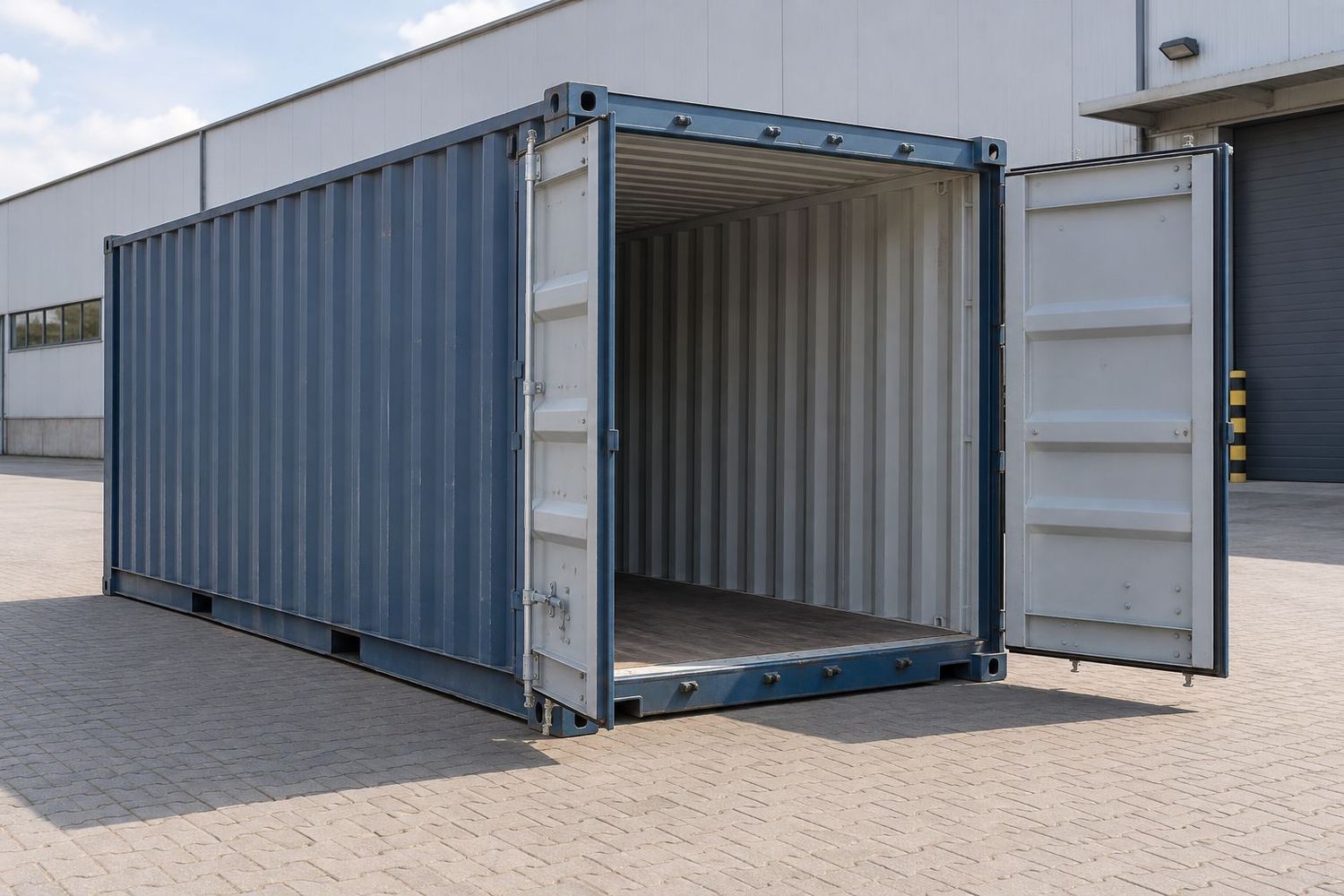
Additional space for equipment, parts, or stock requires defining how it will be used. A container may be one of the options considered, but the decision should stem from the company’s operational needs. For the person responsible for logistics, it is not just the size and price that matter, but also access to stored items, the condition of the unit, and the terms of its delivery and placement.
Start with a list of items and access requirements
Before choosing equipment, prepare a list of items, their dimensions including packaging, and storage requirements. Determine which items will be retrieved regularly and which will remain in place for a longer period. Such a description helps to plan the interior layout and assess whether the chosen format meets the team’s needs.
A guide describing a 20-foot container organizes information about dimensions, variants, and equipment condition. A standard container of this format has an external outline of approximately 6.06 × 2.44 × 2.59 m, given in the order of length, width, and height. You must also account for space to open the doors and operate the unit.
Interior equipment changes the available space. Shelving, cargo securing systems, and aisles should be included in the plan before the company compares supplier proposals. The nominal size alone does not determine how much usable space will remain for goods.
Check the door opening and actual interior
The largest item must be compared with the entrance opening, taking into account its packaging, base, and handling method. The interior height is not the same as the door opening height. Before ordering, it is also worth determining how the loading and unloading of equipment will look.
Information presenting 20-foot container dimensions distinguishes the standard format from variants with different heights or access. Internal dimensions and openings apply to specific models. Ask for confirmation of the parameters of the offered unit instead of treating a catalog drawing as a measurement of a specific container.
If the standard model does not meet the requirements, describe the need for greater height or a different type of door. The supplier should indicate a suitable proposal and its limitations. Equipment parameters and planned use should be agreed upon before evaluating the price.
Assess the unit’s condition and the scope of potential work
When purchasing a used container, ask for current photos of the doors, seals, floor, roof, and repair areas. Determine what the supplier confirms regarding airtightness and technical condition. The description of the commercial category should be supplemented with information about the specific unit or the rules for its assignment.
Any repairs, cleaning, or retrofitting needed for the planned use should have a defined scope and cost. You must also check the requirements of the stored items, including those regarding internal conditions. The external appearance does not independently confirm that the unit will be suitable for a specific application.
If the container is to be used for cargo transport, separately confirm its suitability, documentation, and carrier acceptance. Choosing a unit for storage does not determine its eligibility for planned transport.
Prepare a quote for the same location and scope
Every bidder should receive the same description: format, condition, number of containers, purpose, postal code, and destination address. Also, ask about the place from which the unit will be shipped. The company’s headquarters does not have to be the container’s location, and transport conditions affect the scope of the offer.
Ask for a breakdown of the price of the equipment, transport, unloading, placement, and additional services. Determine the currency, the method of indicating VAT, and the full amount to be paid. If any activity depends on a separate contractor, its cost and responsibility should remain visible in the comparison.
For rentals, include the usage period, fees, delivery, collection, and return conditions. Compare purchases for the same need and time. The unit price and monthly rental fee do not yet describe the full cost of two variants.
Coordinate delivery with the person responsible for the site
The postal code helps locate the project but does not confirm access possibilities. Describe the gate, turns, overhead obstacles, surface, and available maneuvering space. Photos of the access route and the planned location help the contractor assess vehicle and unloading requirements.
Before setting a date, agree on the unloading method, required equipment, ground preparation, and final placement. Indicate the door opening direction and a contact person. The supplier and transport contractor should confirm the plan and its assumptions; free space on the yard does not replace these arrangements.
Gather requirements in one inquiry
ContainerLynx provides guides, public information about suppliers, and the ability to prepare a free inquiry regarding purchase or rental. The project description can include the unit, transport, and unloading. Public prices with a specified date and source help in research but do not constitute a guarantee of a current offer for a given address.
An inquiry is not an order or a reservation. The transfer of necessary data to the companies receiving the inquiry takes place in accordance with the consent granted, and the number of responses is not guaranteed. Before making a decision, you must confirm the seller, the unit, availability, payment terms, and agreed-upon services.
A well-prepared specification combines the storage plan with real delivery conditions. Thanks to this, the comparison of offers concerns the equipment and services needed by the company, and the conversation with the supplier can focus on the questions that remain to be resolved.