









The Hungarian economy is increasingly relying on exports, and this year’s rebound in foreign sales is primarily driven by growth in the automotive and electronics industries. According to the Hungarian Central Statistical Office (KSH), exports to the United States in the January–August period were over 35 percent higher than a year ago, and exports to Poland, Hungary’s second most important market after Germany, grew by 6.7 percent. At the same time, imports are rising as plants rely heavily on components sourced from abroad. For logistics, this means higher volumes in both directions and new requirements for transport infrastructure and warehouse space.
As a logistics operator present in Hungary through our own subsidiary, we are observing these changes throughout the supply chain, from the transport of components to production plants to the distribution of finished goods to foreign markets. The importance of warehouse locations is also growing, as new facilities are being built close to factories and major transport routes.
Automotive and electronics drive trade
Industry currently has the greatest impact on the results of Hungarian foreign trade. In August, exports of transport equipment and electronics were nearly 40 percent higher than a year earlier, which shows how quickly new production capacities translate into sales abroad. A good example is Debrecen, where the BMW factory has once again increased its production volume. This economic model simultaneously generates constant demand for imports, as export production largely depends on parts and components imported from abroad.
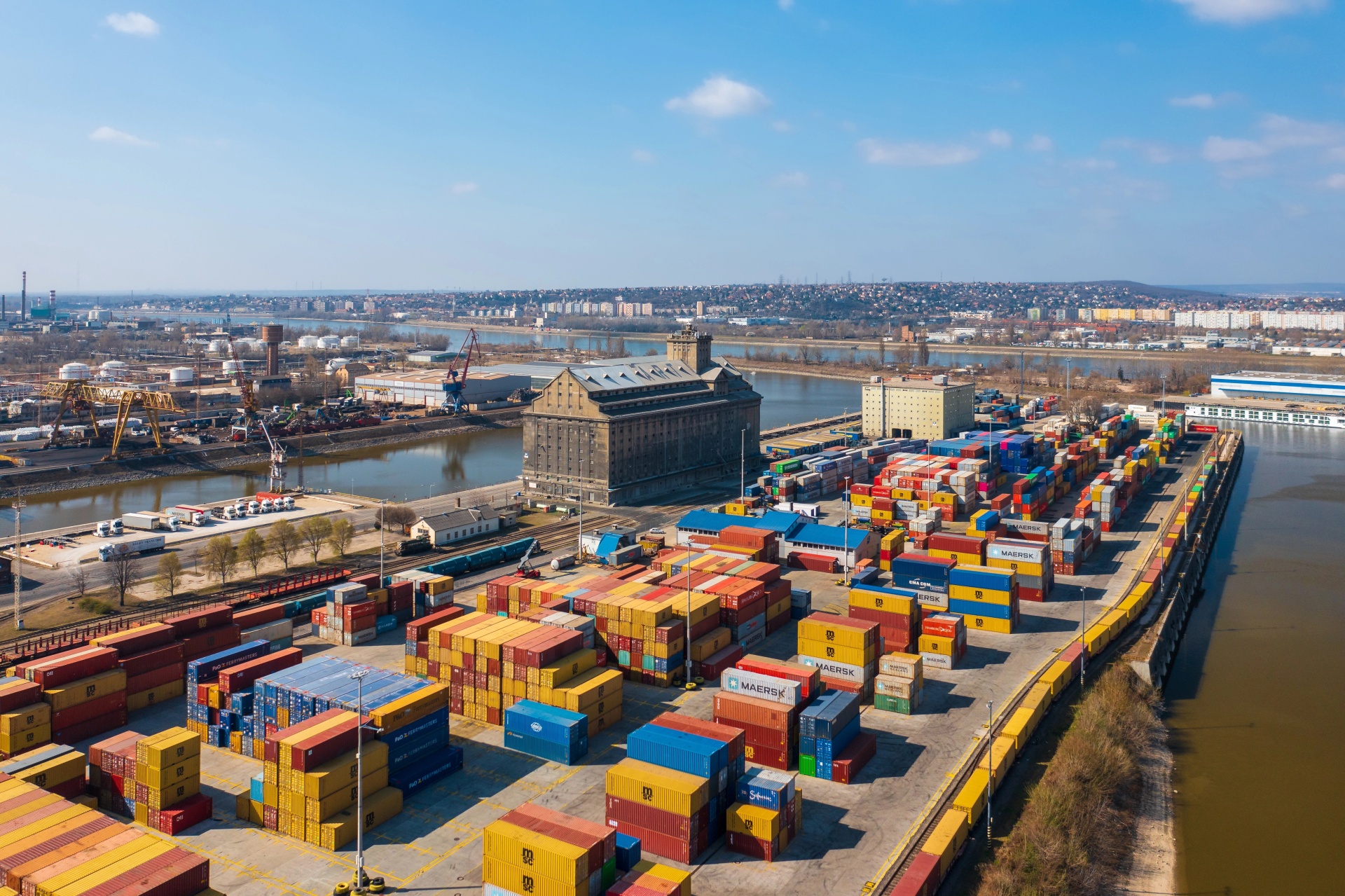
The Central Bank of Hungary (MNB) forecasts that imports will grow faster than exports this year. In addition to supplies for factories, imports are also driven by household consumption, supported by real wage growth. This is clearly visible in maritime transport, where imports account for over 70 percent of Hungarian container traffic. In practice, for many companies, efficient management of inbound deliveries, including customs clearance and storage before further distribution, is becoming crucial.
Infrastructure is developing along major trade routes
Hungary is landlocked, which is why its overseas trade, including growing exchange with the United States, from where imports nearly doubled over eight months, passes through the ports of neighboring countries. In the second quarter, Hungarian maritime container traffic reached a record level, and the largest share of cargo reached Hungary through Adriatic ports. For shipments to and from Hungary, we use southern ports such as Koper and Constanta, as well as Trieste and Rijeka, which are also important gateways for Hungarian cargo. On northern routes, we use Gdańsk and German ports, including Hamburg and Bremerhaven, depending on the trade relationship, type of cargo, and customer requirements. The choice of route depends on the type of cargo and required transit time, and the growing competition between Adriatic and Baltic ports gives companies producing in Hungary greater flexibility.
At the same time, land infrastructure is developing. Since 2025, road traffic with Romania has been taking place without border controls, and in the coming years, the M49 expressway is expected to reach the Romanian border. This is significant because imports from Romania to Hungary are growing particularly fast this year. The railway development plan for 2026–2035, adopted in August, includes preparations for high-speed connections with Vienna and Warsaw. The modernized Budapest–Belgrade railway line is approaching full commercial operation, although according to available information, transport is still taking place in a test phase or to a limited extent. Its potential for freight transport should therefore be assessed with this caveat. An additional stimulus for investment may be the October decision of the EU Council to unblock cohesion funds for Hungary.
The air freight market is also transforming. New regulations and additional EU customs requirements have contributed to a decline in the number of low-value e-commerce shipments, which has reduced volumes handled at airports. For operators focused on general cargo, such as Rohlig SUUS Logistics, this means both opportunities and challenges. Handling agents are paying more attention to traditional freight forwarders and general cargo shipments, and the withdrawal of some cargo space has limited available export options. On some routes, however, rates to Asia have become more competitive.
Warehouses are moving closer to factories and transport corridors
Changes in industry and trade are also visible in the warehouse market. The stock of modern industrial and logistics space in Hungary has exceeded 6.5 million m2, and demand in the first half of the year was significantly higher than a year ago. Most of the new supply is currently being built outside Budapest, in regions where the automotive industry is developing. Developers are also increasingly investing along major transport corridors, including the M6 motorway towards Croatia. After a period of speculative construction, vacant space is also available on the market, which gives tenants a wider choice of locations.
More and more companies are deciding to keep stocks closer to production plants and sales markets, and we are implementing this model in Hungary as well. In 2024, we opened a 7,000 m2 warehouse in Budapest, located right next to the airport and the M0/M4 motorway junction. It combines storage and distribution with value-added services (VAS), such as co-packing and labeling, as well as customs handling. Proximity to the airport supports the development of air freight. Our Hungarian branch is strengthening its position in this product year by year, especially in exports, where we regularly rank in the top fifteen operators in terms of handled volumes. Demand for warehouse services is also increased by changes in the e-commerce market: new customs requirements and shifts in shipment volumes are prompting companies to review their logistics and inventory management strategies.
Manufacturers, especially in the automotive industry, are increasingly interested in the Vendor Managed Inventory (VMI) model, which combines warehousing and inventory management with customs handling. The logistics operator is responsible for importing components and manages their stock, and the client pays for the goods and settles the due customs duties and taxes only when the components are released from the warehouse for production. Thanks to this, the manufacturer has the necessary parts at hand and does not freeze capital in inventory before they reach the production line.
Companies that locate stocks close to factories or major corridors and combine customs handling with transport in one process will gain an advantage. At SUUS, we are developing a network around Hungary: we have our own subsidiaries in Slovenia and Romania, among others, and we treat Central and Eastern Europe as one integrated business unit where operational decisions are made locally. The prospects for the Hungarian economy remain moderately optimistic. The Central Bank of Hungary expects GDP growth to accelerate from 1.8 percent this year to 2.9 percent in 2027, when new production capacities in the automotive sector are launched. If these forecasts prove correct, demand for logistics services and warehouse space will continue to grow.
Source: Rohlig SUUS Logistics