









The sale of second-hand goods is driving demand for logistics services. Platforms such as Vinted, eBay, and local services connecting consumers are generating a growing number of domestic and cross-border shipments. As indicated by the “Last-Mile Innovation Report 2026”, the development of re-commerce supports the circular economy while simultaneously increasing pressure on delivery networks. Small, fragmented shipments and return handling require solutions tailored to peer-to-peer trade.
According to estimates cited in the report, the global re-commerce market was worth approximately USD 200-210 billion in 2025 and could reach USD 290-310 billion by 2029-2030. This segment accounts for tens of billions of additional shipments annually. Accurately determining C2C volumes remains difficult, as they are also included in general parcel market statistics.
For operators, both the scale of growth and the nature of these deliveries are significant. In peer-to-peer trade, senders are individuals scattered across many locations, often shipping single items. This makes grouping shipments and planning their collection difficult. Market development requires efficient organization of the entire parcel journey, from dispatch, through sorting and transport, to collection and potential returns.
In the C2C model, the consumer is both the recipient and the sender. They need a simple shipping process and an easily accessible place where they can drop off a parcel during their daily activities. For operators, this means the necessity of developing a network that efficiently handles the flow of shipments in both directions. Re-commerce allows for extending the lifespan of clothing, electronics, or accessories. However, resale involves the need to move the product between successive owners. There is a demand for transport and packaging, and a potential return means an additional journey for the parcel – says Łukasz Łukasiewicz, Operations Manager at SwipBox Polska.
Fragmented deliveries increase the burden on urban infrastructure. A higher frequency of trips and stops can exacerbate traffic congestion, noise, and local air pollution. The environmental benefits associated with the reuse of products should also be considered in the context of how their transport is organized.
Location, availability, and access integration
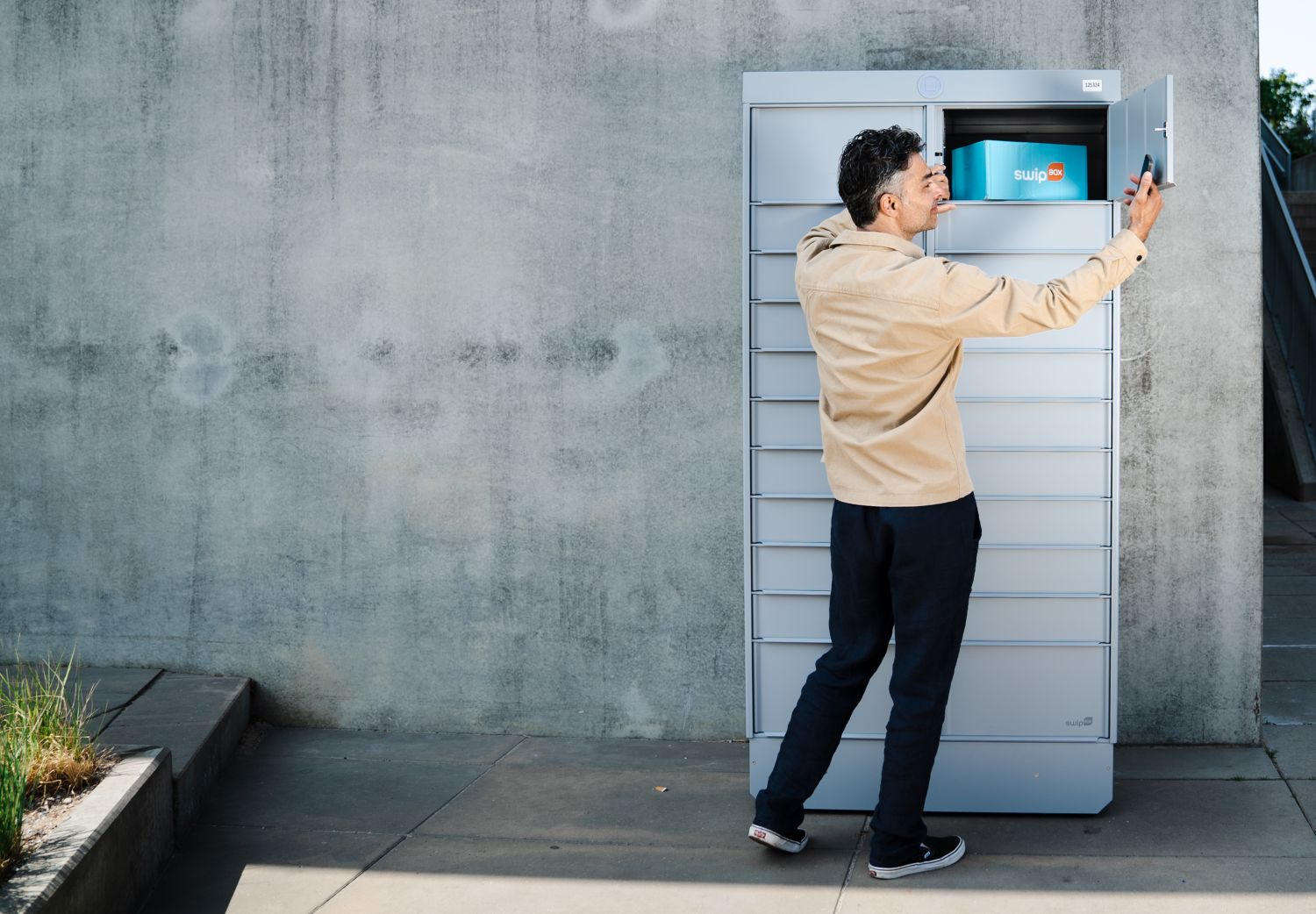
It is important to combine multiple shipments within the same routes and service points. Parcel lockers and drop-off/pick-up points can concentrate flows, reducing the need to travel to many individual addresses. Their effectiveness, however, depends on location, availability, and the utilization of network capacity.
The development of services for peer-to-peer trade requires simplifying label generation, expanding the network of drop-off points, integrated access to parcel lockers, and streamlining reverse logistics. Such solutions should facilitate the use of services for people who send parcels occasionally while reducing the work required to handle each shipment.
As the market grows, managing available capacity becomes increasingly important. The same locations can serve for picking up purchases, sending sold items, and handling returns. Operators must take these needs into account when planning the network, the frequency of point servicing, and the flow of information between the sales platform, the carrier, and the user.
The development of re-commerce requires infrastructure adapted to the way consumers sell and buy used items. Convenience is important
of dispatch, availability of space in the locker, and predictability of collection. The better these elements work together, the easier it is to handle a larger number of parcels while efficiently using existing resources – adds Łukasz Łukasiewicz.
Convenience close to the user
Out-of-home deliveries can reduce the number of trips and failed delivery attempts, but their environmental advantage also depends on consumer behavior. Locations that can be reached on foot, by bicycle, or during another trip have the greatest potential. A special car trip for a single parcel can limit the benefits gained on the courier transport side.
Therefore, the development of infrastructure for C2C should take into account the daily routes of users and the possibility of efficiently handling multiple shipments in one place. Route planning, vehicle utilization, and reducing unnecessary trips related to returns are also significant.
Re-commerce will be one of the growth engines of the parcel market. For operators, this means an opportunity to develop services, but also the necessity to adapt the network to more fragmented flows. The efficiency of this model will be determined by the ability to combine simple dispatch, convenient collection, and effective transport. Logistics organized in this way can support the further development of second-hand trade and reduce the burdens associated with the growing number of shipments.
Source: SwipBox