









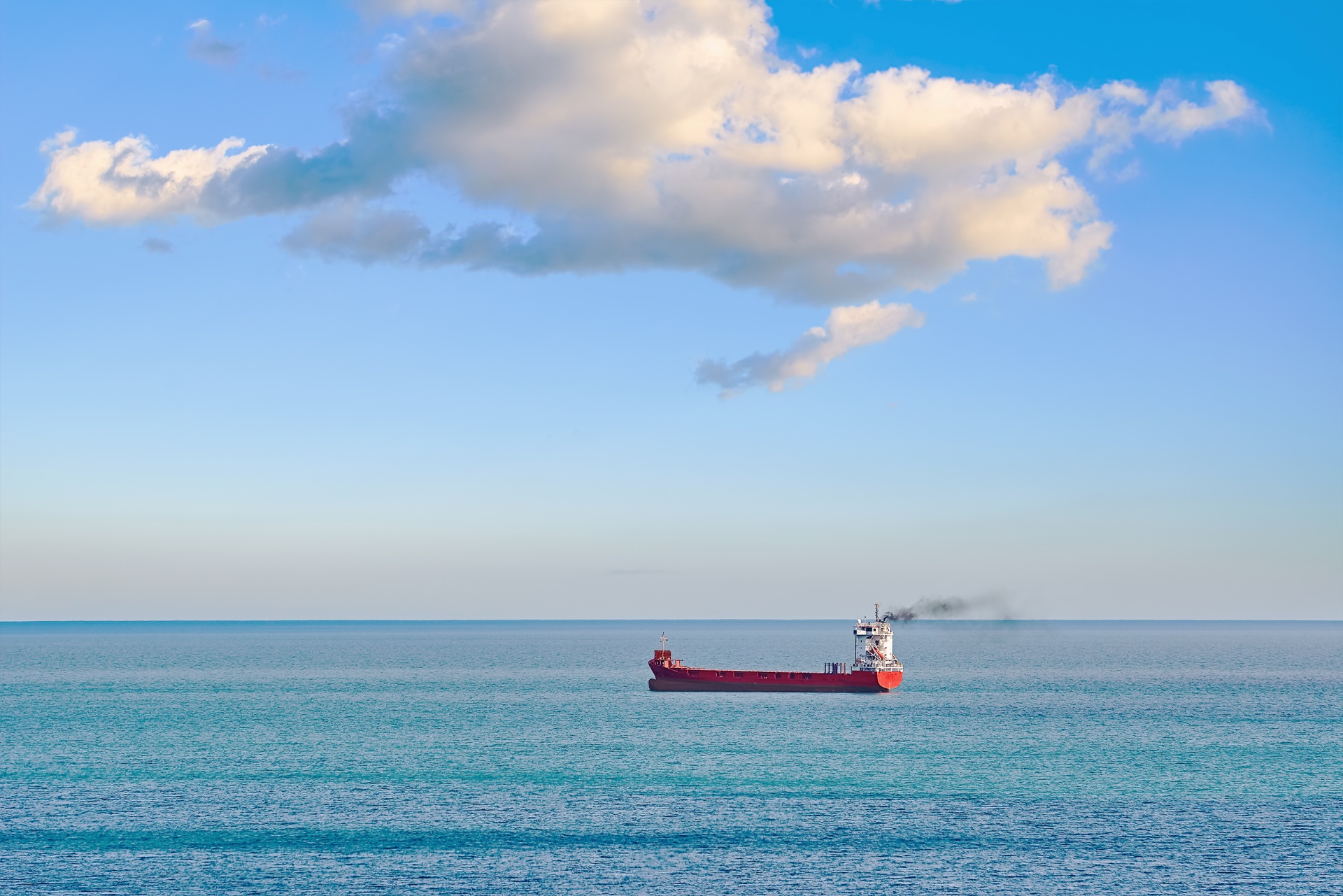
Recent drone attacks on merchant ships off the coasts of Bulgaria and Romania are another example of geopolitical turmoil on key transport routes. For now, we do not see any restrictions on maritime services to Constanta or Burgas, but these incidents show how quickly conditions on a route can change. How can companies serving Romania and Bulgaria ensure the resilience of their supply chains enough to maintain the flow of goods when access to a main port becomes more difficult?
The safest approach is to prepare alternative routes before they are needed. For us, the first choice is Koper in Slovenia, where Rohlig SUUS Logistics has its own branch. It is an important and rapidly growing port on the Adriatic: in 2025, its container terminal handled a record 1.27 million TEU, 12 percent more than the year before. The second track on the Divača-Koper line, commissioned in March, will more than double the capacity of the rail connection from the Slovenian port once it reaches full operational efficiency. Another option is Piraeus in Greece, located on the main Asia-Europe shipping route.
Ports in the north of the continent handle direct ocean services from Asia and have rail connections with Central and Eastern Europe, so cargo from there reaches Romania and Bulgaria exclusively by land. In Poland, our home market, Gdańsk is breaking further records, which we are observing closely: in the first half of 2026, the local Baltic Hub container terminal handled almost 1.6 million TEU, 23 percent more year-on-year. Other options include Hamburg and Bremerhaven in Germany, as well as Rotterdam in the Netherlands. At SUUS, we select services to meet the needs of each client so that the route best suits their cargo in terms of costs, transit time, and reliability.
Air freight is also an alternative, especially for high-value and time-sensitive shipments. The first choice is Bucharest as a local gateway: in the first quarter of 2026, cargo volume at Romanian airports increased by over 13 percent year-on-year. Additional capacity is provided by Budapest, the largest cargo hub in the region, which handled over 426,000 tons in 2025, where SUUS also has its own branch.
Building resilience also means keeping inventory closer to the market, and we see client interest in such a solution. In Romania, SUUS provides warehousing services, including co-packing and other value-added services (VAS), as well as customs clearance, allowing clients to keep safety stock close to their recipients in case of maritime delivery delays.
At SUUS, we specialize in designing logistics tailored to individual client needs as part of our Supply Chain Solutions (SCS). We can conduct an audit, plan, redesign, and manage a client’s entire operation, adapting it to changing conditions on individual transport corridors. Ensuring the resilience of logistics operations is one of the most important priorities for companies today. We have a strong position in the CEECA region and continue to strengthen it, operating in Romania, Poland, the Czech Republic, Slovenia, Kazakhstan, and Uzbekistan, as well as in Slovakia, Hungary, and Ukraine. We manage our clients’ supply chains on a global scale, and our extensive network and multimodal competencies allow us to shift cargo between routes and modes of transport before disruptions on a given corridor affect client schedules. Companies that have already diversified their transport options will be in a better position if the situation in the Black Sea region escalates further.
Source: Rohlig SUUS Logistics