









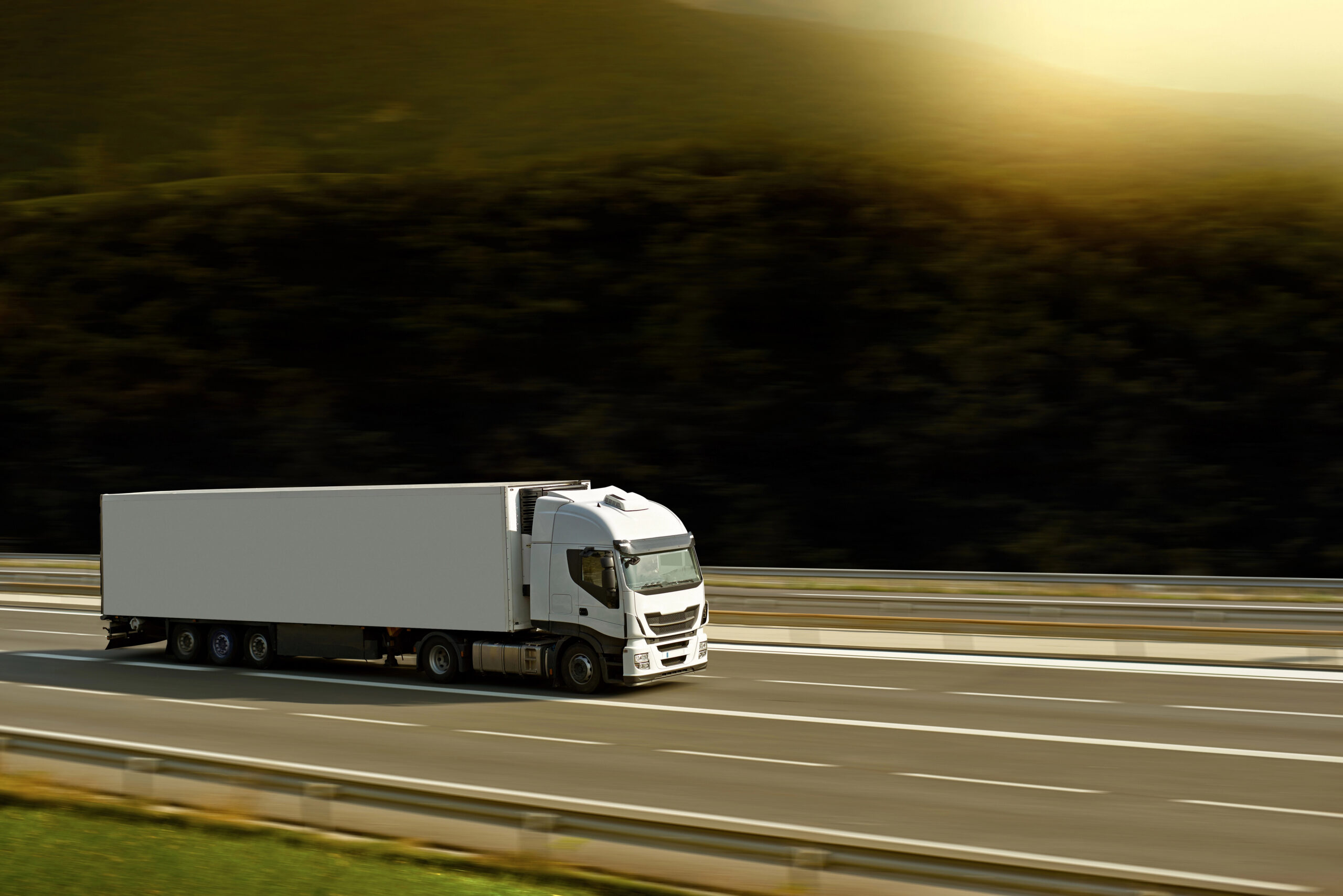
In 2024, Polish transport companies performed over 236 billion tonne-kilometres on international routes. This accounts for nearly 1/3 of international transport work in the European Union[1]. Given that they own less than 1/5 of the vehicles[2], these data indicate the high efficiency of domestic enterprises and their consistent building of a leading position on the continent. Paradoxically, this status does not go hand in hand with financial success. Transport is among the top three most indebted industries in Poland[3]. In the years 2024-2026, it was also the sector with the highest number of companies that declared bankruptcy[4]. The difficult situation is not solely due to rising operating costs. Another problem is the collection of payments for services rendered. This process is a particular challenge in the case of foreign contractors, for whom Polish carriers perform 2/3 of their services[5]. How can one effectively manage cash flows, limit the risk of payment bottlenecks, and choose the right forms of fleet financing to maintain financial stability under such conditions?
The economic condition of the TSL industry is of great importance to the domestic economy. Transport companies are responsible for nearly 7 percent of Poland’s GDP. This is the second-largest contribution to the state budget in the service sector, right after trade and repairs[6]. Moreover, the share of Polish carriers in employment is 6.5 percent[7]. Transport therefore provides nearly a million jobs, and its significance extends far beyond the national level.
Since joining the European Union, domestic transport companies have consistently built a strong position across the entire continent. Currently, foreign markets have become the main area of their activity. In 2024, more than 64 percent of Polish road transport consisted of international transport, cross-trade, or cabotage. Less than 36 percent of services were carried out within the country[8].
Over the last two decades, Poland has built its position as a leader in the European transport industry. It has held this position continuously since 2018, when it overtook Germany in terms of transport work performed[9]. Currently, in 1 out of 2 of the largest inter-state flows in the EU (in terms of tonnage), our domestic companies are the main carrier from outside the countries of loading and unloading[10]. This is an undoubted reason for pride. However, it must be remembered that for many companies, it hides a hard struggle for survival. The financial situation of carriers has been unstable for years – says Tomasz Czyż, Chief Expert for Technological Solutions, Eurowag. – Bearing in mind how crucial an aspect for the sector is obtaining financing for current operations and collecting outstanding receivables, we decided to dedicate the next episode of our recurring webinar “Time for Transport” to this topic.
– adds Czyż.
Why is road transport in the red?
Reports confirm the words of the Eurowag expert – the international success of the Polish transport industry is not as unambiguous as the rankings suggest. Last year, the financial arrears of carriers amounted to PLN 1.63 billion. This is an increase of 25 billion compared to 2024[11]. Fuel prices, road tolls, and rising employment costs are not the only sources of financial problems. Their cause also lies in business issues. Over the years 2024-2025, the net margin of Polish transport companies fell from 6.8 to 4.2 percent[12]. At the same time, most companies do not have the ability to negotiate contracts. In nearly 2/3 of cases (63 percent), such situations happen often or very often[13]. How does this look in practice?
More than 85 percent of carriers declare that their contracts always or very often assume payment terms of 30 to 60 days after the service is performed[14]. In 4 out of 5 cases, this situation has a significant impact on operations[15]. It happens that the time to settle an invoice is even longer. As many as 42 percent of companies carried out contracts assuming payment after more than 120 days from the service performance[16]. Carriers agree to unfavorable contract clauses because they are fighting for the continuity of orders for employees in a competitive market. They operate under the pressure of competition – after all, customers have a large choice in a globalized market.
– explains Kamil Wolański, Head of Expert Department, Eurowag.
Despite long payment terms, a significant portion of contractors do not pay their obligations on time. Often, recovering money is a challenge, especially when it is located abroad.
In the case of outstanding receivables from foreign contractors, the debt recovery process can be more complex. This is influenced by, among other things, the language barrier, cultural differences, and above all, different legal systems and rules for pursuing claims in individual countries. However, the process itself is based on similar logic as in Poland: first, amicable actions and negotiations with the debtor are undertaken, and if they do not bring results, it is possible to take the case to court and then to enforcement proceedings. In such situations, a solution may be to use the services of a partner specializing in comprehensive international debt collection, conducted directly in the debtor’s country. This allows the entrepreneur to use local experience and knowledge of legal and business conditions, without the need to navigate different systems and procedures in force abroad on their own.
– emphasizes Rafał Wąsowski, Sales Director Market Poland, Intrum.
How to avoid paying to do business in transport?
Recovering receivables for a service performed for a contractor is often a long and stressful process. An opportunity to avoid this situation is factoring, i.e., selling non-overdue invoices with a deferred payment term to a financial institution. The transport company receives payment for the order reduced by the costs of performing the service. This action is one of the ways to improve financial liquidity, which is important, among other things, when applying for vehicle leasing. The scope of factoring depends on the entity to which the carrier applies. Usually, this option is available not only in the case of Polish contractors but also those operating within the European Union. Factoring does not, of course, answer all financial challenges. When necessary expenses exceed the company’s capabilities, it is necessary to reach for additional support. This happens, for example, during the replacement or expansion of the fleet.
Obtaining such financing and the period for which it can be granted is limited by various factors. Depending on the financial institution, these can be, for example, the age and type of vehicles, their too low or too high value, and finally their origin or legal status. Problems may arise with plans to purchase a car from an unauthorized supplier. However, the most important thing is the carrier’s situation. Frequent reasons for refusing financing are too short a period of business activity, low creditworthiness, presence in debtor registers, and lack of financial liquidity.
– explains Maciej Kikta, Head of Communication Department, Nest Bank.
The biggest challenge for a transport company in this situation is planning actions that will increase the chance of obtaining financing or leasing. As far as possible, it is necessary to settle outstanding liabilities, ZUS contributions, and taxes. Finding a guarantor and an initial fee, i.e., a down payment made at the time of signing the leasing agreement, will work in one’s favor. Efforts to obtain financial support are also a good time to implement expense and income control mechanisms in the company.
Carriers process a lot of data related to fleet management, route planning, road tolls, or settlement documents. If this information is scattered, managing it is difficult. This is a straight path to financial losses and problems with recovering receivables. New technologies help to limit these challenges. They enable the collection of all the most important information in one place, concerning, among other things, balances, credit limits, fuel costs, or invoices issued to contractors. Solutions of this type provide quick access to unpaid or overdue payments, thanks to which the carrier can take action to recover arrears faster.
– points out Tomasz Czyż, Chief Expert for Technological Solutions, Eurowag.
Discussion about industry problems
Hidden behind the title of the European leader in the transport industry is the gray everyday life of Polish carriers. Its main determinants include, among others, difficult access to financing and delays in payments for services performed. Long-time practitioners and experts in the field of technology for transport, banking, and debt recovery will talk about how to improve one’s image in the eyes of financial institutions and deal with unreliable contractors. During the “Time for Transport #54” webinar, which will take place at 10:00 AM on Thursday, October 29th, practical knowledge will be shared by: Kamil Wolański (Eurowag), Tomasz Czyż (Eurowag), Rafał Wąsowski (Intrum), and Maciej Kikta (Nest Bank). The formula will have an interactive character, including questions and problems submitted by participants. Participation in the event is free, but due to the limited number of places, it requires prior registration. The link to sign up is available HERE.
[1] Polish Economic Institute, 2026, Transport sector facing cost pressure and decarbonization, p. 9
[2] Eurostat, 2026, Road freight transport by vehicle characteristics
[3] KRD, 2025, Most indebted industries of the Polish economy, p. 6
[4] COIG, 2026 company bankruptcies (subsequent data from 2025 and 2024)
[5] Polish Economic Institute, 2026, Transport sector facing cost pressure and decarbonization, p. 9
[6] Statistics Poland (GUS), Poland in numbers 2025, p. 32
[7] Transport and Logistics Poland, Road transport in Poland 2024/2025, p. 12
[8] Polish Economic Institute, 2026, Transport sector facing cost pressure and decarbonization, p. 9
[9] Transport and Logistics Poland, Road transport in Poland 2024/2025, p. 24
[10] Eurostat, 2026, Road freight transport statistics[11] KRD, 2025, Most indebted industries of the Polish economy, p. 19
[12] Trans-Logistic, 2025, TSL industry report, p. 4
[13] Transport and Logistics Poland, 2025, Conditions for concluding contracts and transport orders in road transport, p. 6
[14] Transport and Logistics Poland, 2025, Conditions for concluding contracts and transport orders in road transport, p. 22
[15] Transport and Logistics Poland, 2025, Conditions for concluding contracts and transport orders in road transport, p. 28
[16] Transport and Logistics Poland, 2025, Conditions for concluding contracts and transport orders in road transport, p. 26
Source: Eurowag