









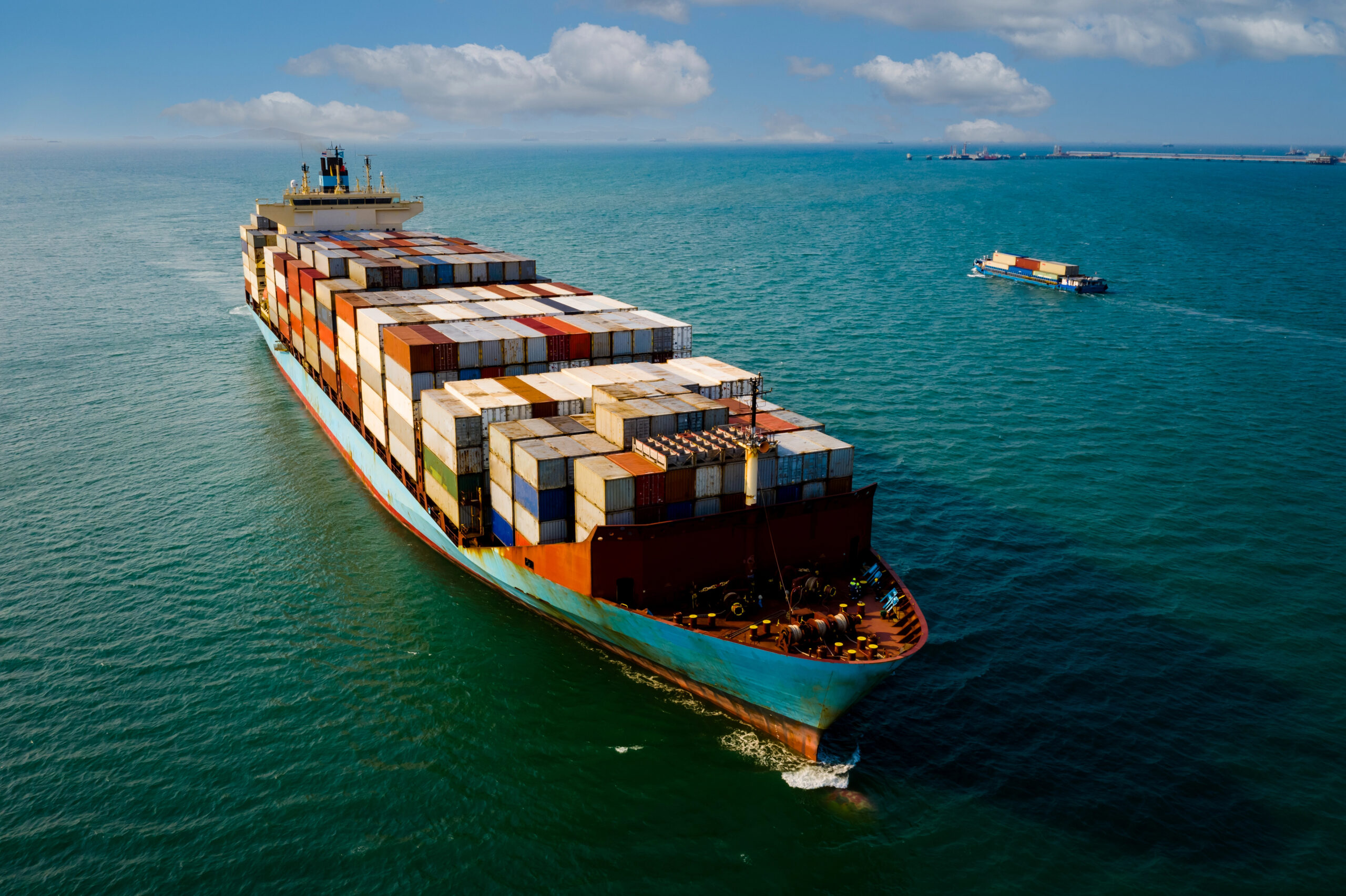
Sometimes open, sometimes practically closed, with traffic dependent on the current political and military situation. Problems in the Strait of Hormuz do not only affect oil and gas tankers. For European companies—including Polish ones—they mean more expensive and less predictable transport, longer delivery times, and the need to rethink inventory levels. This multiplies challenges in warehouses, where not only the availability of space becomes crucial, but also the ability to efficiently handle deliveries whose timing and volume are increasingly difficult to predict.
The Strait of Hormuz is only a few dozen kilometers wide, but its importance to the global economy is immense. Before this year’s conflict, more than 20 million barrels of oil and petroleum products passed through it daily. According to the U.S. Energy Information Administration, this volume fell to 4.9 million barrels per day in the second quarter of 2026. Hormuz is also a key route for LNG—in 2024, about 20 percent of global liquefied gas trade passed through here.
For the European economy, the problem lies not only in soaring energy prices. Although the Strait of Hormuz is not on the main container route connecting the Far East with Europe, disruptions in this region have broader consequences for global shipping. Fuel, freight, and insurance costs are rising, some ships are changing routes, port congestion is appearing, and container availability is worsening in places where they are needed most. As a result, companies using transport connections that do not run directly through the strait are also feeling the problems. The Centre for Eastern Studies pointed out as early as spring that after the blockade of Hormuz, delays in transport between Asia and Europe increased by at least 20-30 days.
The goods will arrive, but it is unclear when
From the perspective of companies, one of the biggest complications is not so much the lack of goods itself, but the loss of predictability. A company that until now could plan deliveries from Asia with fairly high accuracy must take into account delays of several weeks. At the same time, after a period of downtime, several overdue deliveries may arrive almost at the same time.
This changes the way of thinking about inventory. A model based on the smallest possible warehouse and “just-in-time” deliveries works well when the supply chain is stable. With regular disruptions, companies need a larger safety margin. However, this does not mean that the solution is to fill the warehouse to the brim.
In a crisis situation, the natural reaction is to increase inventory, but this should not be done blindly. You need to know which products are critical to the company’s operations, how long we can wait for the next delivery, and how much additional cargo the warehouse can accept without losing efficiency. Safety stock should result from risk analysis, not from fear of an empty shelf.
– comments Paweł Bobiński, board member of Logifact-Systems, a Polish company designing and providing solutions for logistics.
In practice, this means the need to consider not only the average delivery time but also its variability, projected demand, and the importance of individual products for the company’s operations. Increasing the stock of all goods to the same extent can generate additional costs without providing real protection for the most important processes.
The warehouse also has its limits
Larger inventories require space, but also proper work organization. If the warehouse is already operating near maximum capacity, an additional dozen or several dozen percent of goods can disrupt flows, lengthen picking, and make it difficult to accept subsequent deliveries.
The problem may be not only the quantity of stored goods but also the pace at which the warehouse is able to handle them. After a period of delays, several overdue deliveries may arrive simultaneously, causing congestion in receiving areas, a pile-up of unloading operations, and difficulties in fulfilling orders on time. Even a warehouse with free space may have trouble handling such a situation if the number of docks, availability of employees, or throughput of individual processes turn out to be the limiting factors.
Therefore, preparing a company for further disruptions should start with checking the actual storage capacity, taking into account the inventory structure and the warehouse’s ability to handle periodic increases in operational load.
As part of logistics projects and audits, factors such as the size and structure of inventory, goods flows, space utilization, organization of individual zones, and required resources are analyzed. It is also important to identify “bottlenecks,” determine the throughput of individual warehouse processes under average and maximum loads, and assess the ability to flexibly adapt work organization to changing delivery intensity. Only on this basis can it be assessed whether the company really needs additional space or if part of the reserve can be found in the existing facility.
Often the first thought is: we need a bigger warehouse. Meanwhile, the problem may not be the number of square meters, but how they are used. Before a company rents another hall or starts an investment, it is worth calculating how much inventory the current warehouse can actually accommodate and where its bottlenecks are.
– assesses the Logifact-Systems expert.
Prepare a scenario before the problem arises
It is impossible to predict when the situation in the Strait of Hormuz will finally stabilize or where the next problem will appear on global transport routes. However, recent years have shown that disruptions have ceased to be events that can be treated as exceptional.
The European warehouse market is already reacting to this change. Savills points out that companies are increasingly prioritizing supply chain resilience over maximum cost efficiency. Longer transport times are prompting some companies to maintain larger inventories in Europe and combine the “just-in-time” model with a “just-in-case” approach. Companies can still limit inventory where deliveries are stable, while simultaneously maintaining a larger safety stock for products whose availability is particularly vulnerable to disruption.
Shortening and diversifying the supply chain is also becoming increasingly important. Entrepreneurs are looking for suppliers closer to their sales markets, including in Europe, and are reducing dependence on a single supply direction so that problems on a single transport route do not paralyze the entire operation. It is important here not only the number of suppliers but also their geographical and logistical independence. However, such changes require re-planning goods flows, delivery frequency, and inventory organization, and thus affect the way warehouses function.
There is no single correct security model. One company will need a larger stock of key components, another an additional warehouse buffer, and yet another, above all, better information about what is actually in stock and how quickly it rotates. A WMS system can give a company a current picture of inventory, its location, and data allowing for the identification of emerging shortages and surpluses, but technology alone will not replace well-designed processes.
Proper management of warehouse processes also plays an important role here. A WMS system allows not only for controlling inventory levels and locations but also for organizing the flow of goods more efficiently. Thanks to proper planning of receipts, using delivery notifications and information transmitted from host systems, prioritization of operations, and management of warehouse space utilization, a company can better react to sudden surges in deliveries and changes in warehouse load. WMS does not eliminate supply chain disruptions, but if properly designed and implemented, it can help limit their operational consequences. However, technology alone will not replace well-designed processes.
Companies do not have to prepare the warehouse specifically for the crisis in the Strait of Hormuz. They should prepare it for unpredictability. Today the problem is the Middle East, earlier it was the pandemic, the Red Sea, or port congestion. Well-designed logistics, including a WMS system tailored to specific needs, should allow a company to react to such changes without reorganizing the entire warehouse every time.
– summarizes Paweł Bobiński, board member of Logifact-Systems.
The crisis around Hormuz shows that resilience to supply disruptions does not have to mean maintaining ever-larger inventories. Equally important is the operational flexibility of the warehouse, which should be prepared both for periods of limited deliveries and for their sudden surge after transport resumes. Key is the knowledge of which goods require an additional buffer, how large it should be, and how to organize processes and use available space to react efficiently to changing conditions. Proper preparation allows for limiting the effects of disruptions without the need for constant expansion of warehouse space.
Source: Logifact