









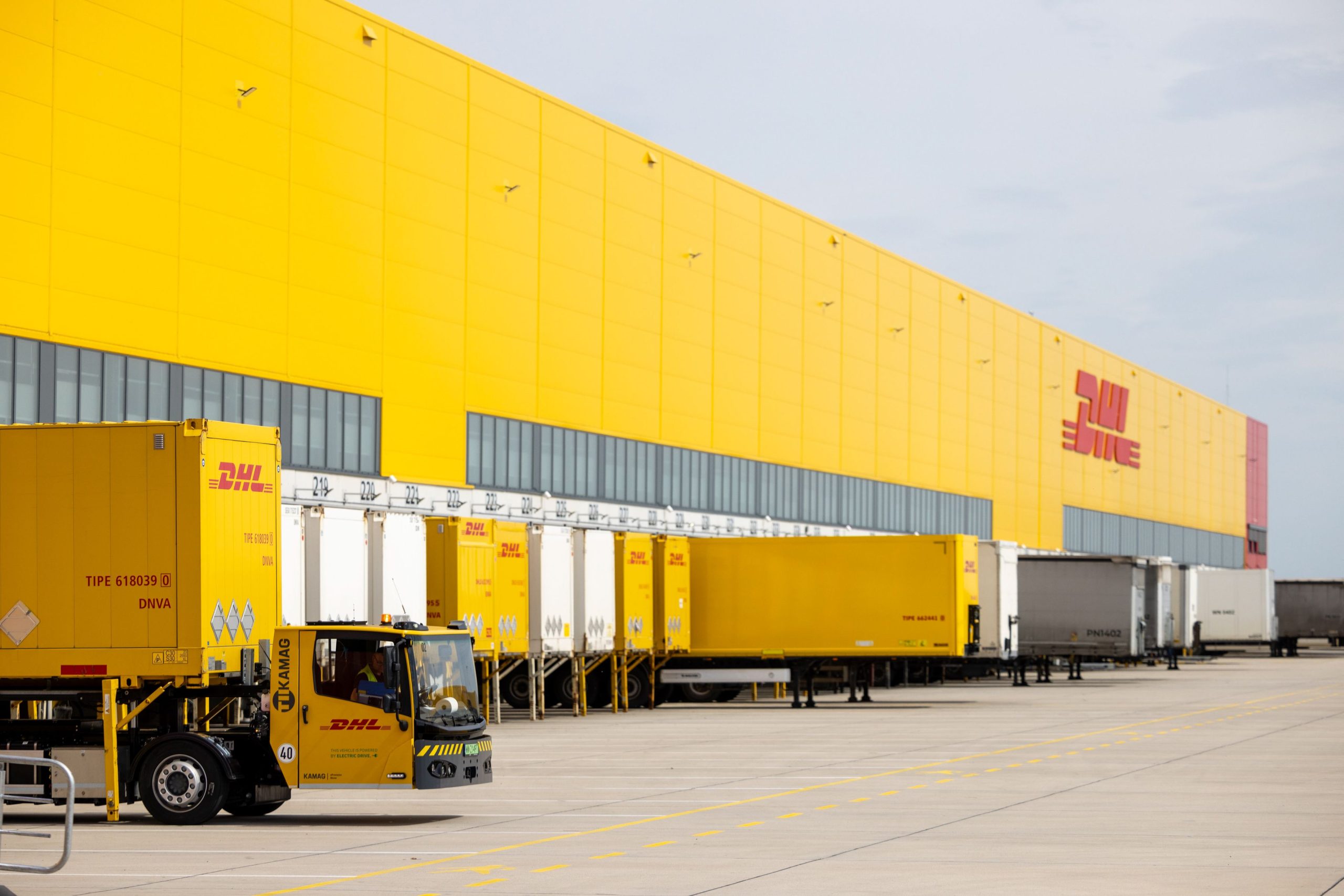
In the year that DHL Express celebrates its 35th anniversary in Poland, the latest edition of the DHL Globalization Tracker report shows the growing role of Europe in global trade. In the first five months of 2026, the value of trade in the region increased by 12% year-on-year, and Poland is among the European economies whose trade is developing particularly dynamically. In response to changes in global supply chains, the DHL Group plans to invest over 400 million euros in Central and Eastern Europe by 2030 to develop infrastructure, transport networks, and modern logistics solutions.
The year in which DHL Express celebrates its 35th anniversary in Poland comes at a time of significant changes in global trade. Despite higher tariffs, geopolitical tensions, and the transformation of global supply chains, international trade is showing resilience to disruptions, and Europe is one of the regions recording the strongest growth. This is shown by the latest edition of the DHL Globalization Tracker report, developed by DHL and the New York University Stern School of Business.
Europe as one of the engines of global trade growth
In the first half of 2026, global trade in goods grew faster than in any other half-year period in the last 15 years – excluding the rebound after the COVID-19 pandemic. One of the main factors supporting growth is global investment in infrastructure related to artificial intelligence (AI), which is increasing demand for, among other things, semiconductors and data transmission devices.
Against the backdrop of the global economy, Europe is performing particularly well. In the first five months of 2026, the value of trade in the region increased by 12% compared to the same period last year. Only East Asia and the Pacific region recorded higher dynamics, with growth reaching 26%. Sub-Saharan Africa came in third with a result of 11%.
Prospects for the coming years have also improved. According to current forecasts, global trade in goods is expected to increase by an average of 3.4% annually until 2029, which is faster than in the previous decade, when the average annual rate was 2.7%. At the same time, the level of globalization, measured by cross-border flows of trade, capital, information, and people, reached a record level of 25.8% in 2025.
Poland against the backdrop of European trade
Poland is recording particularly strong dynamics. Between 2016 and 2025, Polish trade in goods grew 2.1 times faster than global trade and 2.7 times faster than European Union trade. According to forecasts for 2026-2029, it is expected to grow almost 1/3 faster than global trade and 91% faster than European Union trade.
The structure of Polish trade relations is also changing. Germany remains a key partner, and the majority of Poland’s trade still takes place within the European Union, but trade with the United States and China has also increased significantly over the last decade.
These trends fit into the broader increase in the importance of Central and Eastern Europe in European and global supply chains. In the DHL Group’s Strategy 2030, Poland, the Czech Republic, Hungary, and Romania have been identified as markets in the Geographic Tailwinds category.
Over 400 million euros for logistics development in Central and Eastern Europe
In response to these changes, the DHL Group plans to allocate over 400 million euros by 2030 for the development of its operations in Central and Eastern Europe. The program will include investments in logistics infrastructure, international connections, and technological solutions supporting more resilient and flexible supply chains. Funds will be allocated to, among other things, the development of contract logistics and warehouse infrastructure, B2B transport networks, supply chain control towers, international express services, and freight transport.
Central and Eastern Europe is playing an increasingly important role in global trade and global supply chains, and Poland is emerging as one of the most dynamic logistics and production hubs in Europe. As the importance of supply chain resilience and flexibility grows, companies need logistics partners who can efficiently connect production, inventory, and markets across borders. Through these investments, we are developing the infrastructure and international connections needed to support the growth of the companies that drive the region’s economy.
– said John Pearson, CEO of DHL Express.
The next stage of DHL’s development in Poland
Poland will play a significant role in the further development of the DHL Group in the region. The program includes, among other things, the planned construction of a new DHL Express air terminal in Katowice, as well as further investments by other divisions – DHL Supply Chain, DHL Freight, DHL eCommerce, and DHL Global Forwarding – in warehouse and distribution networks and advanced technologies.
New projects will be a continuation of investments made by the Group in recent years. In 2024, DHL launched an International Logistics Center in Poznań worth 180 million euros, serving, among others, the DHL eCommerce, DHL Freight, and Post & Parcel Germany divisions, and connecting Poland with European and global markets.
The 35th anniversary of DHL Express in Poland comes at a special moment for our economy. Polish companies are increasingly boldly developing their operations in foreign markets, and Poland is strengthening its role in international supply chains. This makes the importance of fast, reliable connections with key markets around the world grow. That is why we treat further investments not only as the development of our network, but above all as a way to create even better conditions for the international development of companies operating in Poland. The scale of DHL’s operations in Poland is also shown by employment – the Group employs over 10,000 people in our country, and Poland is one of its ten largest markets in the world in this respect.
– says Tomasz Buraś, CEO of DHL Express Poland.
The DHL Group assumes that with the further transformation of global supply chains, Central and Eastern Europe will play an increasingly important role in connecting European production, consumption, and trade. Investments in infrastructure, technology, and employee skills are intended to help customers build more resilient, flexible, and internationally connected supply chains.
About the DHL Globalization Tracker
The DHL Globalization Tracker is a comprehensive report and interactive website that regularly provides updates on globalization and global trade. It complements the renowned DHL Globalization Report, published periodically since 2011. The Tracker is based on over 25 sources – public, private, and academic – and analyzes over 30 million data points regarding international trade, capital, information, and migration flows. It contains interactive online charts that make it easy for users to browse trends by region, geopolitical groupings, and individual countries. It also allows for easy downloading of data and charts for offline use.
The DHL Globalization Tracker report was developed on behalf of DHL by Prof. Steven A. Altman and Caroline R. Bastian from the New York University Stern School of Business. The DHL Globalization Tracker and additional resources are available at dhl.com/globalization.
Source: DHL Express (Poland) Sp. z o.o.