









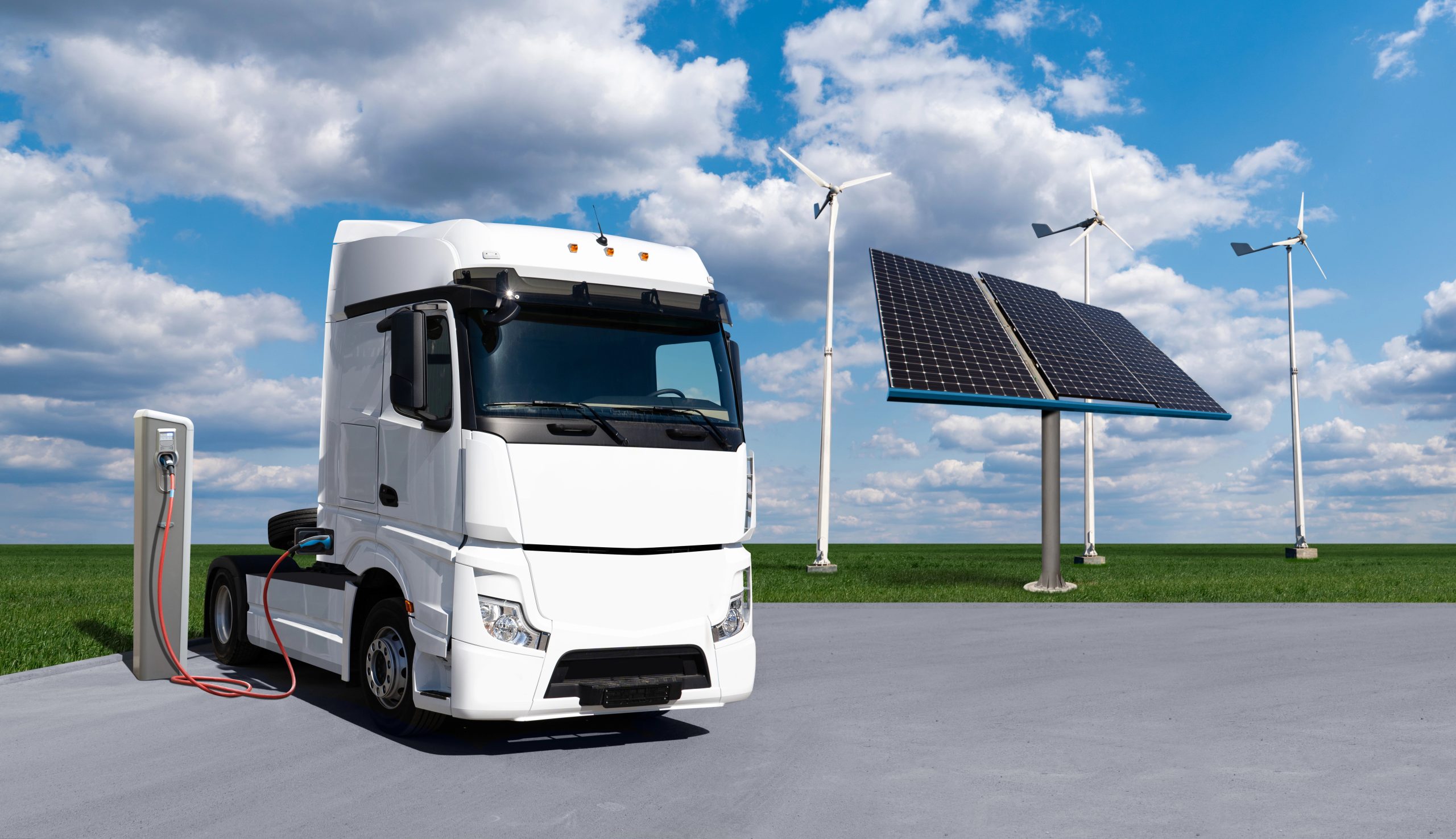
Financial issues, not ecology, are driving the electrification of cars in Poland. The study “The present and future prospects for the development of mobility services,” conducted on behalf of Arval, shows that 60% of employees would choose a hybrid or electric car as a company vehicle – driven primarily by savings. A similar trend among companies is confirmed by the 2026 Fleet and Mobility Barometer, but it also points out that insufficient charging infrastructure remains a barrier to further fleet electrification.
Employees choose with their wallets
The study “The present and future prospects for the development of mobility services” conducted on behalf of Arval shows that respondents – individuals – if they were to choose a car in a rental model or as an employee benefit, would mostly choose some form of electric vehicle. As many as 48% pointed to a hybrid drive, and 12% to a fully electric one. Only 28% of survey participants would choose a combustion engine car. The remaining 12% were unable to choose a preferred drive.
In the opinion of the surveyed employees, the most important advantage of hybrids is lower fuel consumption (41%), followed by lower operating costs (27%) and the ability to drive partially in electric mode (15%). The ecological aspect was indicated by only 7% of respondents.
In the case of fully electric cars, economic arguments also dominate. The biggest advantage is lower operating costs (48%). The ecological aspect was indicated by 17% of respondents, the ability to charge at home, work, and public points – 14%, and subsidies or benefits from the employer – 13%.
There is a certain generational shift visible in this trend. “Pro” hybrids are mainly well-educated, young people from large cities, often employees of large companies. It is worth adding that women are more open to alternative transport solutions than men – 23% of women consider changing their car usage model compared to 19% of men. Our experience and observations show that it is the ability to use company electric cars that has a significant impact on the private choices of employees and their growing interest in cars with alternative drives. These people often use such vehicles at work and can see their advantages and strengths in practice. At the same time, hybrids seem to be a safe and optimal choice in the eyes of Poles – they combine both drives.
– comments Radosław Kitala, Operational Marketing Manager at Arval.
Companies are the main engine of change
A similar way of thinking can also be seen on the company side. According to the 2026 Fleet and Mobility Barometer, 42% of Polish companies already use at least one electrified vehicle. The most popular are still hybrids (HEV), which are owned by every fifth surveyed company (an increase from 16% y/y). In second place are fully electric cars (BEV), which are part of the fleets of 16% of companies (an increase from 12% the year before). At the same time, there is a certain retreat from plug-in hybrids (PHEV), which are used by 14% of companies (a decrease from 16% y/y).
Although in total this is still clearly below the European average, the observed growth dynamics and the companies’ own forecasts allow us to hope that this gap will be significantly reduced in the coming years. An even clearer picture of the changes is shown by the companies’ plans for the next three years: the percentage of companies owning at least one BEV car will increase to 31%, HEV to 37%, and PHEV to 34%.
Company motivations: savings before ecology
The growing interest in electromobility is also primarily driven by economic considerations. According to the 2026 Fleet and Mobility Barometer, fuel cost reduction (47%) remains the most important motivation prompting companies to choose cars with alternative drives. The top three also included a smaller environmental impact (39%) and the need to adapt to future regulations (37%). Further on, fleet managers indicated improving the company’s image (33%), the desire to lower TCO (32%), and tax benefits (30%).
The numbers speak for themselves – the Polish fleet market is maturing faster than one might think. What we are observing is a lasting change in the model of thinking about the fleet. Companies are increasingly treating electrification as part of a broader strategy – operational, cost-related, and image-related.
– says Agnieszka Goworek, Head of Communication and Marketing at Arval.
Infrastructure still hinders electrification
However, the growing interest in alternative drives does not mean that all barriers have been overcome. For fleet managers, the biggest challenge remains the charging infrastructure. Insufficient density of public charging points is indicated by 43% of respondents, and private ones by 41%. A similar percentage points to the still high prices of electric cars, and 39% to the limited offer of models with alternative drives.
The problem also affects employees. The study “The present and future prospects for the development of mobility services” shows that currently only 25% of companies have access to chargers for electric cars. This means that even employees interested in electric cars may not have the opportunity to use them in their daily work.
The pace of regulatory changes also remains a barrier. Only 43% of fleet managers declare readiness for full fleet electrification by 2030 if such a requirement is introduced by regulations. Moreover, 13% would consider withdrawing mobility benefits entirely in such a situation.
One thing is clear: electrification is no longer an ideological issue, but a pure economic calculation. This means that the pace of electromobility growth will now depend on infrastructure and price, not on the worldview of employees or company boards. For Poland, this is both an opportunity and a challenge.
– summarizes Radosław Kitala.
- 48% of employees prefer a hybrid – mainly for lower fuel consumption, and 12% choose a fully electric vehicle – primarily due to lower costs; ecology as the main advantage is indicated by only 7% and 17% of respondents, respectively.
- Similar priorities are shown by the 2026 Fleet and Mobility Barometer: for 47% of companies, savings are the main reason for choosing electric vehicles, and ecology is only in second place (39%).
- A barrier to further electrification – both of fleets and private cars – remains insufficient charging infrastructure – only one in four employees indicates that they have access to a charging point at their workplace.
About the study
The data used in the release comes from the study “The present and future prospects for the development of mobility services” carried out by the research agency INQUIRY on behalf of Arval. The quantitative study using the CAWI method was conducted from April 24 to May 8, 2026, on a sample of N=603 employees of companies employing at least 10 people, operating in Warsaw, Krakow, Wroclaw, Poznan, the Tri-City, and Katowice. The full report with all results will be published in October 2026.
Source: Arval