









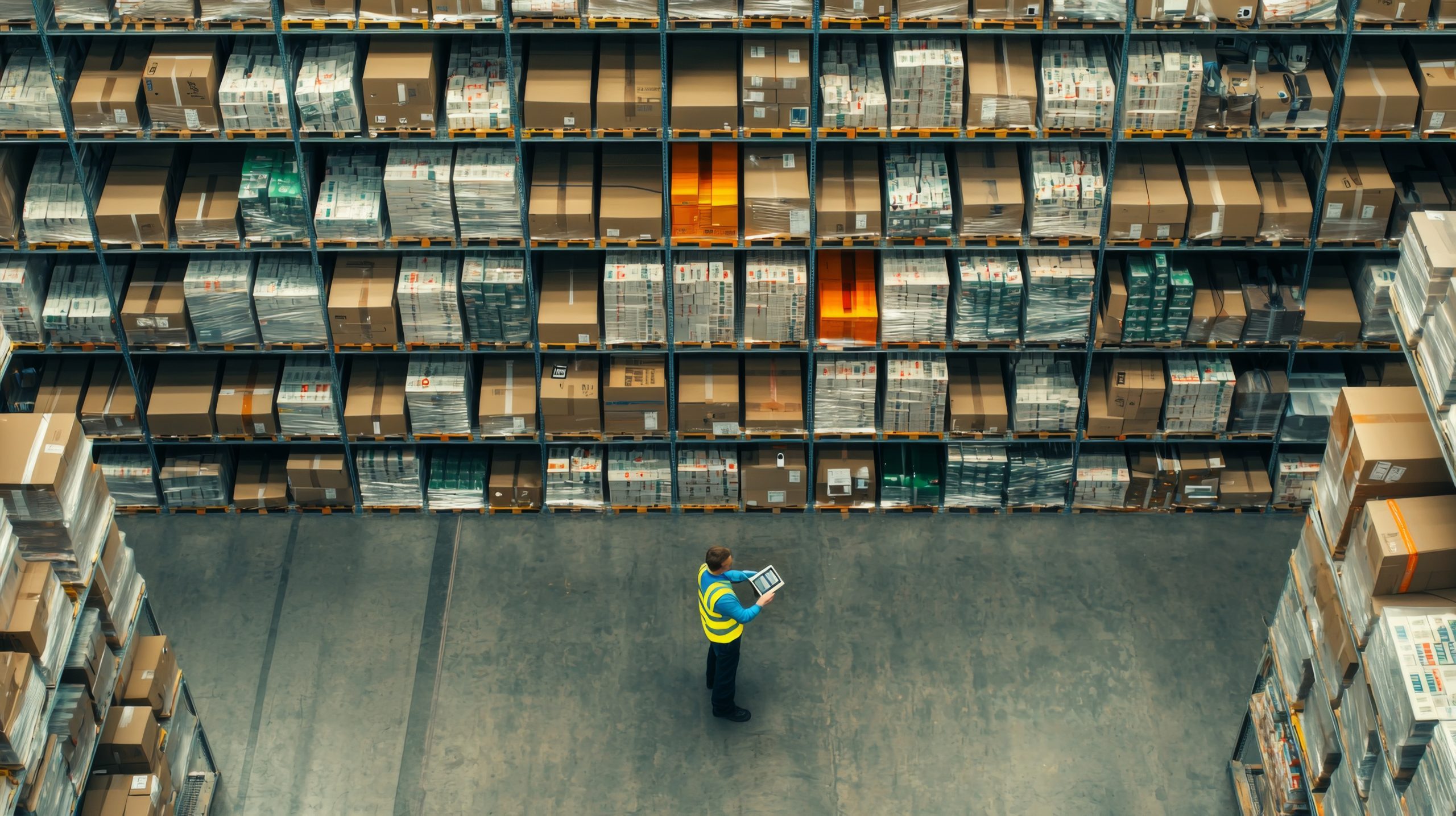
Polish logistics is currently facing a growing number of unpredictable challenges – and the advantage goes to companies that know fastest where their goods actually are.
Rising labor and transport costs, a shortage of warehouse workers, pressure for fast deliveries from e-commerce, and the effects of geopolitical and economic crises are the daily reality of the Polish logistics sector. It is also becoming increasingly difficult to maintain operational continuity when one has to react to events that cannot be fully predicted or planned for.
As a result, logistics is ceasing to be merely an operational support for trade – it has a direct impact on sales, customer experience, and the financial results of retail companies. A few years ago, the priority was mainly cost optimization. Today, there is more and more talk about resilience, understood as the ability to quickly adapt to changes and mitigate the effects of geopolitical perturbations – especially since consumers expect product availability and efficient order fulfillment regardless of the sales channel.
The problem lies not in the lack of goods, but in the lack of information
In practice, the most common source of losses is not the lack of a product, but the lack of knowledge about where it actually is. Outdated inventory data, discrepancies between the ERP system and the actual stock, or errors during goods receipt and dispatch are the daily reality of many warehouses and stores. Many problems that at first glance look like assortment shortages actually result from limited inventory visibility – the goods are in the network, but the system finds out about it with a delay, which is costly in a dynamic retail environment. In this context, it is worth looking at technologies that connect the physical world with the digital one almost in real time – and one of them is RFID.
– comments Robert Głażewski, Business Unit Director at Checkpoint Systems.
What is RFID and how does it support supply chain resilience
RFID (Radio Frequency Identification) is a radio identification technology in which each unit of goods is marked with a unique tag read wirelessly, without the need for direct line-of-sight or physical scanning. Unlike barcodes, it does not require scanning individual items one by one – it enables mass, simultaneous reading of many products and real-time updates of inventory data. It can be said that RFID helps reduce the number of “blind spots” in logistics, i.e., places and moments where an organization loses track of where its goods actually are.
The impact of this technology on the supply chain is most often visible in several areas. The first is better inventory visibility and faster detection of operational difficulties – for example, transport delays or distribution center blockages. The second is more efficient handling of urgent deliveries and seasonal demand spikes thanks to the automation of goods receipt and dispatch. The third concerns greater flexibility in the omnichannel model, including order fulfillment from stores in the Ship-from-Store model. The fourth, increasingly discussed, is data quality as the basis for more effective demand forecasting and inventory planning using AI tools – however, even the best algorithms will not be effective if they are based on incomplete or outdated data.
RFID in numbers
The effects of RFID implementations are often measurable, although their scale depends on the specifics of the organization, the industry, and the maturity of operational processes. Industry research and analysis indicate an increase in inventory accuracy to 95–99% and a reduction in inventory time by as much as 70–90%. The return on investment period is usually estimated at a dozen to over twenty months, depending on the scale of the implementation – however, it is worth treating these data as indicative, not as a guaranteed result of every implementation.
Resilience starts with data visibility
In the conditions of constant changes in the retail industry, the advantage is gained not by companies with the largest stocks, but by those that can most quickly make decisions based on reliable data. Today, RFID is often treated not only as a warehouse automation tool, but as one of the elements of building a resilient and flexible supply chain – capable of functioning both in periods of stable growth and during crises or unforeseen disruptions.
Source: Checkpoint Systems, Inc.