









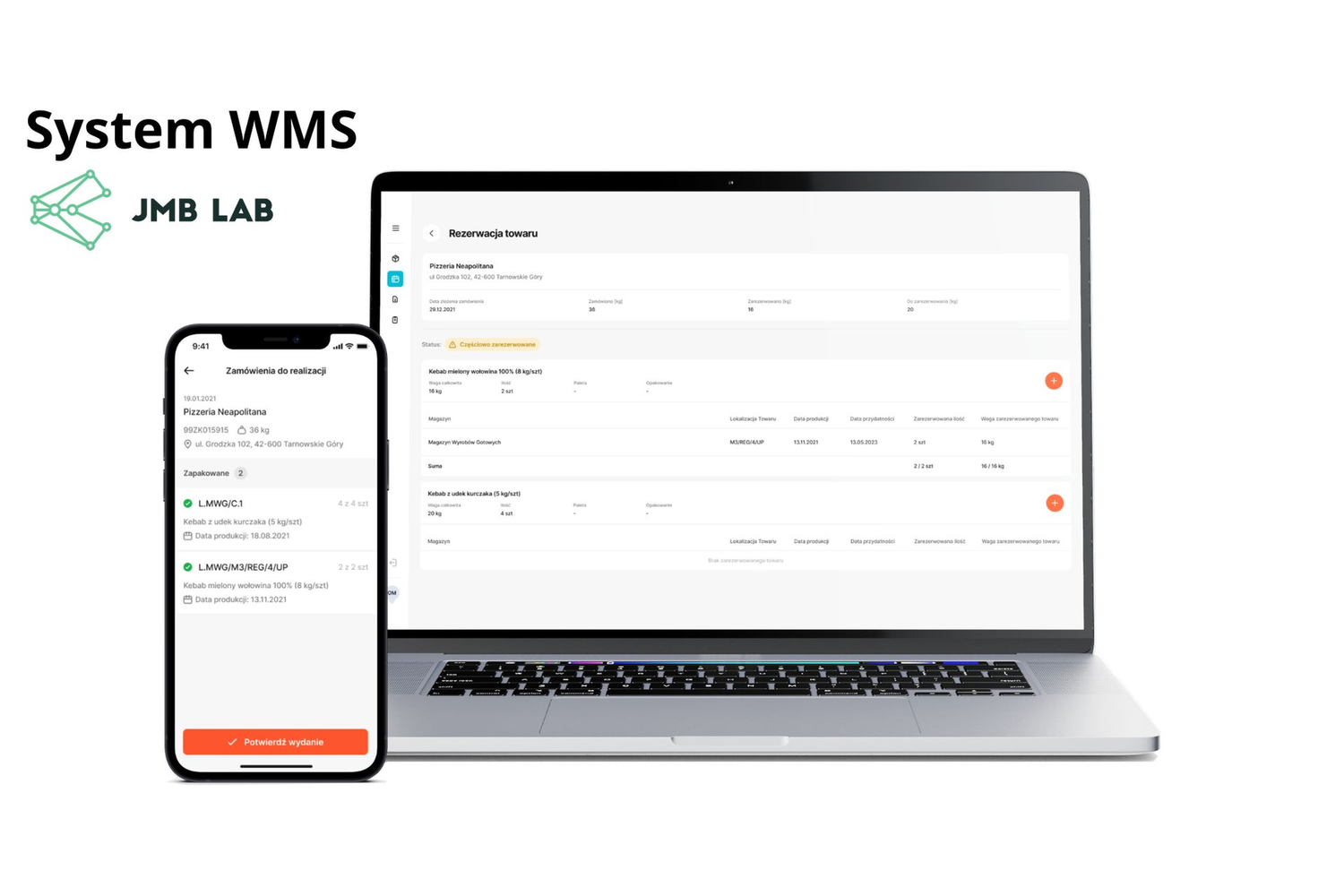
Modern industry faces the pressure of shortening production cycles, rising operating costs, and the requirement for mass product personalization. In such realities, the traditional boundary between the production area and the warehouse ceases to exist. Without efficient internal logistics, even the most advanced machine park will not achieve full efficiency.
The key to maintaining fluidity is the precise synchronization of the flow of raw materials, semi-finished products, and finished goods. To achieve this, manufacturing companies are turning to dedicated intralogistics management tools that connect the production floor with the warehouse facilities into one efficient ecosystem.
ERP vs. WMS on the production floor – where do the capabilities of a classic system end?
A common mistake made by management is assuming that an ERP (Enterprise Resource Planning) system is sufficient for full control over logistics processes. Although ERP works perfectly in the areas of finance, accounting, strategic planning, or sales order processing, its capabilities drop drastically at the operational warehouse level.
ERP treats inventory statically – as numerical values in a balance sheet. However, it lacks knowledge about the exact spatial location of a given component or the current load on communication routes.
| Area | ERP System | Dedicated warehouse system |
| Main question | What and how much is in stock? | Where, how, and when to deliver the goods? |
| Data nature | Static (balance sheet) | Dynamic (real-time) |
| Space management | General zone/warehouse status | Precise location address (rack, shelf, slot) |
| Operation verification | Periodic / manually entered | Immediate (scanners, GS1/RFID codes) |
Implementing a specialized tool allows for the deployment of a so-called chaotic storage system, where algorithms dynamically assign locations for components, optimizing transit paths and preventing machine downtime due to material shortages.
Key areas of support – from raw material receipt to finished product dispatch
Introducing digital control over the movement of goods translates directly into the efficiency of the entire plant. Material flow automation covers primarily two critical touchpoints:
1. Precise line feeding in a Just-in-Time model
Instead of blocking workspace with full pallets of raw materials, the software enables kitting. Based on current production schedules, the system generates tasks for personnel to issue exactly the sets of components required for a given shift. The material appears at the workstation exactly when it is needed.
2. Efficient recording of finished goods
As soon as a product comes off the line, it is immediately labeled. Integrating the system with packing stations allows for the automatic printing of GS1/SSCC logistics labels. The goods immediately change their status in the database to “available,” and algorithms indicate the optimal location in the finished goods warehouse based on dimensions and rotation (ABC analysis).
Ergonomics and interface, or the human factor in digital transformation
Even the most technologically advanced solution will not bring the expected results if its operation is complicated for manual workers. In the era of staff turnover and international teams, the intuitiveness of the interface becomes a priority.
Modern logistics support software offers:
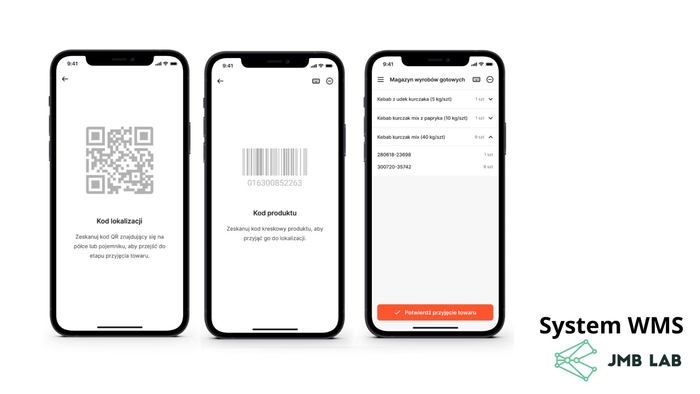
- Clear screens on mobile terminals: limiting views to key buttons shortens the training time for new operators to a minimum.
- Elimination of manual data entry: all confirmations and movements are carried out by scanning barcodes or RFID tags.
- Multilingual interface: the ability to quickly change the language on an employee’s profile (e.g., to Ukrainian, English, or Georgian) removes communication barriers.
- Personalized management dashboards: management gains access to real-time KPIs from a web browser.
How is warehouse software integrated with production?
Implementing a system dedicated to intralogistics requires a strategic approach. To ensure the process runs smoothly, it is worth dividing it into several stages:
- Operational process audit (As-Is): precise mapping of material flow – from delivery unloading, through buffer zones, to shipment.
- Definition of data exchange interfaces: establishing rules for two-way communication between warehouse software, the ERP system, and machine controllers (MES/APS).
- Adapting the architecture to the plant’s specifics: choosing a flexible solution. It is worth paying attention to custom-made systems – an example could be the proprietary WMS system, which allows for full adaptation of processes to the unique spatial layout of halls and seamless integration with popular ERP platforms (e.g., Comarch ERP, IFS, enova365, Symfonia, or Subiekt GT).
- Infrastructure labeling and training: equipping racks and zones with barcodes and conducting tests with operators.
Summary
Intralogistics optimization is an inseparable element of building a modern plant in the spirit of Industry 4.0. A key step on this path is the implementation of systems tailored to the plant’s specifics, such as custom software, which enables full process integration. Eliminating bottlenecks at the interface between the warehouse and the production line allows for maximum utilization of machine capacity, drastic reduction of errors, and full control over material flow in real-time.