









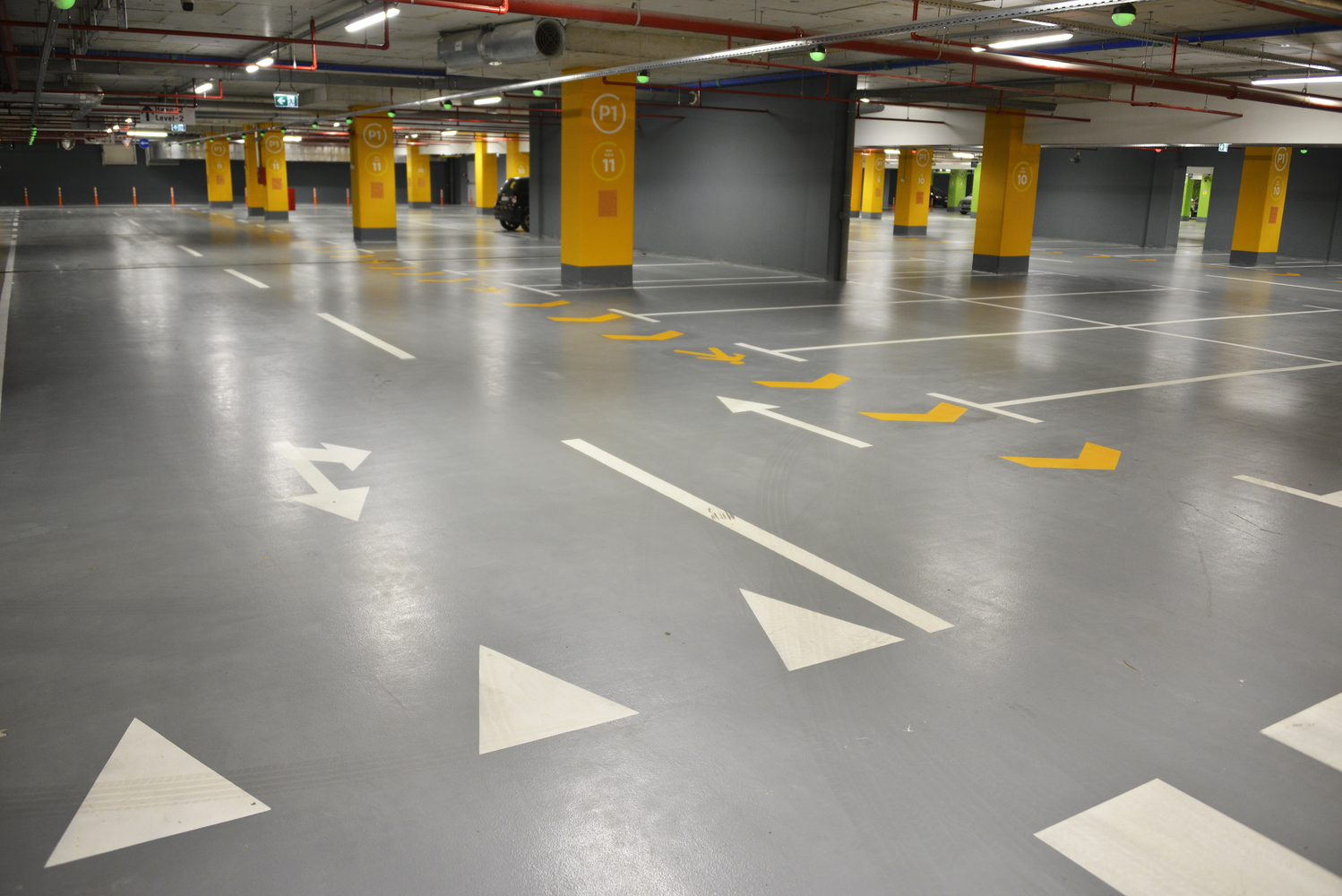
A parking lot without clear lines quickly becomes a source of problems. Drivers waste time maneuvering, traffic lanes get blocked, and pedestrians move between cars without designated walkways. Well-designed horizontal markings organize traffic and make it easier to use the entire space. This is important for small residential parking lots as well as shopping malls, office buildings, or underground garages.
Why are parking lines a key element of traffic organization?
Parking lines are responsible for the proper placement of vehicles and maintaining the passability of the entire facility. Thanks to them, drivers know where they can park, which way to drive, and which zones are intended for pedestrians. Well-executed markings allow for better use of the available surface area. Designating parking spaces in accordance with dimensions and applicable standards allows for creating a larger number of spaces without hindering traffic. Lines also help maintain proper distances between cars, which reduces the risk of door damage or parking errors.
Various types of markings are used in parking lots, including those designating:
- parking spaces,
- traffic direction,
- pedestrian walkways,
- areas excluded from traffic,
- spaces for people with disabilities,
- electric vehicle charging points.
What happens when markings are illegible or damaged?
Worn-out lines hinder traffic organization and cause confusion. Drivers start parking in random spots, often occupying part of the driveway or two spaces at once. As a result, the risk of collisions increases and traffic jams form. Illegible markings also extend the time spent searching for a free space. The problem is particularly visible in the evening and in underground garages, where artificial lighting makes it even harder to see poorly visible lines. The lack of designated pedestrian walkways, in turn, increases the danger for people moving between vehicles.
How does professional line painting improve traffic flow?
Professional parking line painting allows for traffic organization from the moment of entering the parking lot. Directional arrows indicate the correct path, and well-planned driveways reduce the risk of cars stopping in narrow zones. Precise designation of parking spaces with lines also allows for maintaining convenient communication routes while maximizing space utilization. In practice, this means smoother movement around the parking lot and shorter parking times. Clear markings also help drivers make decisions faster. When the parking layout is clear, traffic flows more smoothly and the number of unnecessary maneuvers decreases.
How do parking lines affect driver comfort?
Clearly visible lines make it easier to position the vehicle within the space and reduce the stress associated with tight parking. Additional markings are also of great importance. Numbering spaces helps to find the car faster in large parking lots, and designated zones for families or people with disabilities improve the daily experience of users. In practice, a driver needs a few seconds to assess the parking layout. The more intuitive the markings, the easier it is to move around the facility without unnecessary stops and steering corrections.
What benefits does proper marking bring to facility managers?
For parking lot managers, proper marking means better space organization and a lower risk of operational problems. A well-planned layout of spaces reduces the number of reports related to blocked driveways or improper parking. Clear lines also help maintain compliance with applicable regulations. This applies, among other things, to:
- parking space width,
- markings for people with disabilities,
- designation of traffic routes.
Another benefit is easier traffic management during high parking occupancy. This applies especially to shopping malls, office buildings, warehouses, and industrial facilities, where many vehicles appear every day.
What technologies ensure the durability of parking lines?
The durability of parking lines depends on the type of materials used and the method of their application. Acrylic paints, which dry quickly and work well on standard surfaces, are often used in parking lots. In high-traffic areas, epoxy paints with higher resistance to abrasion and chemicals are used. The method of applying markings is also of great importance. Machine painting of parking lines ensures uniform line width and accurate surface coverage. In hard-to-reach places, rollers or brushes are used.
Additional durability is provided by:
- a double layer of paint,
- proper surface preparation,
- materials resistant to UV radiation,
- paints with high visibility after dark.
Thanks to modern technologies, markings can remain legible for many seasons despite intensive use.
Why is it worth entrusting the work to a professional company?
Professional parking line painting requires experience, knowledge of regulations, and appropriate equipment. The company Creativeline carries out parking lot markings in accordance with applicable standards, ensuring the correct placement of spaces, communication routes, and special markings. It uses its own painting equipment and materials adapted to the type of surface and traffic intensity. Thanks to this, facility managers receive a ready-made solution covering the design, execution, and durable marking of the entire space.
Parking line painting — advantages and characteristics
- Clear parking lines improve traffic organization and reduce the risk of collisions.
- Proper marking shortens parking time and makes it easier for drivers and pedestrians to move around.
- The durability of lines depends on the quality of paints, surface preparation, and application technology.
- Professional execution of parking lines helps to better utilize space and maintain compliance with regulations.
FAQ
How often should parking lines be renewed?
The frequency depends on traffic intensity and the type of paint used. In heavily used parking lots, refreshing the markings may be necessary after a few years.
Must parking markings comply with regulations?
Yes. This applies, among other things, to the dimensions of parking spaces, markings for people with disabilities, and traffic organization within the facility.
Which paints work best in parking lots?
Acrylic and epoxy paints are most commonly used. The choice between them depends on the type of surface and the level of parking lot usage.