









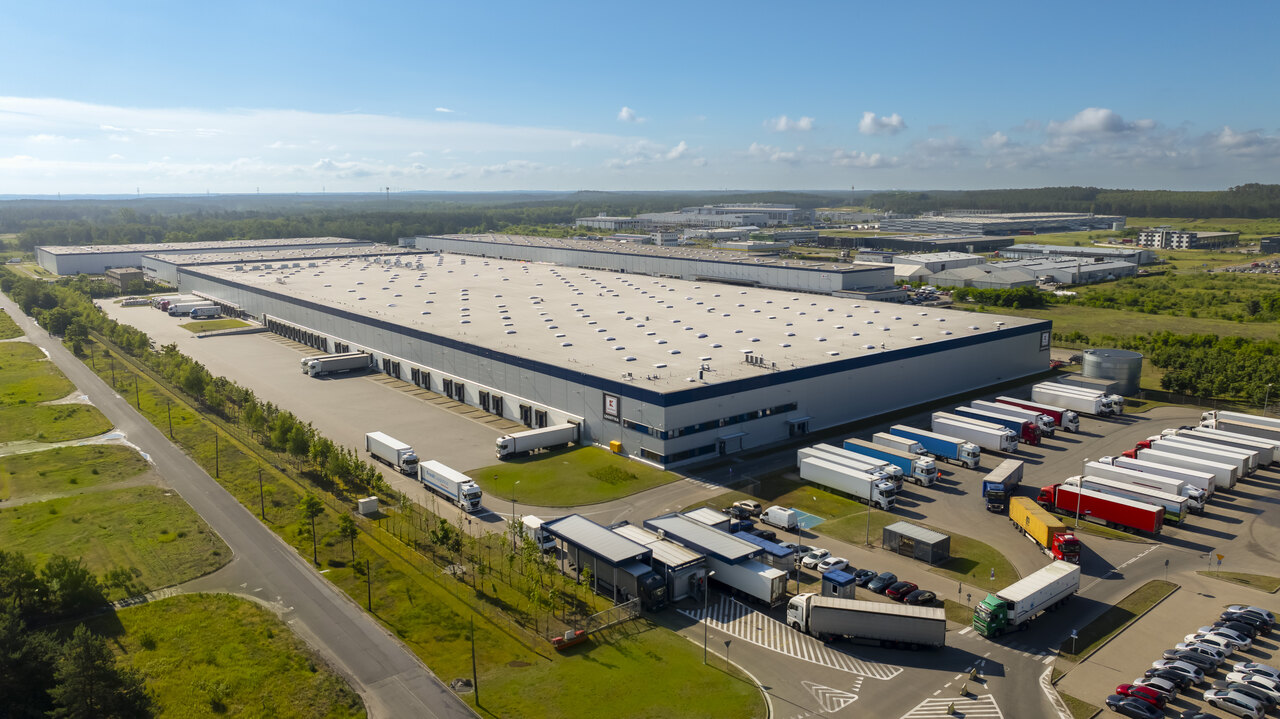
Demand for warehouse space is growing, and vacancy rates are falling. At the same time, launching new investments is much more difficult today than it was a few years ago. The Polish market is therefore entering a phase where the availability of a suitably located facility tailored to their needs may increasingly determine the expansion opportunities of enterprises.
The year 2026 brings a clear change in the dynamics of the Polish warehouse sector. Tenant activity is higher than twelve months ago, while the stock of available space is systematically shrinking. According to Accolade experts, at the end of the first half of 2026, the vacancy rate was approximately 6.6%. This is a significant point for the further development of the market, because with sustained demand, limited supply may increasingly influence both rent levels and investment decisions.
However, this does not mean that the situation looks the same across the entire country. In western Poland – from Szczecin, through Gorzów Wielkopolski, to Zielona Góra – we are observing a large number of active leasing processes. Some transactions have already been closed, and others are in the final stages of negotiation. We also see an interesting situation in Lublin, where the number of potential clients interested in space is starting to exceed the available warehouse stock.
– says Renata Nowacka, Leasing Manager at Accolade.
The Chinese are looking for warehouses
Although most inquiries come from logistics companies, the largest individual transactions are generated by tenants looking for very large spaces. According to Accolade, this applies primarily to the e-commerce sector, where individual inquiries can cover over 20,000-30,000 sqm.
One of the biggest surprises of this year’s market is the activity of Chinese e-commerce platforms. It is not just about the pace and scale of the space sought, but also about a different way of conducting negotiations, making decisions, and organizing the leasing process.
– explains Renata Nowacka, Leasing Manager at Accolade.
Lower availability, higher barriers
According to Accolade data, the warehouse availability rate at the end of the first half of the year was 6%, and the number of new projects is clearly lower than 4-5 years ago. This means that if tenant activity is maintained, the market may move faster and faster from a situation of oversupply to limited availability of ready-to-use space.
The key barrier remains financing, as banks have significantly limited funding for speculatively built space. A new warehouse project today requires much stronger demand security before construction begins. In the best market periods, about 30% pre-lease was sufficient. Currently, to obtain attractive financing, the optimal level of secured space is about 50-60%. This fundamentally changes the market development model. A new warehouse can be built “for the market” to a much lesser extent today. First, you need to find a suitable tenant, sign a contract, and then demonstrate an appropriate level of contracting to the financial institution. It is not only the fact of finding a client that matters, but also their financial situation. If the tenant raises doubts in terms of solvency, and the project requires additional facility adjustments, the investment risk increases significantly. In current conditions, developers must therefore be much more selective in their approach to both location and tenant profile.
– points out Renata Nowacka, Leasing Manager at Accolade.
Warehouses are getting more expensive
Every year, operating costs, labor costs, and fuel costs increase, but so do rising property taxes and other public levies. However, the biggest challenge remains electricity:
The problem is both its price and the state of the energy infrastructure. At the same time, the importance of renewable energy sources and their inclusion in the energy mix used by tenants is growing. It is worth emphasizing here that a modern warehouse must also be designed with changing climatic conditions in mind. The resilience of buildings and infrastructure to the consequences of environmental changes will be an increasingly important element of the investment process.
– adds the Leasing Manager at Accolade.
Shrinking space availability and rising operating costs create conditions for rent increases. As Accolade experts point out, however, this phenomenon should not be simplified to the thesis that rates are rising because new tenants are willing to pay more. On the contrary – large Chinese e-commerce platforms also expect very competitive, low rates.
Pressure on rents results primarily from the relationship between supply and demand. If tenant interest remains high and available space continues to disappear, property owners will gain a stronger negotiating position. With the current level of availability, further supply constraints may therefore gradually translate into rate increases.
– predicts Renata Nowacka, Leasing Manager at Accolade.
Is it easier to find a tenant or a warehouse?
The coming months may bring a significant change on the supply side. Experts from Accolade forecast that if tenant activity remains at the current level and existing space continues to be absorbed, the market may reach a point where the lack of available warehouses becomes a bigger problem than the lack of demand.
Such a scenario could trigger another wave of development activity. New investments will be needed by both European and local tenants, as well as entities serving growing supply chains related to e-commerce. At the same time, the first signals indicate the possibility of a revival in the warehouse real estate transaction market as well. A higher number of transactions between asset owners may become another element of rebuilding investment activity.
– says Renata Nowacka, Leasing Manager at Accolade.
The Polish warehouse market is therefore not just in a growth phase today. If current trends continue, the next problem for the Polish warehouse market may not be finding a tenant, but finding a suitable warehouse for them.
Source: Accolade