









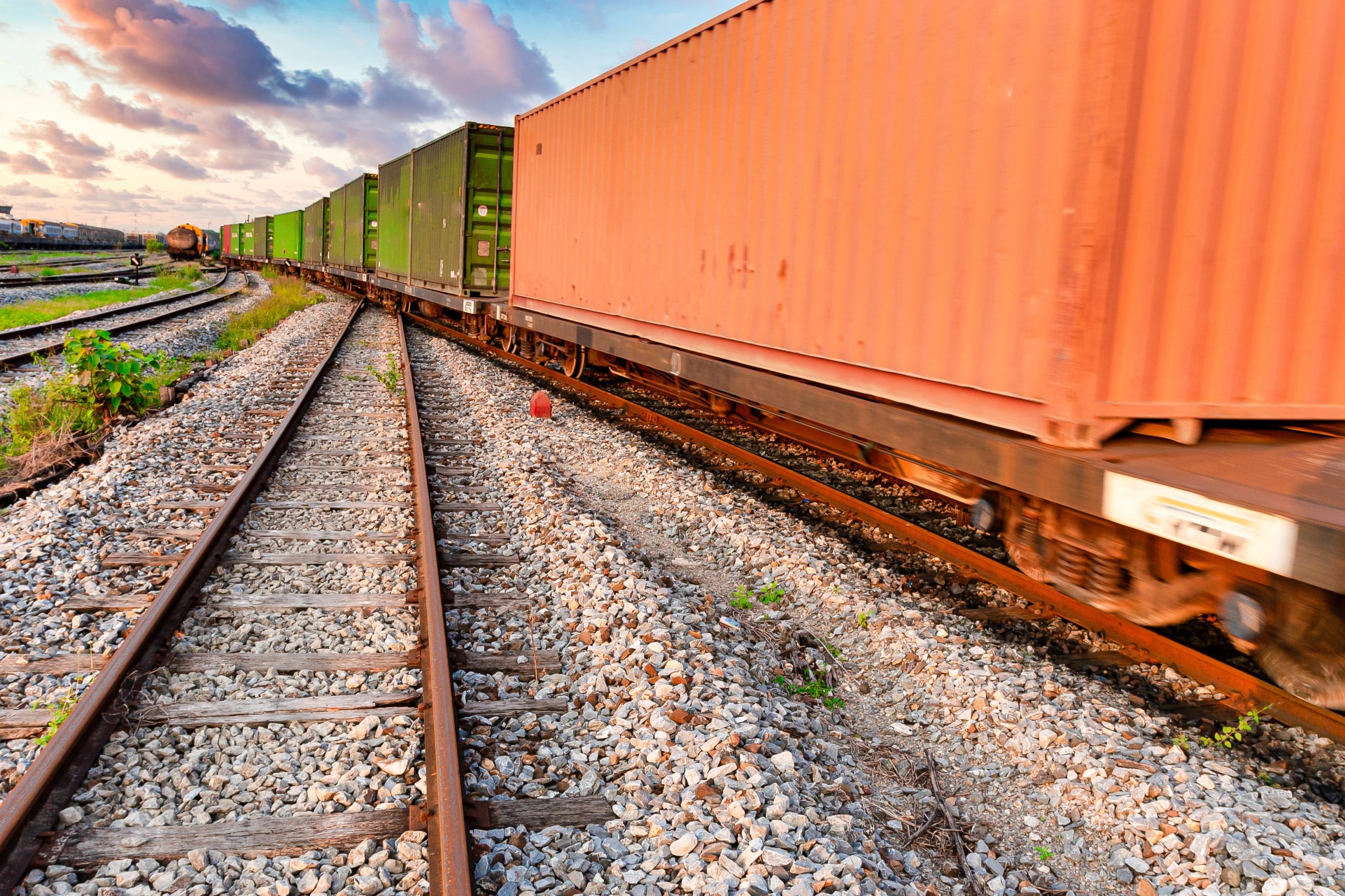
Last year, carriers had approximately 81.7 thousand wagons at their disposal. In total, they owned 84,839 vehicles (89,041 units in 2024). The smaller number of rolling stock is related to adjustments to changes occurring in the structure of transported commodity groups, the development of intermodal transport, and carriers disposing of their oldest and non-functional vehicles.
In 2025, the number of locomotives at the disposal of freight carriers decreased to 3,143 units, which represented a drop of 148 units (-4.5%) compared to the 2024 figures.
Diesel locomotives, due to their versatility, remain the most numerous group of locomotives among freight carriers. For this reason, carriers incur expenses to maintain them in proper technical condition for as long as possible. They are also investing in new diesel locomotives with higher environmental standards. Despite this, their number fell year-on-year by 5.1% (in 2025, there were 1,643 diesel locomotives).
The second most numerous group of locomotives among freight carriers are electric locomotives, although their number also decreased compared to 2024 by 4.8% (1,360 units in 2025). Conversely, the number of dual-mode locomotives increased (by 6.1%), reaching 139 in 2025. Freight carriers still had only 1 hydrogen locomotive at their disposal.
There were also fewer wagons than in 2024 – their number fell by 4.7% to 81,696 units. The decline affected 6 out of 10 types of wagons that freight carriers had in 2025.
The largest decreases concerned special-design coal wagons (-14.4%) from 13,499 units to 11,550 units and standard-design coal wagons (-4.2%) from 41,860 units to 40,114 units. The number of special-design bogie flat wagons, special wagons, wagons with opening roofs, and other wagons increased.
The equipment of traction vehicles influences the comfort of train drivers’ work. In 2025, 47.4% of electric locomotives had air conditioning (41.8% in 2024), 44.6% of diesel locomotives (38.7% in 2024), and 89.9% of dual-mode locomotives (98.2% in 2024). Front-facing cameras were present in 30.7% of electric locomotives (27.9% in 2024), 40.7% of diesel locomotives (37.4% in 2024), and 89.2% of dual-mode locomotives (86.2% in 2024). Internal cameras are present in 3% of electric locomotives (3.9% in 2024), 8.9% of diesel locomotives (the same as in 2024), and 5% of dual-mode locomotives (11.9% in 2024). The hydrogen locomotive, which appeared in 2024, has both air conditioning and a front-facing camera.
Source: Office of Rail Transport