









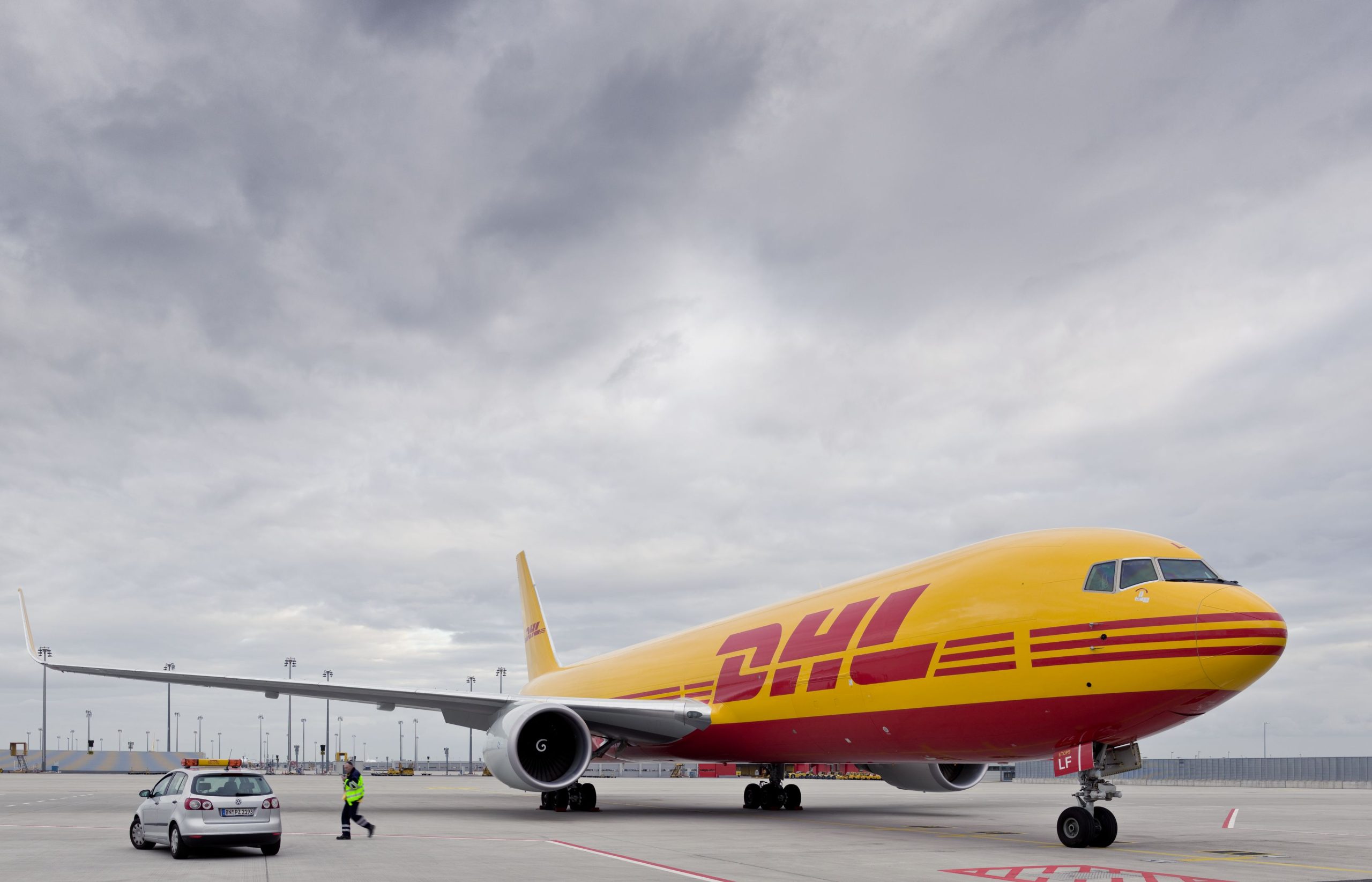
The lack of a single component can halt a production line, and the delivery of a product with non-standard dimensions or one requiring temperature control during transit can determine the quality of an entire batch. Some shipments, due to their specific nature, require a solution that goes beyond the standard process – for example, due to the dimensions and weight of the shipment, the type of cargo, the method of securing it, temperature requirements, or documentation and customs needs. Data from DHL Express shows that the number of such non-standard orders has increased by 15 percent year-on-year[1].
In the global economy, goods continue to travel ever-greater distances, and the importance of efficient cross-border flows is growing along with the scale of global trade. According to data from the latest DHL Global Connectedness Report 2026, the globalization index reached 25 percent in 2025, and the average distance traveled by goods in international trade increased to 5,010 km – the highest level in the history of measurements for this report. At the same time, global trade in goods is expected to grow by an average of 2.6 percent annually until 2029.
The importance of air cargo is also strengthening – IATA data for June 2026[2] indicates a 8.5 percent year-on-year increase in global demand. For European carriers, the growth rate was 6.9 percent, while demand on Europe–Asia routes increased by 7.1 percent. IATA also noted that the growth in demand was supported by, among other things, urgent shipments and high-value technology products. Meanwhile, in the Polish market, air cargo is developing dynamically, although a significant portion of goods arriving in or sent from our country is still handled by foreign hubs. A report by BGK[3] shows that 214,000 tons of cargo were transported through Polish airports in 2025, which is 7 percent more than the previous year and 73 percent more than before the pandemic.
These data show that goods in international trade are traveling longer distances, and supply chains involve more stages. Therefore, non-standard solutions are gaining importance. They are needed, among other things, when a shipment requires individual securing, controlled transport conditions, additional documentation, customs handling, or a process tailored to the specifics of the cargo.
When more than a standard process counts
The foundation of DHL Express’s international offering is Time Definite International (TDI) services, ensuring fast and reliable execution of express shipments within the global DHL Express logistics network, covering over 220 countries and territories worldwide.
For shipments whose parameters or requirements exceed the standard handling process, DHL Express also offers Special Services & Same Day solutions. These are designed individually, taking into account, among other things, the size and weight of the shipment, its value, cargo sensitivity, temperature requirements, packaging method, documentation, or the expected level of transport supervision. Company data shows that the number of shipments handled under dedicated services increased by 15 percent year-on-year[4]. The automotive sector accounted for 51 percent of revenue from special services, and engineering and manufacturing for another 17 percent. The number of orders for the technology sector grew the fastest – by over 143 percent year-on-year[5].
A solution tailored to the shipment and its requirements
In about 23 percent of projects, the company uses the nearest available flight connection, the so-called Next Flight Out. Another 17 percent are orders where a courier travels with the shipment and supervises its handover at subsequent stages (the so-called on-board courier, OBC). This means that these two variants account for a total of four out of ten special orders. However, the choice of such a solution does not result solely from the need to shorten transport time. It is often also determined by the value of the shipment, product sensitivity, limited transshipment possibilities, security requirements, customs documentation, or the need for constant supervision of its movement. DHL Express provides an individual approach to the execution of such orders and ongoing monitoring of the transport progress.
However, not every non-standard execution requires only air transport. In the automotive sector, dedicated road transport between factories, warehouses, and production plants, conducted without consolidating the shipment with other cargo, also plays an important role.
However, choosing a single means of transport is not always sufficient. In more complex cases, the DHL Express team designs a hybrid model that can combine pickup by a local partner, transport to a terminal, transport within the global network, and an individually planned handling of the final delivery stage. Such solutions are used, among other places, where local regulations, economic zones, or operational conditions make it impossible to apply a standard process.
Every shipment may require a different solution
The scope of non-standard executions is broad. One example of a DHL Express order was the shipment of frozen food products to the United States. The shipment was secured with dry ice, and its execution required the preparation of documentation appropriate for food transport and the maintenance of appropriate temperature conditions. Due to a delay during transport, ongoing monitoring of the shipment, coordination with the airline and terminal, and control of the conditions allowing for the maintenance of the required temperature were necessary. The products reached the recipient in the proper condition, in compliance with safety rules.
In the case of shipments with non-standard requirements, there is no single model suitable for every client. Sometimes a direct flight connection is key, in other cases road transport without transshipments, maintaining controlled conditions, special cargo securing, proper documentation, or designing the entire process with the participation of local partners. Companies are increasingly analyzing not only the cost of transport but also the risk associated with a mismatch between the solution and the shipment parameters. Therefore, such services can be an important element of managing the operational continuity of enterprises.
– says Tomasz Buraś, CEO of DHL Express Poland.
Between Poland, Asia, and the United States
The geographical scope of DHL Express’s non-standard service execution is very broad and includes both imports to Poland and exports from Poland. Most orders currently concern flows from China to Poland and from Poland to the United States, which shows the importance of these routes for Polish companies using special solutions. In shipments from Poland to the United States, orders for the technology and engineering sector dominate, including aircraft engine parts for civil aircraft, as well as for the automotive industry – e.g., components for production lines, ECU control modules, or sensors. Meanwhile, electronic components and semiconductors, such as integrated circuits, processors, and other sub-assemblies used in electronics production, as well as parts for machines and production equipment, are primarily transported from China to Poland.
India is also enjoying visible, though slightly less, interest. This shows that the need for non-standard solutions arises both in the import of components and products needed by Polish enterprises and in the export of goods from Poland to distant markets.
Critical logistics does not replace typical courier services. It complements them where the specifics of the cargo and the requirements related to its transport go beyond the standard handling process.
[1] DHL Express internal data.
[2] https://www.iata.org/en/pressroom/2026-releases/07-29-air-cargo-demand-strengthens-june/
[3] https://www.bgk.pl/aktualnosc/raport-bgk-cargo-lotnicze-w-polsce-1/
[4] DHL Express internal data.
[5] DHL Express internal data.
Source: DHL Express (Poland) Sp. z o.o.