









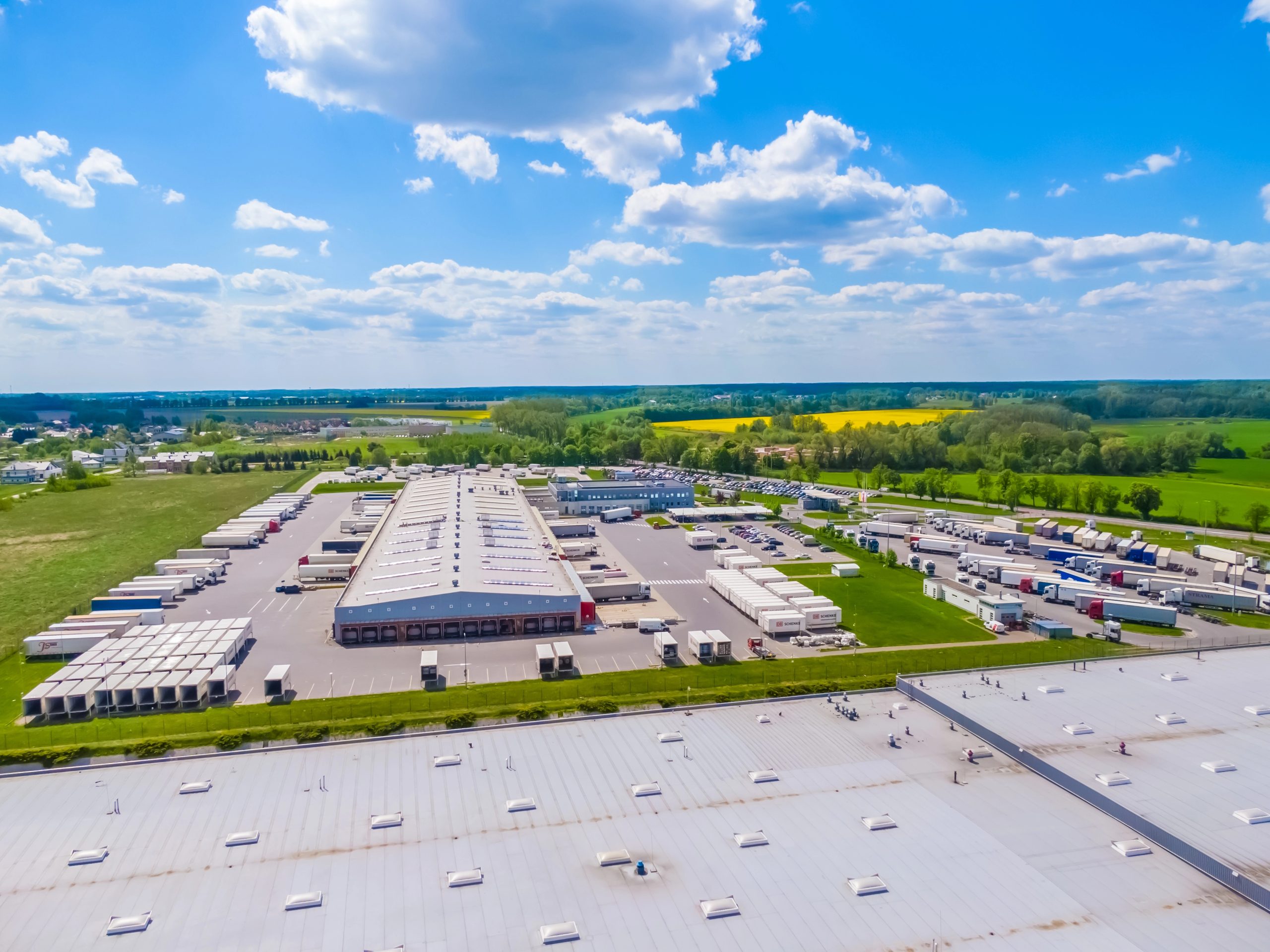
After a year dominated by lease renegotiations, the first half of 2026 saw a revival in the Polish warehouse market driven by an increase in demand for new space. New leases and expansions already accounted for 60% of tenant activity, with net demand reaching 2.1 million sq m. At the same time, the cautious supply policy pursued by developers means that available space is disappearing from the market ever faster. In just three months, the vacancy rate fell from 7.1% to 6.3%. JLL experts summarize the second quarter and the first half of 2026 in the Polish warehouse and logistics market.
In addition to the scale of demand, its structure also changed significantly in the first half of the year. In 2025, the majority of tenant activity consisted of renegotiations and contract extensions. Companies were primarily securing their existing operations, maintaining a high level of caution regarding new investments. In the first half of 2026, new leases and expansions accounted for 60% of tenant activity, with net demand at 2.1 million sq m. Renewals accounted for approximately 1.2 million sq m. An additional 200,000 sq m was attributed to sale & leaseback transactions, which are steadily gaining in attractiveness. Total gross demand reached 3.5 million sq m, compared to 2.9 million sq m in the same period of 2025.
In recent months, e-commerce has remained one of the main drivers of the market. In the first half of 2026, companies associated with this sector generated approximately 750,000 sq m of demand for warehouse space, of which more than 400,000 sq m was attributed to Chinese e-commerce platforms developing large distribution operations in Poland. A significant portion of this demand was met in existing facilities, which clearly accelerated the absorption of available space and further limited the vacancy rate.
The geography of the market is also changing
The five largest warehouse hubs accounted for 82% of gross demand and 77% of net demand. The highest activity was recorded in Upper Silesia, where over 620,000 sq m was leased, followed by Wrocław with 581,000 sq m and Central Poland with 545,000 sq m. However, more interesting than the ranking itself are the differences in the market structure in various parts of the country. According to JLL experts, new entries and expansions took place particularly in the western and southern regions of Poland. These locations are primarily attractive to international operators and e-commerce platforms, for whom Poland is not only a large consumer market but also a base for serving customers in Western Europe.
Warsaw and Central Poland serve a different function, where renewals and lease consolidations related to already operating domestic distribution networks played a greater role. As a result, a division is becoming increasingly clear on the national warehouse map between locations serving new international goods flows and hubs based primarily on established domestic operations.
Demand is accelerating faster than construction
Increasing tenant activity is having a growing impact on the absorption of existing warehouse space. A large part of the new demand was met in the first half of the year in already available facilities, which clearly limited the level of vacant space on the market. The effect is already visible in the availability level – the vacancy rate fell from 7.1% at the end of March to 6.3% at the end of June. After taking into account vacant modules in existing buildings and speculative space under construction, tenants had only about 2.9 million sq m at their disposal (which is about 300,000 sq m less than just three months earlier).
The scale of this “unavailability” is perfectly illustrated by the ratio of available supply to the pace at which the market absorbs it. From the perspective of the entire Polish market, the buffer has decreased from the equivalent of about 8.5 months to just 7 months (in such a period, all currently available space would theoretically be absorbed by the market at the average annual net demand from the last five years). In some markets, the situation is much tighter – these indicators are about 5 months in Wrocław and 6 months in Szczecin, the Tri-City, and Central Poland.
– comments Maciej Kotowski, Director, Research & Consultancy, JLL.
At the same time, developers maintain a conservative approach to starting new investments. In the first half of the year, approximately 1.2 million sq m of new warehouses entered the market, which is a result similar to the new supply in the same period last year and two years ago. As a result, the total stock of modern logistics space in Poland increased to 38.55 million sq m. However, the volume of investments under construction shrank to about 1.3 million sq m, which is an 11% year-on-year decrease. Speculative activity is being limited even more clearly. At the end of June, such projects covered about 503,000 sq m, which is as much as 17% less than a year earlier.
Developers are ready, but selective
This does not mean, however, that there is no potential to increase supply in the future. JLL points out that developers have extensive land banks, but remain cautious about starting subsequent projects without first securing them with pre-let agreements. After the experiences of recent years and periods of temporary oversupply, greater emphasis is placed on risk mitigation and the implementation of facilities with a contracted tenant, including build-to-suit investments.
The decrease in available warehouse space by about 300,000 sq m in just one quarter shows how quickly the offer available to tenants is shrinking. A vacancy rate of 6.3% may still seem relatively high, but in practice, this volume is highly fragmented, and in many locations, there is already a shortage of larger modules exceeding 30,000 sq m. At the same time, only about 1.3 million sq m remains under construction, which limits the possibility of quickly increasing supply. If demand continues in the coming quarters and rents start to rise, this may again increase the willingness of developers to implement speculative projects.
– comments Tomasz Mika, Head of Industrial Agency, JLL.
Availability is decreasing, negotiations are becoming more difficult
Shrinking space availability has not yet caused a sharp increase in rents. In the first half of 2026, asking rates in suburban logistics parks in the five largest markets ranged from €3.50 to €6.00 per sq m per month. In the case of urban warehouses, they reached 8 euros, and in selected top projects in Warsaw, they even exceeded this level. JLL predicts that rents will remain essentially stable for the rest of the year.
Maintaining base rates does not mean, however, that the situation for tenants remains unchanged. With a decreasing number of available options, owners of the best facilities are gaining a stronger negotiating position. Pressure may therefore be visible primarily in effective rents, through the reduction of incentives offered to tenants. This applies especially to the most sought-after locations and modern, energy-efficient buildings.
There are many indications that the priorities of the largest space users will also change. In conditions of tight supply chains and rapidly shrinking availability of high-quality warehouses, the ability to secure a strategic location may increasingly outweigh the pursuit of the lowest possible rent rate.
Source: JLL