









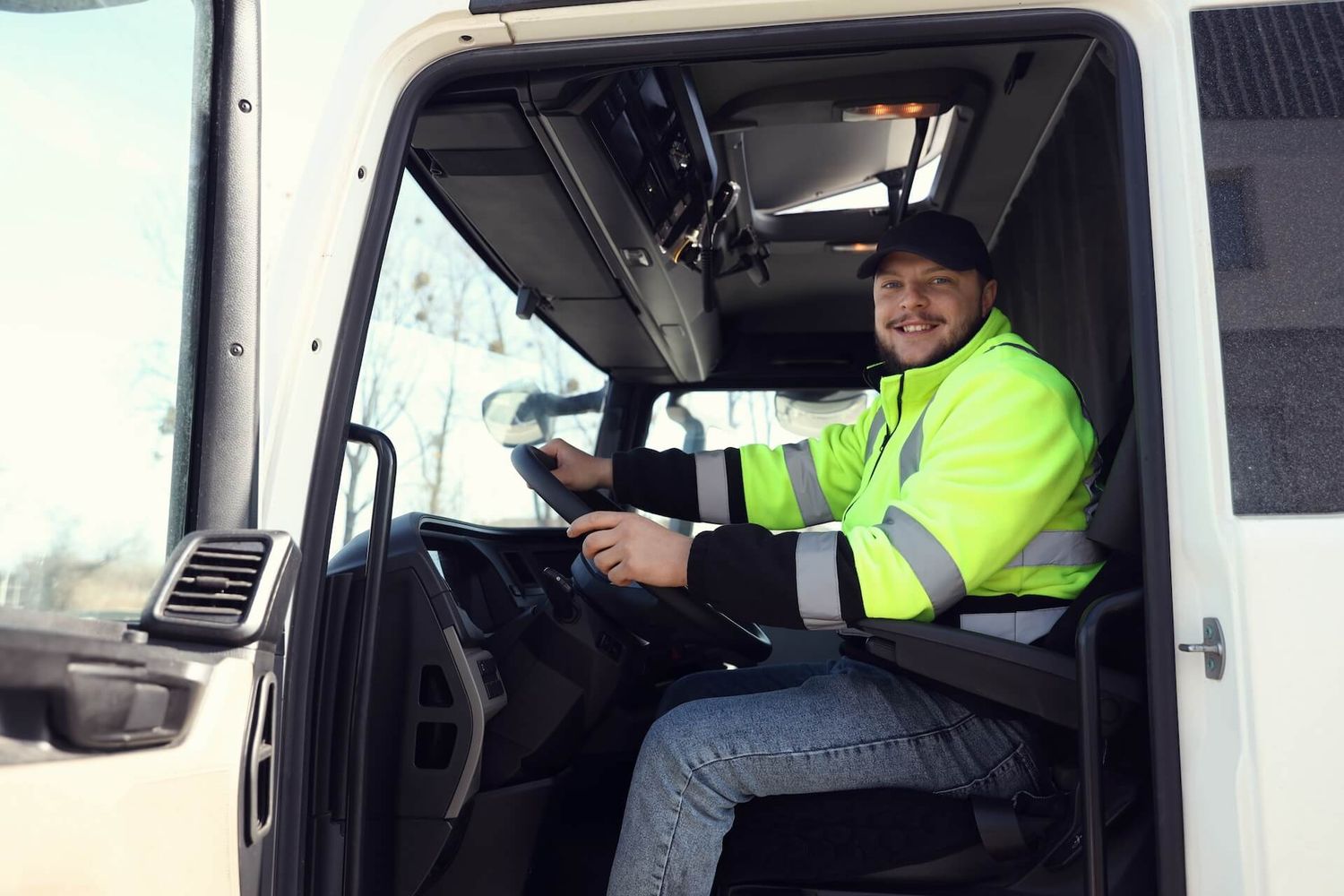
A printed jacket for logistics company employees should combine weather protection, work comfort, and clear brand marking. A different model will work well at a loading dock, another in a warehouse, and yet another for a driver who frequently gets in and out of a vehicle. Before ordering, you need to assess working conditions, the season, visibility levels, the cut, and the material for the print. Check how to choose jackets for a logistics team so they are practical, durable, and look good after branding.
1. Determine where the employee wears the jacket most often
Start choosing a jacket based on the workplace, not the color or the logo itself. A warehouse worker needs a lighter model that does not cause overheating during movement, while someone working at a loading dock or in a maneuvering yard should have better protection against cold, wind, and precipitation. In logistics companies, conditions often change throughout the day. An employee might move from a hall to a car, from a warehouse to the outside, or spend several hours handling loading at an open gate. Therefore, one model for the entire team will not always be the best solution. Check out various models from the corporate jacket category at the LOGOS Dystrybucja store at https://sklep-logos.pl/kurtki-firmowe.
2. Choose the type of jacket according to duties
The jacket should support a specific way of working. For people in constant motion, a model that is too thick will be uncomfortable, and for employees standing outside for long periods, a light softshell may be insufficient. It is therefore worth matching the type of jacket to the position.
| Working conditions | Which model to consider? |
| warehouse and hall | light transitional jacket or softshell |
| loading dock and maneuvering yard | insulated jacket or 3-in-1 model |
| working in the rain | rain jacket with a hood and sealed seams |
| frequent vehicle entry | shorter, comfortable model without excess insulation |
| working after dark or near vehicles | high-visibility jacket with reflective elements |
Such a breakdown facilitates purchasing and reduces the risk that part of the team will receive clothing ill-suited to their actual duties.
3. Match the jacket to the weather and season
When working outdoors, not only the thickness of the jacket matters, but also resistance to rain, wind, and breathability. For clothing that protects against rain, it is worth paying attention to the EN 343 standard, which concerns, among other things, protection against precipitation and the properties of materials and seams. In logistics, a layering system often works well. Instead of one very thick jacket, you can choose a set: a t-shirt, a sweatshirt or fleece, and an outer jacket. This makes it easier for the employee to adjust their clothing to the temperature in the warehouse, the vehicle cabin, and outside. You can read more about matching a jacket to working conditions in the article https://nowoczesny.eu/jak-dopasowac-kurtki-z-nadrukiem-logo-firmy-do-warunkow-pracy/.
4. Plan the print only after choosing the material
Not every jacket is suitable for the same type of marking. On smooth fabrics, it is easier to make a clear print or transfer, while softshells, waterproof jackets, and insulated models require more caution. The structure of the material, the application temperature, and the place where the logo is to be placed matter. For jackets worn in logistics, the print must be matched not only to the fabric but also to the working conditions. If the team works at a loading dock, outdoors, in the rain, in the wind, or after dark, the material’s resistance, insulation, and visibility are also important. These issues should be analyzed more broadly when choosing jackets with a company logo print for working conditions, especially when the order is to cover a larger group of employees.
5. Check visibility at loading docks, vehicles, and when working after dark
In logistics companies, employee visibility can be just as important as thermal comfort. This applies especially to people working near vehicles, near loading docks, in maneuvering yards, parking lots, and in poorly lit areas. If the jacket is to serve as high-visibility clothing, a bright color alone is not enough. ISO 20471 specifies requirements for high-visibility clothing intended to visually signal the user’s presence. With such models, the print should not cover reflective strips or limit the surface area of the fluorescent material.
6. Match the cut to movement and layers underneath
A jacket for a logistics employee must allow for freely raising arms, bending over, carrying packages, and operating a scanner. A cut that is too tight will interfere with work, and one that is too wide may get caught on equipment or sit poorly under a seatbelt. Before ordering, check sleeve length, shoulder width, cuff adjustment, pocket access, and space for a mid-layer. For work at a loading dock, a slightly longer back will work better, and for frequent vehicle driving – a model that does not ride up while sitting.
7. Order a sample before a larger batch
A visualization will not show everything. A sample allows you to assess whether the jacket fits well, whether it restricts movement, and whether the print is legible on the chosen material. This is especially important for dark colors, high-visibility clothing, softshells, and waterproof jackets. After receiving the sample, it is also worth checking how the jacket behaves after washing and daily use. The logo should not wrinkle, peel off, or crack, and the material must not lose its protective properties at the marking site. Only after such a test is it worth ordering a larger batch for the entire team.
Summary
A printed jacket for logistics company employees should be matched to the position, season, activity level, and need for visibility. For the warehouse, a lighter model or softshell is often enough; at loading docks, an insulated or 3-in-1 jacket will work better, and when working near vehicles, it is worth considering high-visibility clothing. Plan the print only after choosing the material and cut, because not every jacket handles the same marking technique well. It is safest to order a sample, test it in real conditions, and only then prepare a larger order.