









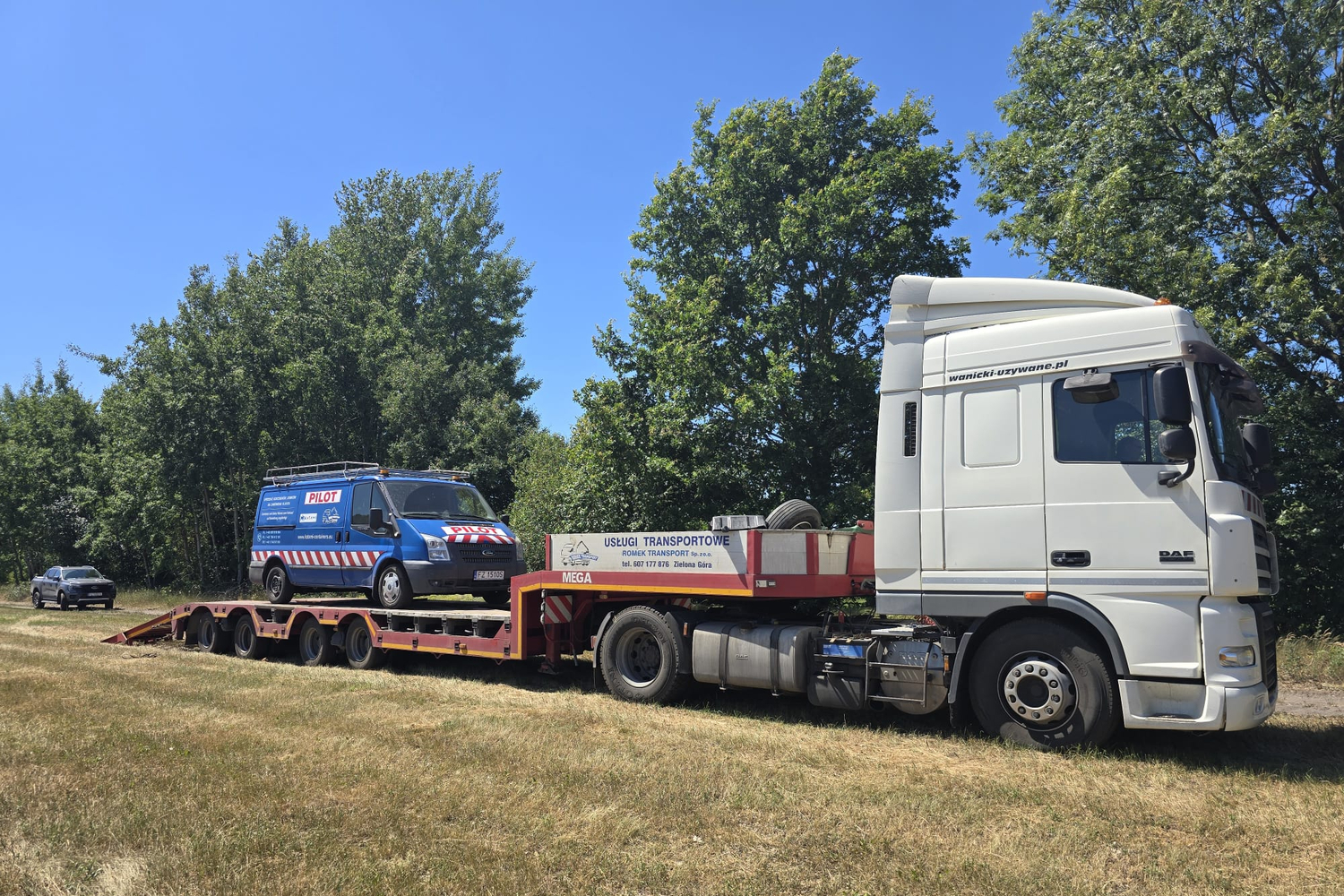
Low-loader transport involves moving construction machinery on special trailers with a lowered loading platform. It is used by construction companies, industrial firms, and investors who need to move an excavator, bulldozer, or road roller from one site to another. Finding a carrier is only the first step, because the success of the entire operation depends on planning, which begins long before the day of the trip.
Why is a standard trailer not always enough?
Low-loader transport involves carrying tall and heavy machines on a trailer with a lowered platform. Thanks to the lower loading height, it is possible to transport equipment that would exceed the permissible vehicle height on public roads if carried on a standard trailer.
A standard trailer has height and weight limitations that cannot be bypassed when transporting large construction equipment. A tall crawler excavator placed on an ordinary platform quickly exceeds the permissible total height of the vehicle combination, which means no permission to enter public roads without additional formalities.
A low-loader trailer solves this problem thanks to the lowered loading platform. The machine sits lower, so the entire combination stays within the permissible parameters or at least limits the scale of any excesses.
The lowered platform also facilitates the loading process itself, as the approach angle is gentler, which is important for tracked machines with low ground clearance.
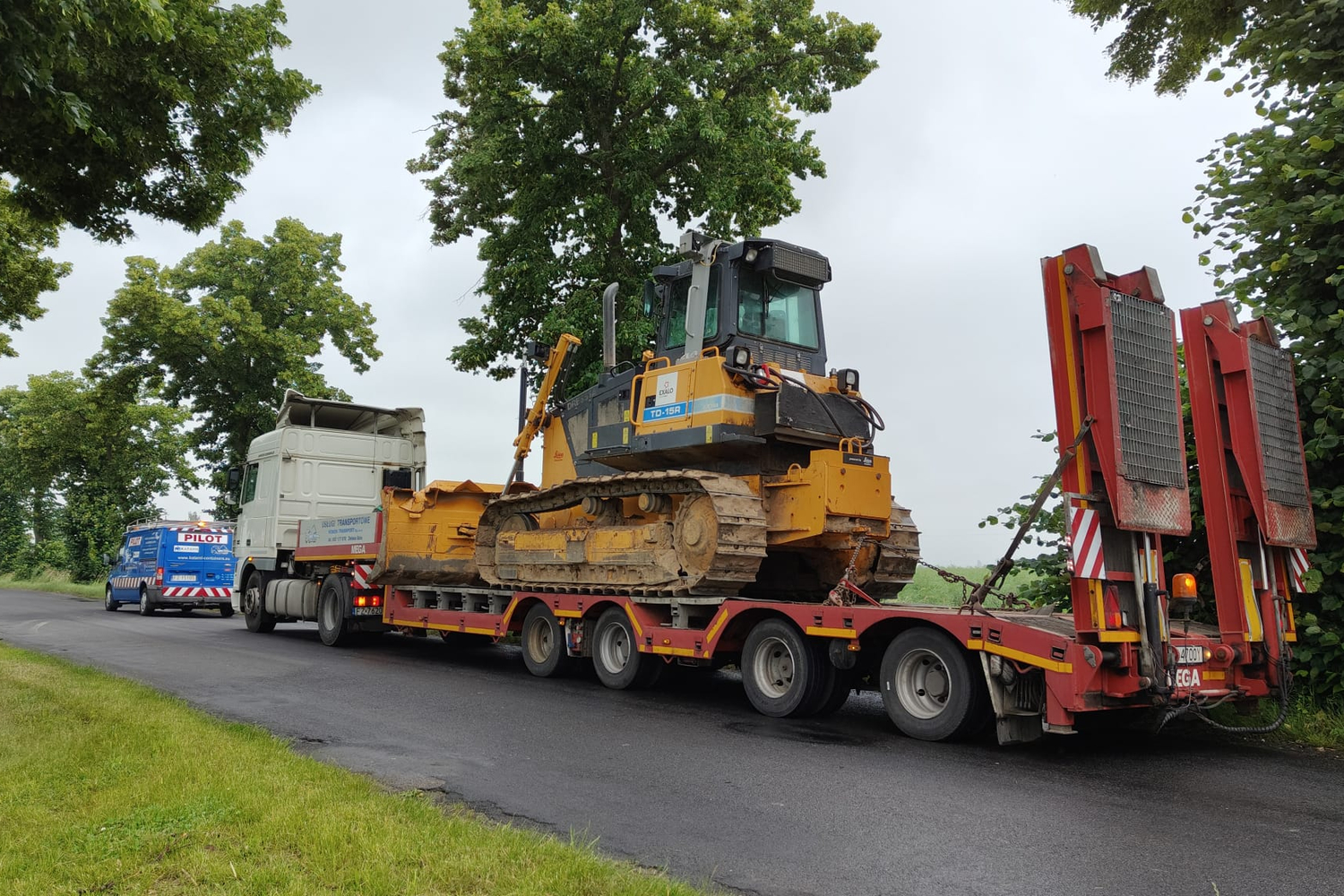
Examples of machines transported by low-loader
Low-loaders are used to transport equipment whose dimensions or weight exclude transport by a standard trailer. Most commonly these are:
- crawler excavators,
- bulldozers,
- road rollers,
- loaders,
- asphalt pavers,
- crushers and screeners,
- lifts and other specialized machinery.
What information is needed before organizing transport?
Before commissioning the transport, the carrier must know the exact parameters of the machine. These determine the choice of trailer, the route, and whether the transport will require permits.
Technical parameters of the machine
Four values determine how the transport is organized – length, width, height, and total weight of the machine. Each of them affects a different element of planning. Height determines whether the combination will fit under bridges on the route.
Weight determines the choice of trailer and which bridges can withstand the load. Width and length affect the maneuverability of the combination at roundabouts and tight intersections.
Why do accurate data matter?
Incorrect or incomplete data about the machine triggers a chain of problems. A poorly selected trailer may turn out to be too low or too weak for a given load, and then the machine will not fit within the parameters or it will not be possible to load it safely at all. This leads to the necessity of changing the route at the last minute, delays counted in hours or days, and additional costs that could have been avoided with reliable data.
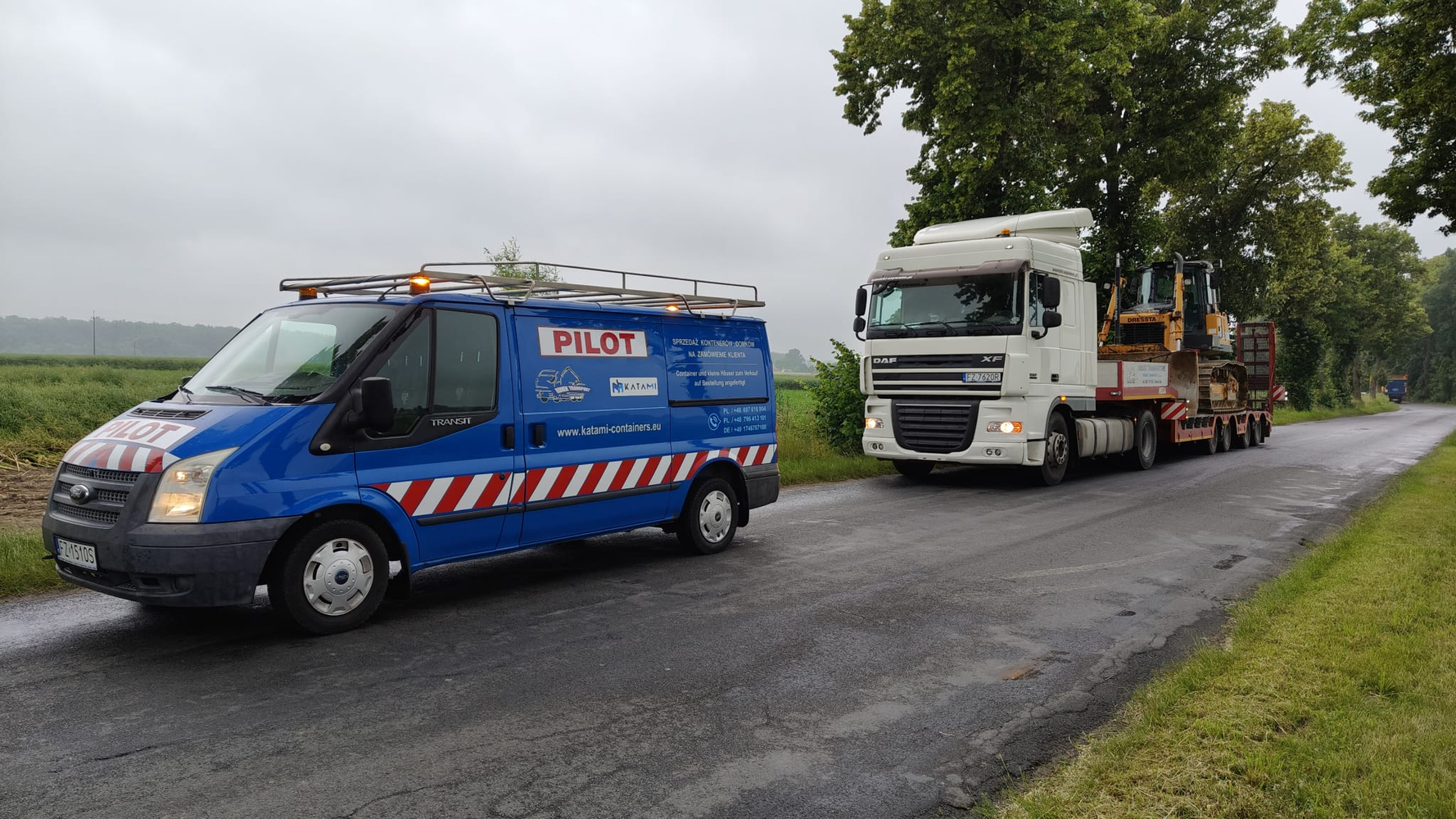
The route for a construction machine rarely coincides with the shortest path indicated by navigation. With a heavy and oversized load, it is not distance that counts, but passability.
Why is the shortest route not always the best?
The shortest route often leads through obstacles that a heavy combination cannot overcome. Bridges and viaducts have weight and height restrictions, and exceeding them threatens not only a fine but also a real danger to the structure and road users. In addition, there are road works, roundabouts, and tight intersections where a long combination is unable to perform a maneuver. Therefore, the route is planned for a specific machine, not for the odometer.
Oversized transport requires permits when the combination exceeds the permissible dimensions or weight standards defined in regulations. The necessity of obtaining approval is determined by parameters such as excessive width, length, height, or axle load. The higher the category of the permit, the longer it takes to issue, and the formalities can include arrangements with road and bridge authorities. For this reason, it is worth starting procedures in advance, before the transport deadline becomes urgent.
In the case of construction machinery transport, the biggest problems arise not during the trip itself, but at the planning stage. A thorough analysis of load parameters, the route, and required permits allows for avoiding costly delays on the construction site – Romek Transport.
How to prepare construction equipment for transport?
Before loading, the machine must be cleaned of mud and debris that could fall onto the road during the trip. Moving parts, such as excavator arms or rotating components, must be secured against movement.
Proper load securing is responsible for the safety of the driver and other road users. A poorly secured machine can shift during braking or on a curve, which risks tipping the combination. Correct securing ensures compliance with regulations regarding the transport of goods and limits the risk of damaging the machine itself during transport.
What to look for before commissioning transport?
Before commissioning transport, it is worth checking the company’s experience in transporting construction machinery, as this type of cargo has its own rules.
A suitable fleet is important, which allows for matching the trailer to specific equipment. Knowledge of administrative procedures is also important, thanks to which formalities related to permits proceed smoothly.
The carrier should have insurance covering the transported machines and offer support in planning the transport, rather than limiting themselves to just providing the vehicle.
Low-loader transport as an element of efficient construction logistics
The transport of construction machinery directly affects the investment schedule. Equipment that does not arrive on time halts the work of the entire team, and every day of downtime is a measurable cost. A well-planned transport reduces the risk of such downtime because it takes into account the machine’s parameters, route passability, and required permits even before departure.
Cooperation with an experienced logistics partner allows for avoiding most organizational problems, which usually reveal themselves not on the road, but in the preparation phase.