









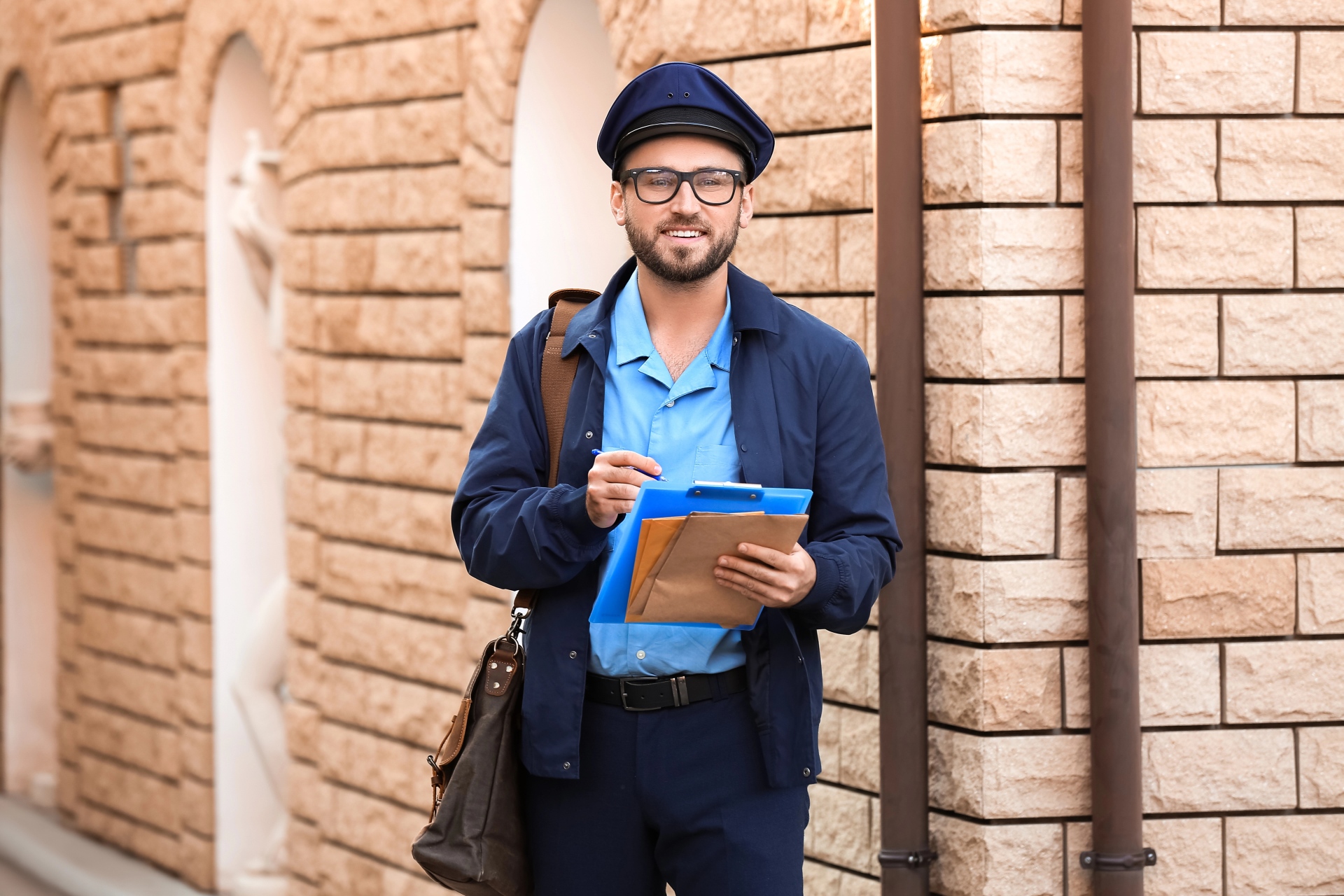
They only have a moment for each mailbox. In their bag, there are anywhere from a few hundred to even a thousand items—ordinary mail, registered letters, and documents requiring special attention—and in their head, a map of the area and names. Every street, every apartment number is planned out on the route beforehand; everything must be correct before they head out into the field. After finishing the round, they return to the office, leave the GPS device, and settle the notified shipments and returns so that nothing is missed. Although stereotypes suggest that a postman just walks around with a bag under their arm, the reality is completely different. It is a job requiring concentration, planning, and responsibility, where every mistake can cost more than just a few minutes.
They didn’t plan this path from the beginning. One of the postmen has been in the profession since 2000—as they say, they just wanted to try something different than before. Another employee ended up in the profession by accident. First, they worked in postal services for a few years, and then—at Speedmail, where they have been for four years—they found an advertisement and decided to give it a try. They were always drawn to field work. The beginnings quickly verified their expectations.
– I thought I knew the city perfectly, but working in the field showed me how wrong I was – admits Adam, a postman at Speedmail in Gliwice. However, the surprise also came from another side. – I didn’t expect how much people wait for the postman. Especially the elderly—for them, it is a truly important moment of the day – adds Beata, a Speedmail postman from Wrocław.
Because it’s not just a walk
For many, it is still just a letter dropped into a mailbox—a moment, the short sound of a flap, and the end of the story. For them, it is one of hundreds of points on the route and another person who is waiting. – Because people really are waiting, especially the elderly. For a letter, but also for a short conversation, for the presence of someone familiar, but not only that. Traditional correspondence still has huge significance because, in the digital world, paper is an important piece of evidence and a guarantee of reaching everyone. Elderly people do not use apps or e-mails; for some of them, the postman is the only way to receive correspondence. – says Beata, a Speedmail postman from Wrocław.
That is precisely why it is a profession of trust. The postman does not just deliver correspondence; they become part of the local community. Over time, they know people, their daily rhythm, and their stories. What they value most in this work is the contact with another human being and the feeling of being needed.
But behind all this lies hard work. This is not a simple walk. It requires concentration, physical fitness, and excellent orientation in the field. Every day means kilometers on foot, decisions made on the run, and responsibility that is not visible at first glance. It is a job requiring perseverance—physical and mental—and self-discipline.
But technology provides support
The postman profession has changed a lot over the years. Once associated mainly with delivering letters and postcards, today it is closer to working in logistics. – In the past, the postman was a messenger of news; today, they are part of an entire delivery system – the postmen admit. The realities of work have also changed—new housing estates have appeared, modern intercoms, and higher customer requirements. Despite this, one thing remains unchanged—the expectation that the shipment will arrive quickly and on time. – Recipients still expect efficient and timely delivery; in this regard, nothing has changed. – adds Adam, a Speedmail postman from Gliwice.
Technology has played a huge role in this transformation. Speedmail postmen today use tools that seemed like the future only recently. GPS, reporting systems, maps on phones, or intercom codes have become everyday life. – Every shipment has its unique number, thanks to which we can track its journey, and the business client additionally has the ability to check on a map where and at what time the postman dropped the shipment into the mailbox—this is a standard introduced by Speedmail—along with access to information about flexible returns and reasons for non-delivery, e.g., why the letter was not delivered. – explains one of the postmen. Another adds – In case of a complaint, we are able to confirm exactly that we were at a given address at a specific time. This not only streamlines work but also builds trust—both in the postman and in the entire system.
It is also a help in situations such as health or safety threats. – The GPS has an SOS function; it can help in cases of danger, fainting, or animal attacks. The dispatcher then sees my location and can send help to the place where I am. – adds Beata.
Modern solutions also help in organizing the day. Planning the route with the support of maps or having access to data in real-time gives greater control and certainty of action. – I have greater confidence that I have organized my work well – says Adam. At the same time, he emphasizes that technology is only a tool, and reliability has always remained the most important thing. – The priority is for the letter to reach the right person – we hear. And it is precisely in this combination—modern systems and human responsibility—that the work of a postman is defined today.
Hundreds of letters, zero errors. And responsibility that you don’t see
In this job, there is no room for coincidence, but not because someone is watching over your shoulder—only because in every envelope lies someone’s business. The postman is responsible not only for delivery but also for personal data, confidentiality of information, and often for something that has real consequences for the recipient. – People think I only carry papers, but for some, it is an important bill or test results – says Beata, a postman from Wrocław. Safe delivery is not a formality, but a concrete action—the right mailbox, the right person. Sometimes it means a simple thing—making sure the envelope is not sticking out of the mailbox, and sometimes verifying identity for a registered shipment. – Safe delivery is a letter into the recipient’s hand, not under the doormat. It is making sure that the shipment reaches the recipient. Identity verification is my responsibility. As Adam, a postman from Gliwice, emphasizes, another aspect is equally important – To this, it is crucial that shipments in transport are well secured in the bag or backpack, and during delivery, I pay attention when taking out correspondence so that none falls out. Before dropping it into the mailbox, I pay close attention to whether it is the correct shipment.
Added to this is attentiveness in the field. Not always comfortable. A mailbox by the door instead of by the fence, a dog behind the gate, a closed property, or a stairwell that is difficult to get into—this is everyday life that requires reflexes and experience. – Situations occur that require special caution, i.e., aggressive dogs. You have to have eyes in the back of your head because you never know what awaits you behind the next gate – the postmen admit.
The scale of this work is best shown by the number of shipments. On average, about five hundred a day, but there are days when there are many more. And regardless of whether there are three hundred or five hundred—the area must be covered entirely. – It doesn’t matter how many letters there are. You have to reach every street. This is precisely why this job can be a test of endurance. Especially when the weather is a factor. – There is nothing worse than rain – says Adam and adds. – In the field, this means not only discomfort but also the responsibility to ensure that no shipment is damaged.
And yet, what is the norm for a postman often turns out to be a surprise for customers. The pace of work, the distances covered daily, knowing the codes to stairwells—that is one thing. The second is the technology that is not visible at first glance. – Most people don’t know that an ordinary letter can be tracked – say Speedmail employees. The system records the moment of delivery and the exact location, and the GPS device accompanies the postman throughout the day. This changes the way of thinking about this job—because it turns out that even the simplest shipment ceases to be anonymous.
In a world that is moving to the internet faster and faster, the role of the postman does not disappear—it only changes. It is still an important and demanding job. Despite technological changes, many postmen emphasize that they still find something very concrete and human in their work. – This job gives me a sense of freedom and being in constant motion. I also like contact with people, being part of the local community, and the awareness that you are needed by someone – they emphasize.
Asked at the end about what gives them the greatest satisfaction in the postman’s job, they answer in unison. – The feeling that at the end of the day, despite the fatigue, the work was done honestly. Delivering all the letters and a kind word from the recipient can really change the whole day.
Source: Speedmail