









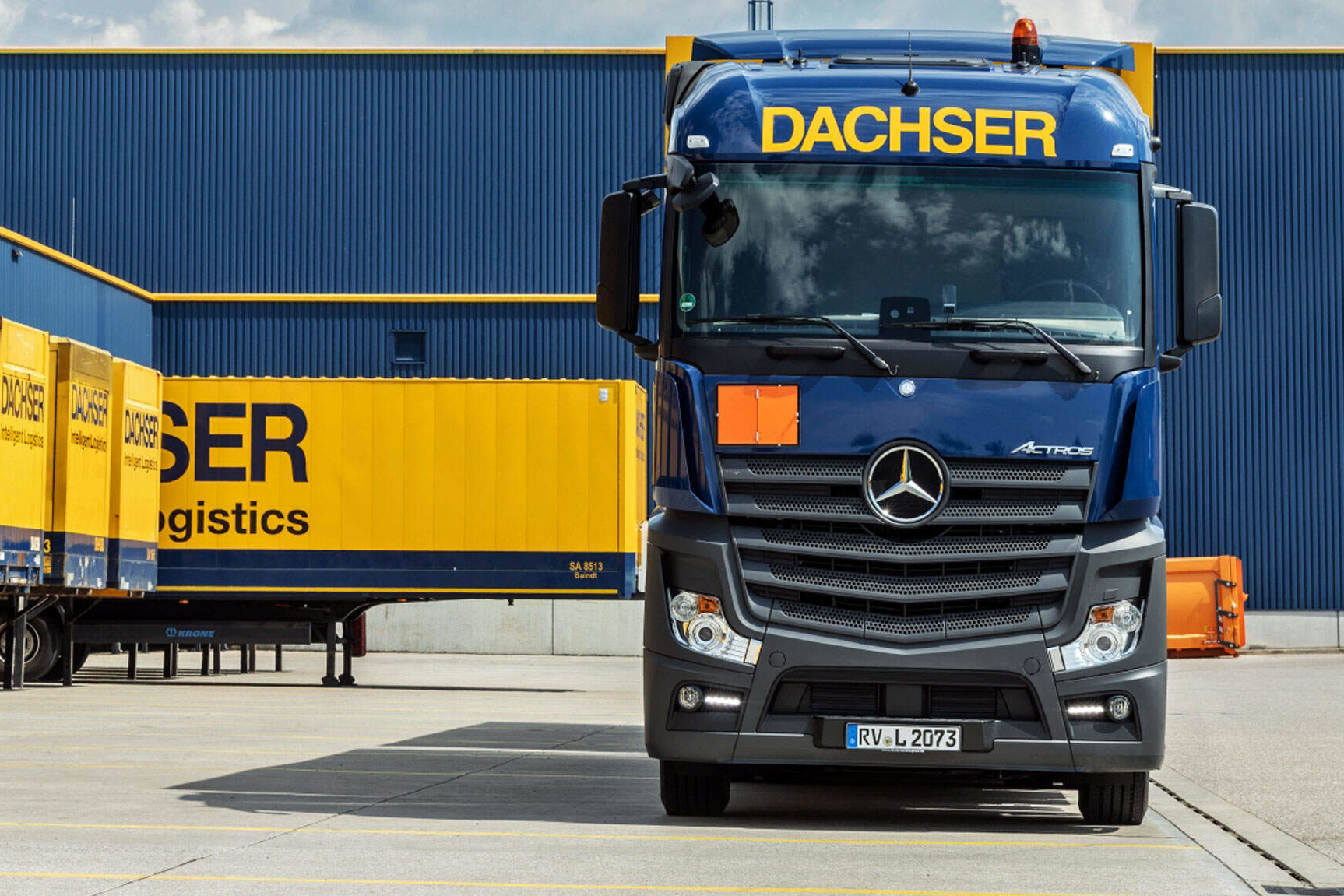
How can innovative technological solutions support the development of the supply chain? The current study titled “Logistics as a sales argument in the chemical industry” provides the answers. The authors, Prof. Christian Kille and Dr. Andreas Backhaus, analyze how logistics is beginning to be repositioned as a success factor and a competitive advantage for companies in the chemical sector.
The chemical industry is facing fundamental changes. Geopolitical fragmentation, energy transition, technological innovations, and the circular economy are shaping an environment in which familiar competitive advantage factors are gradually losing their significance. In this context, logistics, previously often perceived solely as a support function, is gaining strategic importance.
A recently conducted study analyzed 69 new logistics services that offer added value to customers in the chemical industry. The focus was on demonstrating the specific potential of logistics – allowing companies to move beyond competing solely on product parameters or price and instead distinguish themselves in the market through supply chain competencies and the value offered.
The ability to integrate data, predict disruptions, and flexibly respond to fluctuations in demand and the regulatory environment is becoming particularly important today. Operators who invest in modern technologies have the chance to provide their customers and partners with the highest standard of service.
– comments Ewelina Staszewska-Kobiela, Business Development Manager for CHEM Logistics at DACHSER Poland.
Logistics as a competitive advantage in the chemical industry
Today, the question “Are you able to deliver?” is outdated. In times of dynamic change and high risk in the supply chain, customers ask instead: “Do you have the competence to deliver products in a reliable, transparent, and sustainable manner?”. If a logistics operator can answer in the affirmative, they have the potential to provide companies in the chemical industry with a real competitive advantage.
In the best-case scenario, logistics not only supports the chemical industry in dealing with current challenges but also plays a key role in overcoming them.
Solutions based on artificial intelligence and full supply chain visibility enable a transition from a reactive to a proactive management model. It is thanks to these that companies can not only minimize operational risks but also realistically influence the quality of customer service and build long-term business relationships.
– adds Ewelina Staszewska-Kobiela.
These challenges do not occur in isolation – they are a direct result of profound structural changes taking place in the chemical industry. The eight megatrends identified in the study – from raw material security to changing regulations – affect logistics processes and, consequently, the efficiency of the entire supply chain. Based on these, 21 specific challenges were identified that chemical companies and their logistics partners must face. They can be grouped into eight areas: availability of operational capacity, sustainability and regulatory compliance, supply chain process quality, logistics operation quality, price and cost pressure, network transparency, forecast accuracy, and customer service.
If logistics effectively responds to these challenges, it will cease to be merely a cost center and will begin to serve as a strategic differentiator. The study covered 69 new logistics services that can provide significant added value to the customers of chemical companies.
As emphasized by Prof. Christian Kille, Professor of Retail Logistics and Operations Management at the University of Applied Sciences Würzburg-Schweinfurt, in an optimal scenario, logistics not only supports enterprises in the face of current challenges but also plays a key role in overcoming them.
Paradigm shift through technological progress
Meeting these challenges requires a paradigm shift. Technologies such as artificial intelligence, digital twins, or the Internet of Things open up possibilities that were unattainable just a few years ago. It is precisely at the intersection of these new possibilities and growing challenges that the aforementioned 69 logistics services were created.
Of these, the ten most significant were analyzed in detail. These include, among others, digital twins, AI-based demand forecasting, and platforms ensuring real-time visibility.
These innovations should not be viewed as separate, individual solutions. They should be developed as part of an integrated ecosystem. As a result, logistics takes on a new role and begins to function as a significant sales argument in the chemical industry.
Based on the above assumptions, six specific recommendations for action can be formulated, which should be considered by both logistics managers in chemical companies and logistics operators:
- Joint supply chain planning
Integrated planning systems, connecting chemical companies, customers, and logistics operators, form the basis for improving transport utilization and delivery reliability. Investments in shared platforms bring benefits in the form of reducing empty runs, optimizing warehouse flows, and increasing on-time delivery. Additionally, they strengthen supply chain resilience through better coordination. The willingness of all parties to share data and a change in the approach to cooperation are key here. - Scenario planning
Market dynamics require solid planning foundations based on various courses of action. Logistics operators possess extensive experience and data that can be used to create scenarios taking into account various possible variants. Thanks to this, organizations are better prepared to operate in an unstable environment because alternative scenarios have been previously analyzed or prepared. - Full supply chain visibility
Full end-to-end process visibility is becoming a necessity to effectively identify and manage risk in the supply chain. This enables proactive adjustment not only of transport routes but also – which is particularly important – of production processes. - Strengthening customer service through technical competence
Chemical logistics is subject to numerous regulatory and safety requirements. Incorporating specialized knowledge into customer service significantly speeds up problem-solving. Competence centers, gathering technical, regulatory, and logistics knowledge for individual chemical segments, will become an important differentiator in customer service and support for their supply chain challenges. - Proactive regulatory compliance management
The regulatory environment is constantly changing. Monitoring changes and adapting to compliance requirements is complex and time-consuming, but necessary. It is crucial to identify upcoming regulations early and implement them sufficiently quickly. - Achieving sustainability goals
In logistics, economy and ecology can go hand in hand. Cooperation with logistics operators in assessing multimodal transport and warehousing solutions allows for the implementation of low-emission alternatives, which – with the right approach – can also be more cost-effective. Actions in the area of sustainability should be measurable, transparent, and understandable to customers and investors.
Source: Dachser