









Until a few years ago, most companies built their supply chains primarily around cost efficiency. Globalization, the development of container transport, and the relative stability of international trade allowed companies to plan operations in the long term, relying on well-established transport routes. Today, the situation is completely different. The COVID-19 pandemic, the war in Ukraine, the Red Sea crisis, tensions around the Strait of Hormuz, and growing economic rivalry between the United States and China have placed logistics at the center of geopolitical shifts. Increasingly, competitive advantage is no longer determined by the lowest transport cost, but by the ability to maintain supply chain continuity under conditions of rising uncertainty.
The world seeks alternative routes
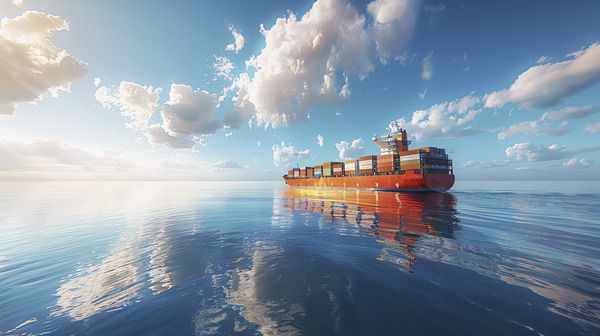
One of the most significant events of the last several months was the security crisis in the Red Sea. Attacks on merchant vessels and threats to shipping in the Suez Canal area forced many shipowners to divert vessels around the Cape of Good Hope. In practice, this meant extending transport times by up to several weeks, increasing fuel costs, higher insurance premiums, and the need to restructure delivery schedules. For many companies, this was another signal showing how much risk is posed by dependence on single transport corridors.
An additional source of uncertainty remains the tensions around the Strait of Hormuz, through which a significant portion of the world’s crude oil exports flows. Any potential disruptions in this region could affect not only fuel prices but also the operational costs of the entire transport and logistics sector.
As Arleta Marczyńska, CEO of eXports, notes, companies are increasingly analyzing today not only transport costs but also political stability in regions, infrastructure availability, and regulatory predictability.
It is precisely these factors that will gain in importance in the coming years – explains A. Marczyńska.
As a result, we are observing a process of gradual diversification of trade routes and the search for new connections between Asia and Europe.
Rail regains importance
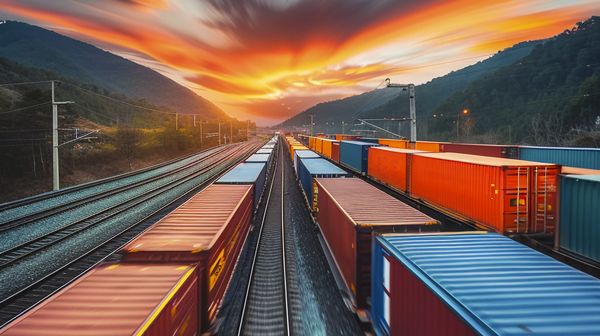
One of the beneficiaries of these changes remains rail transport. Despite challenges related to the war in Ukraine and restrictions on some routes through Russia and Belarus, rail still constitutes an attractive alternative to maritime transport for cargo requiring shorter delivery times.
Increasing interest is also focused on the so-called Middle Corridor, a transport corridor leading through Kazakhstan, the Caspian Sea, Azerbaijan, Georgia, and Turkey. A few years ago, this solution was treated mainly as an alternative to traditional routes. Today, it is becoming one of the key development directions for Eurasian logistics.
Experts point out that Central Asian countries are ceasing to serve solely as transit areas. They are increasingly developing their own logistics, industrial, and warehouse infrastructure, becoming active participants in international supply chains.
Additionally, investments made by governments in the region and international institutions are intended to increase the capacity of the corridor and shorten transport times between Asia and Europe. As a result, rail is once again becoming an important element of the transport strategies of many companies seeking a balance between cost, delivery time, and operational security.
India and Turkey on the world’s logistics map
In parallel, the importance of new trade directions is growing. India currently attracts special attention, increasingly being identified as one of the most important production centers of the future. Dynamic economic development, a huge internal market, and infrastructure investments lead many companies to perceive this country as an alternative to some operations previously conducted in China.
Turkey is also playing an increasingly important role. Its geographical location makes it a natural bridge between Europe, Asia, and the Middle East. The expansion of ports, intermodal terminals, and rail connections is strengthening the country’s position as a regional logistics hub.
According to Dr. Mateusz Zając from the Wrocław University of Science and Technology, the development of alternative transport corridors shows that global trade is diversifying its routes more strongly.
In the long term, this could lead to the creation of a more complex but simultaneously more resilient network of logistics connections – assesses M. Zając.

Diversification is becoming the standard
Changes occurring in global trade are causing companies to increasingly move away from a model based on single delivery directions. In practice, this means looking for new trade partners, developing alternative transport routes, and making greater use of intermodal transport. Today, more and more organizations are analyzing not only transport costs but also the level of risk associated with specific regions of the world. Disruptions caused by the pandemic, armed conflicts, or political tensions have shown that even the most cost-effective solution may prove insufficient if it does not ensure adequate operational resilience.
It is clearly visible that TSL industry companies, in cooperation with their clients, are looking for alternative trade directions in order to increase market diversification, while simultaneously prioritizing the building of resilient logistics models based on alternative delivery routes, the integration of different transport modes, constant monitoring of the global situation, and systematic risk assessment and management – says Tomasz Radek, Business Development Director at DSV.
Such an approach is increasingly translating into specific business decisions. Companies are building backup transport scenarios, increasing the importance of rail and intermodal transport, and investing in solutions that allow for real-time monitoring of goods flow. As a result, logistics is becoming not just a tool for delivery execution, but one of the key elements of risk management strategy.
The Baltic gains strategic importance
Changes occurring in global trade are also affecting the position of Polish ports. The ports in Gdańsk, Gdynia, and Świnoujście have been consistently increasing their transshipment capabilities for several years, and their importance grew further after the outbreak of the war in Ukraine. The growing role of the Baltic Sea region is not only the result of handling traditional container cargo. Increasingly important are investments related to energy, offshore, project logistics, and handling new trade directions. As a result, the Baltic is becoming one of the most important logistics areas in Central and Eastern Europe. For Polish companies, this means an opportunity for further development of logistics services and strengthening the country’s position as a regional transport hub.
The growing role of Poland as a logistics base for the reconstruction of Ukraine also remains significant. Although the scale of future projects remains difficult to estimate, experts agree that Polish port, warehouse, and transport infrastructure could play a significant role in handling the flow of materials and goods related to the reconstruction process of our eastern neighbor.
Aviation returns to the game
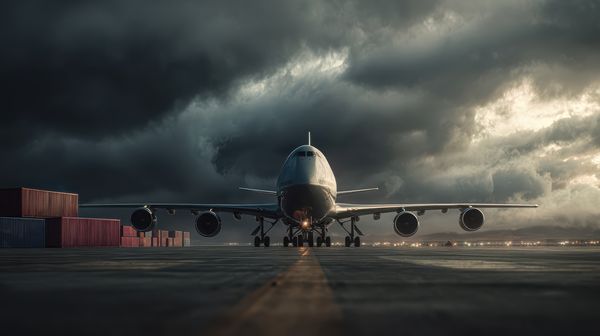
Rising geopolitical uncertainty is also affecting air transport. Although it remains the most expensive mode of transport, its importance is growing wherever delivery time, security, and operational predictability are key. This applies primarily to the pharmaceutical and electronics industries, as well as the e-commerce segment. Additionally, the development of internet commerce is causing air carriers and cargo operators to invest in new connections and infrastructure capable of handling increasing volumes of shipments.
Increasingly, air transport is no longer treated as an exceptional solution but as an element of broader multimodal strategies. In the event of disruptions in sea or rail transport, it allows for the maintenance of delivery continuity for high-value products or those critical to business operations.

From cost to resilience
However, the most important change taking place in logistics today is not the creation of new routes or the development of new connections.
It is a change in the way of thinking about supply chain management.
For many years, the main goal of companies was to maximize cost efficiency. Today, operational resilience, the ability to react quickly to disruptions, and the ability to flexibly redirect goods flows are gaining importance.
For years, logistics was optimized primarily in terms of costs. Today, operational resilience is gaining importance. Companies are ready to pay more for solutions that ensure supply continuity and limit the risk of downtime – points out Marcin Potapczuk, CEO of PDP Logistics.
Similar conclusions flow from observing the entire market. Companies are increasingly building parallel supply routes, diversifying logistics partners, and investing in solutions that increase the visibility of transport processes.
As Prof. Adam Koliński from the Poznań School of Logistics emphasizes, the sustainability of new transport corridors will depend not only on the current geopolitical situation but primarily on the level of infrastructure investment, international cooperation, and the ability to create stable conditions for trade.
In the new reality, sea, rail, and air transport no longer compete with each other to the same extent as before. They are increasingly becoming elements of one integrated logistics system, the goal of which is to ensure the continuity of supplies regardless of the geopolitical or economic situation. One thing, however, seems certain. Global logistics has entered a period of deep transformation, and the future will belong to those organizations that can combine operational efficiency with resilience to unpredictable events.
 You can read more about the impact of geopolitical changes on modern logistics in the latest issue of “Logistyka” magazine.