








For years, Poland has remained one of the most attractive locations for industrial and logistics investments in Europe. New factories, distribution centers, and 24/7 facilities are being established. Whether they will operate stably depends not only on road and rail infrastructure or access to sales markets. Increasingly, a much more mundane element is proving critical – the actual ability of employees to commute to work. Without efficiently organized employee transport, even the best-designed facility may struggle to maintain production continuity and meet contracts.
Companies preparing new investments usually conduct a detailed analysis of a region’s road, rail, and air potential. As TIAS Career expert Paweł Czastor points out, the “people logistics” aspect is considered much less frequently at this stage, even though its significance in conditions of very low unemployment is crucial.
In many projects, the problem is not that investors fail to see the importance of employee transport, but that the “last mile” issue arises too late. Decisions regarding facility locations are often made by teams responsible for freight logistics, while hiring, scheduling, and labor organization are handled by entirely different departments, often appointed only after the investment decision has been made. Meanwhile, efficient employee transport is a complex operation that requires the cooperation of HR, production, and a professional transport operator capable of working 24/7, with vehicle reserves and response procedures. Those who think about this at the planning stage eliminate one of the greatest risks to production stability.
– emphasizes Paweł Czastor, Vice President of TIAS Career.
Lack of staffing on production lines means not only HR problems but also risks of downtime, loss of contracts, and sometimes even contractual penalties amounting to hundreds of thousands of euros per hour. In extreme cases, the consequence could even be the relocation of part of the production to another facility within the same corporation.
In many locations, public transport does not solve the problem. It either does not reach the destination at all or does not operate during shift hours. A delay in one morning course is enough for an employee without a car to physically be unable to get to work. Why does this matter? The “Labor Market Monitor” indicates that one in five people would not take a job at a company that offers no amenities related to commuting, and for as many as 39%, the ability to use organized transport would be a significant factor influencing the attractiveness of a given employer. A flexible transport system tailored to schedules can therefore noticeably contribute to reducing turnover and increasing operational stability for plants.
Commuting on time is key
Although ensuring the mere possibility of commuting remains a challenge for many companies, the quality of the commute is also gaining importance. Studies conducted by Minds & Roses for Bolt Business indicate that transport costs are becoming a real financial burden for employees, and the expectation of employer support is growing rapidly. More than half of Poles commute to work by car, spending at least half an hour a day in it, and the average monthly cost of commuting is estimated at around 137 PLN. At the same time, almost 40% of employees would like to receive mobility-related benefits, while currently, less than one in ten companies offers them. The importance of commuting is also confirmed by employee surveys. More than half of employees declare a willingness to change jobs if commuting conditions deteriorate, and a longer, more stressful travel time is associated with increased absenteeism and a decline in job satisfaction.
As a result, employee transport is increasingly ceasing to be viewed as an HR benefit and is becoming a process with real operational and financial significance. A 24/7 operating, predictable system adapted to the rhythm of production enables companies to plan shifts in a business-optimal manner, rather than solely based on public transport limitations. This is complex people logistics today, requiring not only a fleet but also route planning based on HR data, backup fleet security, and constant operational coordination. This is why more and more companies treat the commuting system as an element of critical infrastructure, requiring a professional partner who ensures proper organization and offers solutions that work 24/7.
The significance of this aspect is best seen in the example of Lower Silesia – a region recognized as one of the key production and logistics hubs in Europe. Although it possesses one of the best-developed road and rail networks in Poland and logistics infrastructure supporting a significant part of the Central and Eastern European warehouse market, even here the “last mile” – the real ability for employees to reach their workplace – remains a challenge. This particularly applies to production and logistics investments, often located outside city centers and operating on a shift system.
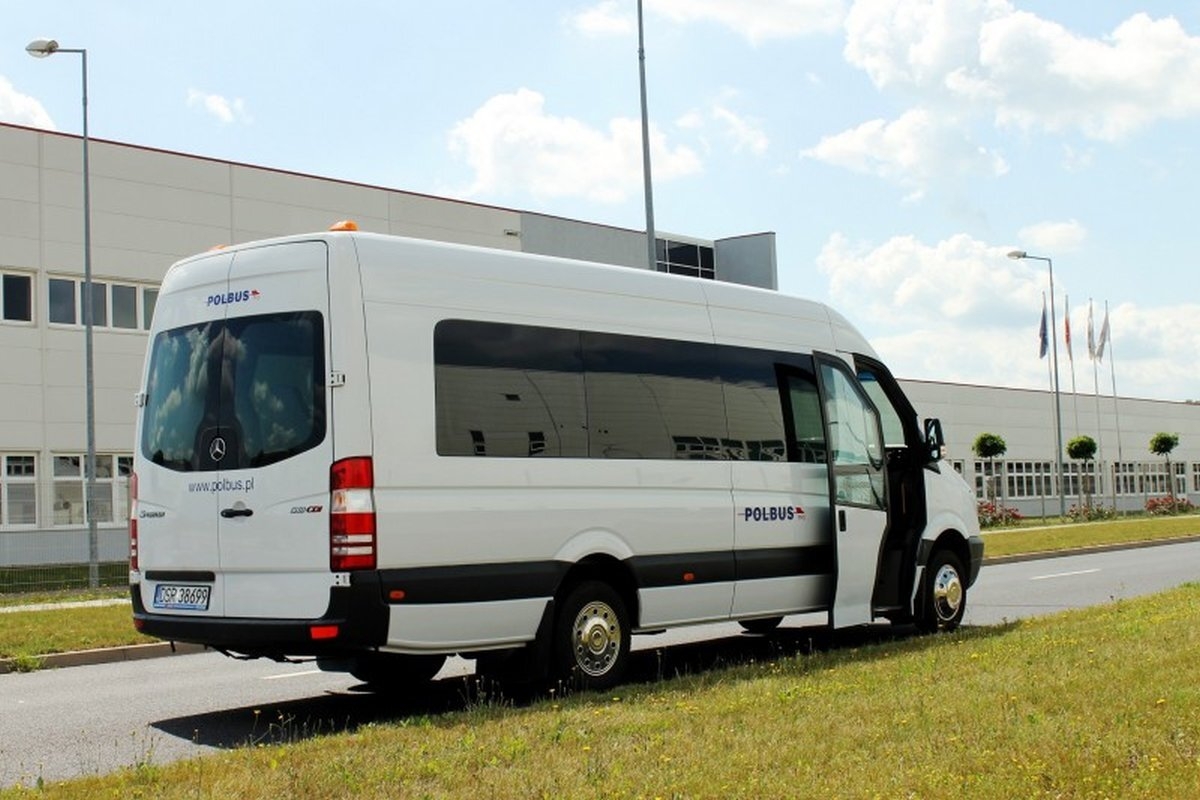
How this challenge is addressed in practice is shown by the activities of Polbus-PKS, one of the largest bus operators in Lower Silesia. The company offers a wide spectrum of services, from regional transport and the rental of coaches and buses to advanced employee transport projects. As part of the latter, it carries out about 80 trips daily, transporting nearly 18,000 employees for leading companies in the industrial, technological, and automotive sectors, with capital from Europe, Asia, and North America.
Our experience shows that employee transport is increasingly becoming an element of recruitment strategy, not just a logistical add-on.Thanks to well-planned transport, companies are able to reach talent from towns even 80–100 km away from the plant, effectively expanding their labor market.
– emphasizes Jerzy Michalak, President of Polbus-PKS.
Polbus-PKS, which has been serving international investors for over 20 years, points out that issues regarding employee transport appear very early in the decision-making process today. They are often present in conversations even before the start of production or mass recruitment.
Investors are increasingly rarely asking generally about “transport availability.” They are interested in specifics: are we able to launch transport 24 hours a day, 7 days a week, throughout the year, including in a continuous work system. They want to know how many employees we can transport to a specific shift and from what distance. We serve locations even more than 100 kilometers away, planning routes based on employees’ places of residence and production rhythm. If several dozen people are traveling on a given route, we provide a coach; with lower demand, we use buses. The key is that the employee has a real opportunity to reach the plant for 6:00, 14:00, or 22:00, depending on the work system adopted by the company and regardless of the day of the week.
– says Jerzy Michalak.
Transport is an operation with the right fleet
As Jerzy Michalak emphasizes, in the case of large industrial and logistics projects, employee transport is now a complex operation involving not only a fleet and drivers. It must also include assigned coordinators, including English-speaking ones if the nature of the organization’s functioning requires it, as well as integration with HR departments and readiness to quickly scale transport in case of production changes or employment growth. Only with such an approach can company transport effectively eliminate one of the main barriers to entering the labor market: the problem of reaching early and night shifts, which is particularly important from the perspective of temporary workers and those commuting from smaller towns.
An additional aspect is cultural differences and specific requirements of clients from different parts of the world. These relate to communication standards, as well as requirements such as adjusting the standard of vehicles to the global guidelines of a given organization or servicing routes with a specific brand of fleet.
For foreign investors, the evaluation of a location is increasingly rarely based solely on infrastructure declarations. What is verified is the region’s ability to ensure operational continuity from the first day of the facility’s operation. It is precisely at the level of such, seemingly invisible solutions, that the competitiveness of locations vying for the attention of companies from different parts of the world is decided today.
Source: Polbus-PKS