









Joint efforts for sustainable development: how Ricola and DACHSER are continuously reducing CO₂ emissions throughout the global supply chain of the Swiss herbal drop manufacturer. We present a report on the development and rerouting of our values-oriented cooperation.
Fragrant meadows, buzzing bees, a clear mountain stream, and snow-capped peaks – people living in harmony with nature. This idyllic alpine world is the starting point for a uniquely charming story. Its main protagonist is the Swiss manufacturer of herbal drops, Ricola, based in Laufen near Basel. The company, founded in 1930, is considered a pioneer in herb cultivation. It is extremely selective regarding locations and values controlled, environmentally friendly cultivation. In this pristine region, Ricola has entered into permanent purchase agreements with over a hundred growers. They supply the company with ingredients for about 50 different products, including specialized teas, which the company exports to 45 countries. Ricola currently employs about 500 people and has branches in Europe, Asia, and the United States. In this way, the family-owned Swiss company has become a global brand with its herbal drops.
– If the products offered contain natural ingredients, then sustainability must be convincing – from one end of the production and supply chain to the next – says Jochen Layer, Vice President Corporate Fulfillment at Ricola. – Thinking and acting sustainably is part of how we perceive ourselves at Ricola. That is precisely why our family company places so much emphasis on reducing energy consumption and CO₂ emissions. To achieve this, we are implementing a range of measures. It is an approach that DACHSER and Ricola have shared from the first day of our cooperation.
Given that logistics accounts for a significant portion of Ricola’s total greenhouse gas emissions, it is a particular focus in the company’s comprehensive climate protection strategy. To achieve tangible, measurable results in this area as quickly as possible, Ricola established a sustainability team in 2021.
– We are taking a comprehensive approach that considers not only the company’s carbon footprint but also ethical aspects related to every link in the supply chain – says Jochen Layer – At first, we thought we would have difficulty engaging logistics service providers in this rather complex topic. However, when we presented our ideas regarding climate action to DACHSER, it turned out that the company received them with great openness and enthusiasm. The logistics operator had long anticipated many key aspects and even developed them further. DACHSER had developed research and accumulated rich research and project experience in other contexts, which meant we could immediately apply this vast knowledge to assess and redesign our logistics chains.
A relationship built on trust
– Every cooperation aimed at achieving climate goals is based on the thorough integration of the logistics service provider’s actions with the client’s processes and the establishment of a partnership based on trust. This is what Ricola and DACHSER have cultivated since beginning their cooperation in 2008 – says Samuel Haller, Country Manager Air & Sea Logistics at DACHSER Switzerland. Together with sustainability experts from the DACHSER headquarters in Kempten, efforts were undertaken a few years ago to identify a range of various measures to reduce emissions throughout the entire supply chain.
Jan Bender, Department Head Foreign Trade Compliance Air & Sea Logistics at DACHSER, describes the approach that then led to the creation of a concrete climate action pilot project in 2022, in cooperation with Ricola – We examined where useful levers for emission reduction exist and ways to adapt them.
Cecilia Homilius, Sustainability Consultant and member of Jan Bender’s team, explains – The project partners sought opportunities to establish an objective and impartial decision-making process, with a focus on preferred carriers, on opportunities to use sustainable fuels – such as hydrogen and biofuels, sustainable aviation fuels (SAF), and sustainable marine fuels (SMF) – and on the potential CO₂ savings they offer.” In her opinion, this type of comprehensive approach is essential for implementing appropriate economic and ecological measures throughout the entire ordering and supply chain.
This is precisely what Ricola aimed for when developing its development plan. The company set itself the ambitious goal of halving its own CO₂ emissions from transport by 2030 compared to 2020. Conversely, the assumption for 2050 is net-zero greenhouse gas emissions (well-to-wheel). “During our joint inaugural workshops, we discussed every possible aspect. We defined Ricola’s expectations and goals and analyzed the entire supply chain to find ways to make it more sustainable. It was an extremely intense process, as well as an exciting dialogue between equals” – says Jan Bender.
– Every cooperation aimed at achieving climate goals is based on the thorough integration of the logistics service provider’s actions with the client’s processes and the establishment of a partnership based on trust. This is what Ricola and DACHSER have cultivated since beginning their cooperation in 2008 – says Samuel Haller, Country Manager Air & Sea Logistics at DACHSER Switzerland.
Vinh Tran, Order Management Coordinator, who is responsible for implementing logistics sustainability projects in operations, shares our opinion – We conducted a critical analysis and inventory of CO₂ emissions and other greenhouse gases resulting from transporting Ricola products directly from the factory to global markets. This resulted in the first concrete actions aimed at achieving a noticeable reduction of these emissions – in relation to all carriers involved in pickup, main transport, and additional transport.
Scientific support
Jochen Layer emphasizes that Ricola, like DACHSER, bases decisions aimed at improving climate protection solely on proven scientific facts. Ricola calculates its carbon footprint in cooperation with myclimate, an independent, international climate protection organization based in Switzerland. The data collected and processed in this way shows that by 2025, Ricola will meet the rigorous standards defined for a company of this size in the EU Corporate Sustainability Reporting Directive (CSRD). Among the company’s main intentions is also obtaining B Corp certification. This is part of a holistic approach whereby certified companies include their commitment to sustainable development and fair working conditions in their statutes – which further strengthens their intention to help create a better, greener tomorrow. The goal is to ensure greater transparency and orientation towards values, both in this area and throughout the entire supply chain.
Testing all modes of transport
The latest analysis of supply chains and their values in the global herbal logistics of the Swiss family company has already resulted in a range of concrete actions. Initially, thanks to the improvement of transport capabilities and full utilization of the maximum container load capacity, efficiency was significantly increased. This led to a 12 percent reduction in total transport demand.
– This optimization was definitely our main lever – comments Vinh Tran.
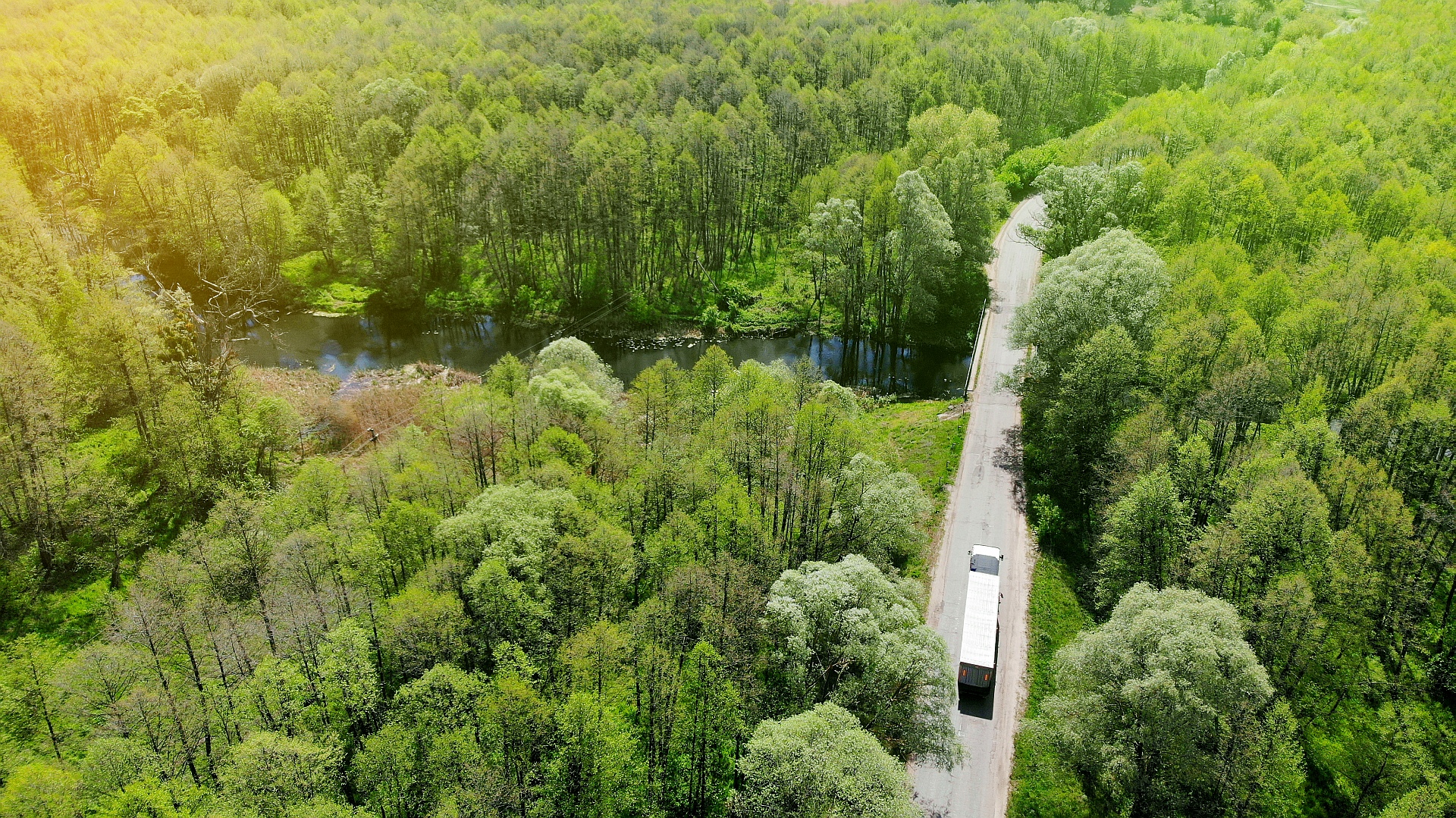
Subsequently, various emission-free propulsion technologies are being considered for trucks used in container transport over short distances from the production plant in Switzerland to the rail terminal. “Unfortunately, from an economic point of view, a complete transition to purely electric alternatives is not feasible for us” – explains Vinh Tran. He adds that the company will have to wait for decisions by Swiss policymakers regarding infrastructure and subsidies. Conversely, hydrogen-electric trucks, which many see as the future of emission-free freight transport, are also not yet widely available enough – says Vinh Tran. As long as new technologies do not develop enough to be available in everyday transport operations, Ricola will rely on biodiesel. This solution also allows for saving several metric tons of greenhouse gas emissions annually.
Currently, rail is the preferred mode of transport used to carry Ricola products from its factory to Hamburg and Rotterdam, from where they are further shipped to Asia and the USA. “Switching 100 percent to rail transport instead of combined truck and barge transport allows the company to save about 51 tons of CO₂e annually,” says Cecilia Homilius.
Moreover, the use of sustainable marine fuels (SMF) lowers emissions resulting from the transport of Ricola products by sea. Compared to conventional heavy fuel oil, using SMF can reduce CO₂e emissions by at least 75 percent over the entire machine life cycle.
In the case of shipments to Asia (Hong Kong), Ricola and DACHSER recently finished testing a transport route from Laufen to the Italian port of Genoa.
– Using ports located in the south further optimizes the route and transport time – says Vinh Tran. This explains why logistics planners are currently considering the potential benefits of including additional destinations in Ricola’s supply chain.

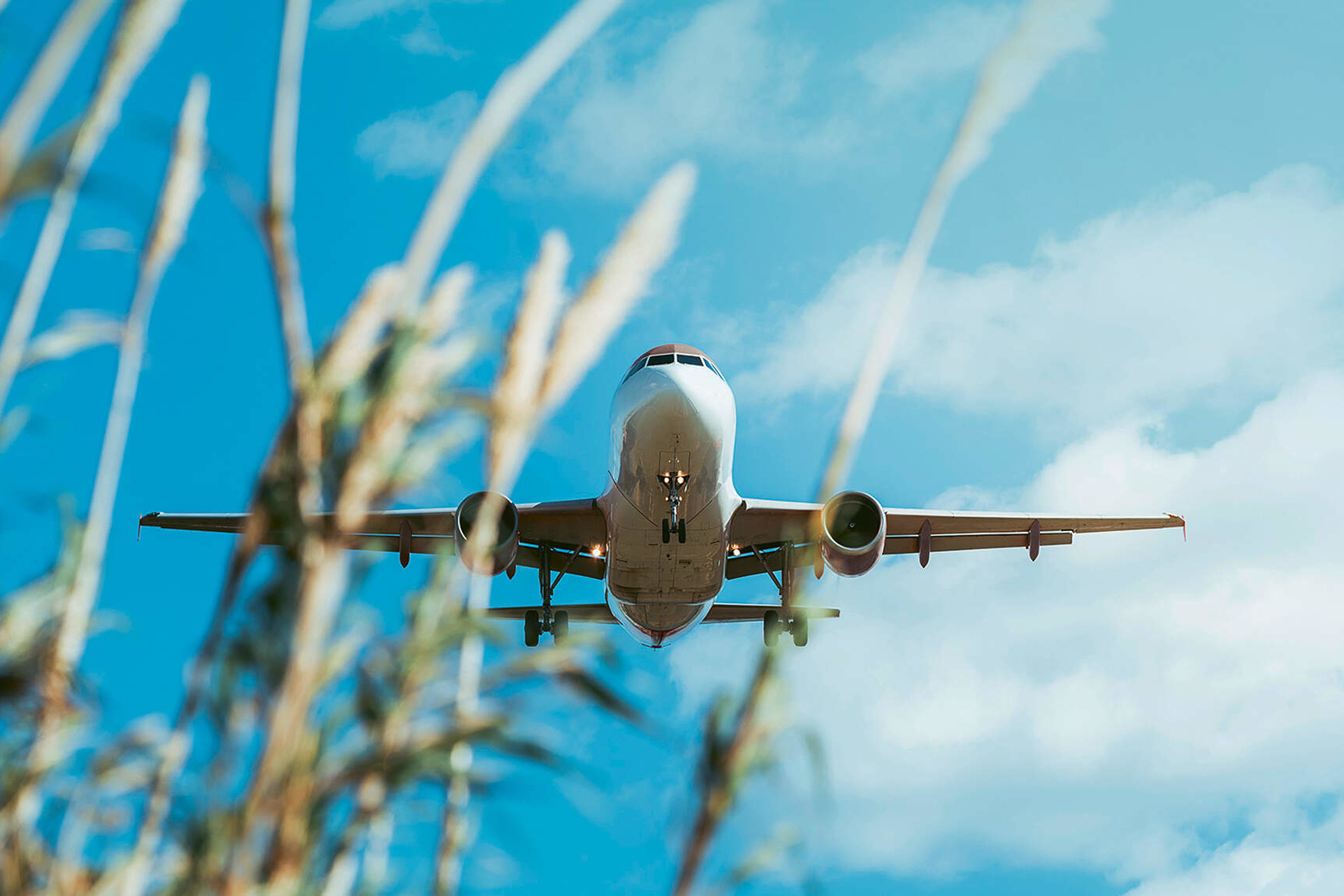
A more sustainable flight
Ricola is passionately engaged in climate action, which means it also wants to further reduce its already low use of air transport. However, in emergency situations, it cannot be completely avoided.
– During the project, we researched which airline offers the most reasonable direct connection and uses a modern aircraft fleet. Ultimately, this can make a really big difference – says Cecilia Homilius. Calculations showed that on the main transport route from Zurich to New York, there was a huge difference between the best and least favorable combination in terms of ecological footprint: from 500 g to as much as 1200 g CO₂e per ton-kilometer. DACHSER now also enables Ricola to use sustainable aviation fuels (SAF), which allowed for saving over 150 tons of CO₂e in the first half of 2023 alone.
– We are not trying to save the world by ourselves, but we can and want to contribute to making the world a better place – says Jochen Layer. This way of thinking is at the heart of the cooperation between Ricola and DACHSER, which goes far beyond innovative logistics projects. An example of this is the recent ideas competition for trainees. – Our trainees gladly took advantage of it and showed great enthusiasm.
So far, out of 35 submitted ideas for sustainable development, four projects have emerged, focusing on wind energy, sustainable packaging, food waste prevention, and more efficient procurement.
Jochen Layer emphasizes that both the ideas competition and the cooperation with DACHSER carry a message about future potential – We see how introducing even a few changes allows us to achieve great things. This makes us want to do even more, and we will certainly take new actions.
Source: Dachser